
Harish-Chandra
Indian American mathematician and physicist
About Harish-Chandra
Lived 1923 – 1983 (aged 60). Harish-Chandra was an Indian and American mathematician, physicist and university teacher, known for Harish-Chandra homomorphism, Harish-Chandra isomorphism and Harish-Chandra module.
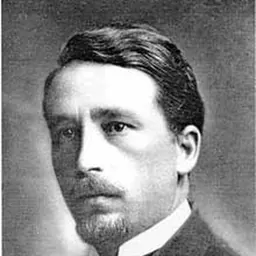
Harish-Chandra (né Harishchandra) FRS ( 11 October 1923 – 16 October 1983) was an Indian-American mathematician and physicist who did fundamental work in representation theory, especially harmonic analysis on semisimple Lie groups.
Early life Harish-Chandra was born in Kanpur. He was educated at B.N.S.D. College, Kanpur and at the University of Allahabad. After receiving his master's degree in physics in 1940, he moved to the Indian Institute of Science, Bangalore for further studies under Homi J. Bhabha.
In 1945, he moved to University of Cambridge, and worked as a research student under Paul Dirac.
Personal life In 1952, Harish-Chandra married Lalitha "Lily" Kale (1934–2019). Kale, whose father was an Indian food scientist and whose mother was a Polish Jew, was born in Warsaw but grew up in Bangalore after her family fled Poland in 1939 or 1940. They had two daughters, Premala Chandra and Devika Chandra; Premala also became a physicist.
Death Starting in 1969, Harish-Chandra began to experience heart attacks. A second and third heart attack occurred in 1970 and 1982, respectively. From then, his physical capabilities began to decline. A fourth heart attack occurred in 1983, leaving him mostly bedridden and in isolation. On the day after a conference organized for him and mathematician Armand Borel took place, Harish-Chandra died from his final heart attack.
Don’t just read it —
keep it.
Full-length biographies made to live with: read them, listen on the way to work, watch them tonight.
- E-book
- Audio
- Video
Instant download · yours to keep · every purchase keeps this site free
Important facts
more
Harish-Chandra's character formula, Harish-Chandra's regularity theorem, Harish-Chandra's Ξ functionPeople in Harish-Chandra's life
Named in this biography and alive at the same time



Related people
Same field, nearest in time



Contemporaries
People whose lives overlapped Harish-Chandra's
Frequently asked questions
Who was Harish-Chandra?
Indian American mathematician and physicist (1923–1983)
When was Harish-Chandra born?
Harish-Chandra was born on 11 October 1923 in Kanpur.
When did Harish-Chandra die?
Harish-Chandra died on 16 October 1983 in Princeton.
What was Harish-Chandra's occupation?
Harish-Chandra was a mathematician, physicist and university teacher.
What was Harish-Chandra known for?
Harish-Chandra was known for Harish-Chandra homomorphism, Harish-Chandra isomorphism, Harish-Chandra module, Harish-Chandra transform, Harish-Chandra's Schwartz space and Harish-Chandra's c-function.
What nationality was Harish-Chandra?
Harish-Chandra was Indian and American.
Sources & further reading
Cite this page
APA: Biography.guide. (2026). Harish-Chandra. https://biography.guide/harish-chandra/
MLA: "Harish-Chandra." Biography.guide, https://biography.guide/harish-chandra/.
Chicago: "Harish-Chandra." Biography.guide. https://biography.guide/harish-chandra/.
Data last updated: 2026-09-25 · Spot an error? Report a correction.
Page generated 2026-09-27 05:13 UTC