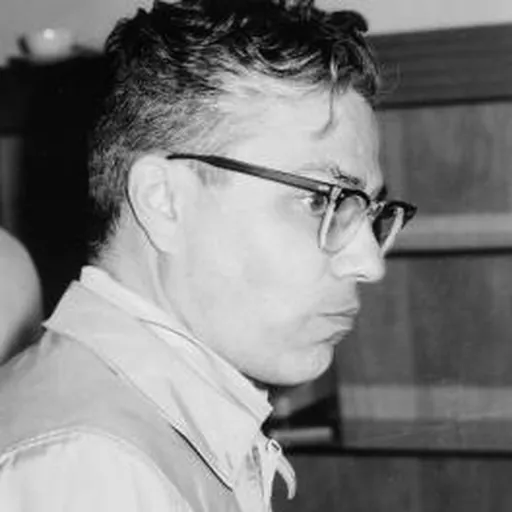
About Armand Borel
Lived 1923 – 2003 (aged 80). Armand Borel was a Swiss and American mathematician, topologist and university teacher.
Armand Borel (21 May 1923 – 11 August 2003) was a Swiss mathematician, born in La Chaux-de-Fonds, and was a permanent professor at the Institute for Advanced Study in Princeton, New Jersey, United States from 1957 to 1993. He worked in algebraic topology, in the theory of Lie groups, and was one of the creators of the contemporary theory of linear algebraic groups.
Biography He studied at the ETH Zürich, where he came under the influence of the topologist Heinz Hopf and Lie-group theorist Eduard Stiefel. He was in Paris from 1949: he applied the Leray spectral sequence to the topology of Lie groups and their classifying spaces, under the influence of Jean Leray and Henri Cartan. With Hirzebruch, he significantly developed the theory of characteristic classes in the early 1950s.
He collaborated with Jacques Tits in fundamental work on algebraic groups, and with Harish-Chandra on their arithmetic subgroups. In an algebraic group G a Borel subgroup H is one minimal with respect to the property that the homogeneous space G/H is a projective variety. For example, if G is GLn then we can take H to be the subgroup of upper triangular matrices. In this case it turns out that H is a maximal solvable subgroup, and that the parabolic subgroups P between H and G have a combinatorial structure (in this case the homogeneous spaces G/P are the various flag manifolds). Both those aspects generalize, and play a central role in the theory.
The Borel−Moore homology theory applies to general locally compact spaces, and is closely related to sheaf theory.
He published a number of books, including a work on the history of Lie groups. In 1978 he received the Brouwer Medal and in 1992 he was awarded the Balzan Prize "For his fundamental contributions to the theory of Lie groups, algebraic groups and arithmetic groups, and for his indefatigable action in favour of high quality in mathematical research and the propagation of new ideas" (motivation of the Balzan General Prize Committee). He was a member of the American Academy of Arts and Sciences, the United States National Academy of Sciences, and the American Philosophical Society.
He died in Princeton. He used to answer the question of whether he was related to Émile Borel alternately by saying he was a nephew, and no relation.
Famous quotations "I feel that what mathematics needs least are pundits who issue prescriptions or guidelines for presumably less enlightened mortals." (Oeuvres IV, p. 452)
Don’t just read it —
keep it.
Full-length biographies made to live with: read them, listen on the way to work, watch them tonight.
- E-book
- Audio
- Video
Instant download · yours to keep · every purchase keeps this site free
Important facts
People in Armand Borel's life
Named in this biography and alive at the same time



Related people
Same field, nearest in time



Contemporaries
People whose lives overlapped Armand Borel's
Frequently asked questions
Who was Armand Borel?
Swiss mathematician (1923-2003)
When was Armand Borel born?
Armand Borel was born on 21 May 1923 in La Chaux-de-Fonds.
When did Armand Borel die?
Armand Borel died on 11 August 2003 in Princeton.
What was Armand Borel's occupation?
Armand Borel was a mathematician, topologist and university teacher.
What nationality was Armand Borel?
Armand Borel was Swiss and American.
Sources & further reading
Cite this page
APA: Biography.guide. (2026). Armand Borel. https://biography.guide/armand-borel/
MLA: "Armand Borel." Biography.guide, https://biography.guide/armand-borel/.
Chicago: "Armand Borel." Biography.guide. https://biography.guide/armand-borel/.
Data last updated: 2026-09-22 · Spot an error? Report a correction.
Portrait: Wikimedia Commons · author & licence
Page generated 2026-09-27 05:03 UTC