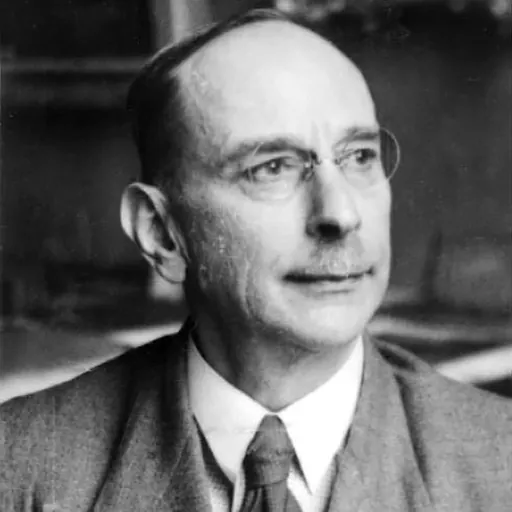
Hans Posse
German art historian, Hitler's special representative for planned "Führermuseum" in Linz, Austria
About Hans Posse
Lived 1879 – 1942 (aged 63). Hans Posse was an art historian and art dealer.
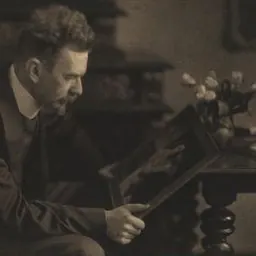
Dr. Hans Posse (6 February 1879 – 7 December 1942) was a German art historian, museum curator, and, for over three years, from June 1939 until his death, the special representative of Adolf Hitler appointed to expand the collection of paintings and other art objects which Hitler intended for the so-called "Führermuseum" in Linz, Austria. The museum, which was never built, was to be the core of a cultural center which was part of a planned general rebuilding of the city intended to have it surpass Vienna and rival Budapest.
Life and career Posse was the son of Otto Adalbert Posse, an historian and archivist who was director of the Saxon Central State Archive in Dresden. The younger Posse studied art history, archaeology and history in Marburg and Vienna, and received his doctorate in 1903 in Vienna under Franz Wickhoff with a thesis on the 17th century Roman painter Andrea Sacchi.
Posse's museum career began that same year as a volunteer at the Kaiser Friedrich Museum in Berlin, where he soon became the assistant to and protégé of Wilhelm von Bode, the museum's director. Posse made a name for himself in the world of art history by his handling of the museum's collections of German, Dutch and English paintings; a two-volume inventory catalog was published in 1911.
He spent several years in Florence as an assistant at the city's German Institute of Art History, and in Rome as a researcher at the Bibliotheca Hertziana, which resulted in a work on the ceiling paintings of Pietro da Cortona. His later publications would investigate Lucas Cranach and the German Impressionist Robert Sterl. Posse was nevertheless able to keep his position, at least temporarily, by distancing himself from the Modernist works he had previously championed. He argued that of the 310 works added to the collection under his leadership, only 33 were dated after 1910, that many of those were gifts and on loan, and he had received them only in the spirit of helping local artists. At about the same time, Posse – whose housekeeper and future wife had joined the Nazi Party in 1931 – applied to become a party member, and received his interim membership card in December 1933. His opponents, however, prevented him from becoming a full member; he remained a provisional member of the Party until June 1934, when his membership was finally rejected.
Hitler's Special Envoy A year later, on 20 June 1939, Hitler summoned Posse to his summer home, the Berghof, and told him that he wanted Posse to be the head of what would be perhaps the most massive art acquisition project in history, the gathering of paintings and other art works for Hitler's planned art museum in Linz, Austria, the city Hitler considered to be his hometown. What came to be called the "Führermuseum" – which was never built – was to be the core of a cultural center which was part of a general rebuilding of the city intended to have it surpass Vienna and rival Budapest. Posse's job would be to supplement Hitler's own previously purchased collection of mostly 19th century Germanic Romantic paintings. According to Posse's diary, Hitler told him that the museum would contain "only the best of all periods from the prehistoric beginnings of art ... to the nineteenth century and recent time," and the works were to be obtained both by purchase and by confiscation. "You are ... to deal only with me. I shall make the decisions," Posse was told.
The next day, Hitler set up the Sonderauftrag Linz ("Special Commission: Linz") in Dresden and appointed Posse as his special envoy. A few days later, on 26 June, Hitler signed a letter intended to give Posse the authority he would need to do the job. He wrote:
I commission Dr. Hans Posse, Director of Dresden Gallery, to build up the new art museum for Linz Donau. All Party and State services are ordered to assist Dr. Posse in fulfillment of his mission.
Although Hitler had favored German and Austrian paintings from the 19th century, Posse's focus was on early German, Dutch, French, and Italian paintings.
The Sonderauftrag not only collected art for the Führermuseum, but also for other museums in the German Reich, especially in the eastern territories. The artworks would have been distributed to these museums after the war. The Sonderauftrag had approximately 20 specialists attached to it: "curators of paintings, prints, coins, and armor, a librarian, an architect, an administrator, photographers, and restorers." The sizable staff included Robert Oertel and Gottfried Reimer of the Dresden Gallery, Friedrich Wolffhardt, an SS officer, as curator of books and autographs; Leopold Rupprecht of the Kunsthistorisches Museum as curator for armour, and Fritz Dworschak, also of that museum, as curator for coins.
Collecting for Linz Immediately following the Nazi Anschluss with Austria " thousands of paintings were quickly seized following a general ban on Jewish art dealers and gallery owners. With many fleeing abroad, their holdings were ruthlessly liquidated and "Aryanized." On July 10, 1939, Posse visited the Austrian central depot of artworks confiscated from Jewish art collections, noting in his travel diary "Over 8000 pieces".
In the late summer and autumn of 1939, Posse traveled a number of times to Vienna to the Central Depot for confiscated art in the Neue Burg to pick out art pieces for the Linz museum, These 182 pieces were included in Posse's July 1940 list of 324 paintings he had chosen for the museum's collection. Posse commission Erhard Göpel to explore the Dutch art market.
Posse also went to Poland to examine confiscated artworks there, selecting works by Leonardo, Raphael, and Rembrandt for the museum in Linz, although these pieces never actually left the control of the General Government, the rump of Poland left after Nazi Germany and the Soviet Union took the territory they wanted.
When Posse went to France, he took Nazi art looter Karl Haberstock with him, and the dealer, working through 82 local agents, purchased 62 pieces for the Linz collection, including works by Rembrandt, Brueghel, Watteau and Rubens.
In the "authoritarian anarchy" and "administrative chaos" that was typical of the way the Third Reich operated, the Sonderauftrag Linz was not the only Nazi agency collecting art works. In France, as in many other countries in Europe, the office of Einsatzstab Reichsleiter Rosenberg (Special Purposes Reich Leader Rosenberg, ERR) was the primary agency. Another dealer used by Hans Posse was Hildebrand Gurlitt, through whom he made expensive purchases of tapestries, paintings and drawings.
Relationship with Hitler Hitler was pleased with Posse's work – the curator became one of the few people whose artistic opinion Hitler respected – and in April 1940 awarded him the honorific title of "Professor", something the Führer did for many of his favorites in the arts, such as architects Albert Speer and Hermann Giesler; sculptors Arno Breker and Josef Thorak; and photographer Heinrich Hoffmann; among others.
Death Posse died on 7 December 1942 of oral cancer in a clinic in Berlin. His funeral was a high state event to which Hitler invited the directors of all art museums in the Reich; Propaganda Minister Joseph Goebbels delivered the eulogy, although there was no mention made of the Linz Museum project, since it was a state secret. Posse had gathered more than 2500 art works for the Linz museum in the three years he was head of the Sonderauftrag Linz.
Posse's successor as Hitler's special envoy was the art historian and former director of the Kaiser Friedrich Museum, Hermann Voss.
Nazi-looted art Research is ongoing into the artworks looted from Jewish collectors during the Holocaust that Posse acquired. A research database listing the art destined for Hitler's Linz museum was published in 2008 by the German Historical Museum. The German Lost Art Foundation also lists artworks acquired by Hans Posse.
Don’t just read it —
keep it.
Full-length biographies made to live with: read them, listen on the way to work, watch them tonight.
- E-book
- Audio
- Video
Instant download · yours to keep · every purchase keeps this site free
Important facts
People in Hans Posse's life
Named in this biography and alive at the same time



Related people
Same field, nearest in time
Contemporaries
People whose lives overlapped Hans Posse's





Frequently asked questions
Who was Hans Posse?
German art historian, Hitler's special representative for planned "Führermuseum" in Linz, Austria
When was Hans Posse born?
Hans Posse was born on 6 February 1879 in Dresden.
When did Hans Posse die?
Hans Posse died on 7 December 1942 in Berlin.
What was Hans Posse's occupation?
Hans Posse was an art historian and art dealer.
What nationality was Hans Posse?
Hans Posse's recorded nationality: German Reich.
Sources & further reading
Cite this page
APA: Biography.guide. (2026). Hans Posse. https://biography.guide/hans-posse/
MLA: "Hans Posse." Biography.guide, https://biography.guide/hans-posse/.
Chicago: "Hans Posse." Biography.guide. https://biography.guide/hans-posse/.
Data last updated: 2026-09-22 · Spot an error? Report a correction.
Portrait: Wikimedia Commons · author & licence
Page generated 2026-09-27 05:04 UTC