
About Hans Nibel
Lived 1880 – 1934 (aged 54). Hans Nibel was a German engineer.
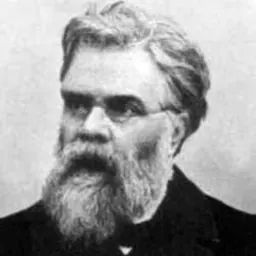
Hans Nibel (31 August 1880 – 25 November 1934) was a German mechanical engineer.
He was employed for more than a quarter of a century in positions of increasing influence at Benz and Cie and, after the 1926 merger, its successor entity, Daimler-Benz AG. He is best remembered for his time as Technical Director, a position he took over from Ferdinand Porsche following an acrimonious falling out between the company and Dr. Porsche. Between 1929 and 1934 Nibel was responsible for a succession of new Mercedes-Benz models of which, in commercial terms, the Mercedes-Benz W15, introduced in October 1931, was probably the most important. During the savage backwash from the Great Depression the W15 was relatively affordable, enabling the manufacturer to retain a major presence in the German auto market in a way that the large expensive cars with which Mercedes-Benz had increasingly been associated during the 1920s never could have done.
Life Provenance and early years Johann "Hans" Nibel was born into a Catholic family at Olleschau, Austria-Hungary (today Olšany in the Olomouc Region of the Czech Republic). He had one brother and two sisters. At that time, and until 1918, the entire region was part of the Austro-Hungarian empire. Nibel's father, also called Johann Nibel (1839–1914), was a factory director, probably of a paper factory. Through his father the boy was exposed to many of the finer points of the production technologies of those times from an early age. He was evidently a studious schoolboy. A surviving certificate from his school days dated 1899 classified him as "outstanding" in respect of Mathematics, Physics and Drawing, which hints at the specialisms that would best support him in his future career.
Benz & Cie AG He graduated with a "Diplom-Ingenieur" engineering degree. He obtained his first professional work experience working at a succession of relatively small engineering and manufacturing businesses,
Beyond the automobile business, Nibel introduced improvements for the oil powered engine designed in Sweden by Jonas Hesselman and manufactured at the time by Benz under licence. At the other end of at least one spectrum, drawing inspiration from developments in the design of engines for racing cars, in 1909 he designed an aircraft engine, providing the impetus for the company to set up a new division to operate alongside its main automobile manufacturing business.
Like many pioneering engineers involved in the early decades of the automobile age in Europe, Nibel was also sometimes mentioned in news reports as a racing driver. However, when he did appear behind the wheel in a competitive event it was more often than not in the context not of an out an out speed trial, but of an endurance event such as the "Prince Heinrich Rally" or the "Carpathian Rally". Trophies collected by Nibel through his participation in motor sport included, in 1909, the Prize of the Crown Princess of Saxony following success, driving a Benz 20/35 PS in that year's "Prince Heinrich Rally", the "Silver Plate" for his performance in the 1912 "International Austrian Alpine Rally", and in 1914 the "Prize of the Minister for the Interior" following the "Carpathian Rally". Beyond the world of motorsport in 1912/13 Benz & Cie AG was awarded and received the prestigious (and lucrative) "Kaiserpreis" ("Emperor's Prize for the best German aircraft engine"), which was widely interpreted by colleagues and commentators as a personal achievement for Hans Nibel and his senior engineers. During this time he was working with the Prosper L'Orange "oil-burner engines" (better viewed, in retrospect, as early forms of diesel engines), progressing to the point at which, soon after the war ended, Benz were already able to deliver simple engines as early as 1919, using this technology, for small industrial and agricultural engines . Another important development came in 1920 when Nibel, whose woe design efforts were still largely focused on racing cars at this stage, mandated Kurt Eltze (1878–1973) to set up the company's own production facility for injection pumps and nozzles to deal with "heavy fuel oil". Together the two men played a central role in turning "Benz and Cie AG" and its successor "Daimler-Benz AG" into world-leading pioneers in the use of diesel fuel for road vehicles. In 1922 Benz & Cie introduced a farm tractor with a self-combusting (through compression-induced spontaneous combustion) engine. It was the first road-capable diesel powered vehicle in the world. In 1923, under Nibel's direction, the first diesel powered road-going truck was presented by Benz. For the rest of his life and career he worked to sustain the company's pre-eminence in respect of diesel technology for road vehicles.
On 25 August 1922 Hans Nibel, who had been a deputy member of the company's main board since 1917, became a full board member. This was also the year in which the institution known at that time as the "Technische Hochschule," (Karlsruhe Institute of Technology) awarded him an honorary doctorate (Dr. Ing. h. c.) "in recognition of his great contributions to design/development and technology ("... in Anerkennung seiner großen Verdienste als Konstrukteur und Techniker").
Merger May 1924 saw the establishment of the "Interessengemeinschaft Daimler Motoren-Gesellschaft und Benz & Cie“, a joint enterprise comprising the two companies "Benz and Cie AG" and "Daimler-Benz AG". There were many who saw the move as a precursor to fuller merger between the two companies, but there was also a tradition of rivalry to be taken into account. At the board level Hans Nibel was among the first to become convinced of the desirability of a full merger, and he was one of the most vigorous proponents of such a move. In this context it is unsurprising that he was appointed at once to the executive board of the newly created joint enterprise business. Meanwhile an effective programme of standardisation in respect of car design and production technologies was launched in order to enable Benz and Daimler models to compete more effectively in a crowded market place. Purchasing and sales activities were also harmonised, along with advertising, although at this stage each of the two brands retained a separate trade mark. The design and development offices were also merged. Nibel found himself working, as a colleague with his counterpart from Daimler, the brilliant - if, on occasion, "difficult" - Dr. Porsche. Somewhat confusingly, sources state that the two men worked "gleichberechtigt" (at the same level of authority) within the corporate structure although Porsche (who was five years older than Nibel), nevertheless "carried ultimate responsibility" for the department.
In 1928 Nibel became head of the company's design and development department.
The success of the "Typ 170" provided impetus for the launch in 1933 and commercial success of the "Typ 200" (W21) and "Typ 290" (W18) in 1933, larger family cars, designed and developed under Nibel's close direction, which incorporated many of the innovations pioneered in the "Typ 170".
The rear-engined "Typ 130" (W23) introduced in February 1934 and listed in sales material till 1936 was as revolutionary as any of the passenger cars introduced by Daimler-Benz on Nibel's watch. The idea had almost certainly originated with Dr. Porsche who had remained influential in the auto industry following his own departure from the company in 1929. Placing the engine at the same end of the car as the driving wheels implied the possibility of a simplified drive-train with resulting reductions in productions costs and vehicle weight. Traction on slippery roads was improved and there were those who argued that the configuration could be more space-efficient. The "Typ 130" bore Nibel's signature in respect of much of the detailed design and development work. The mid-engined "Typ 130" (W30) unveiled during the summer of 1934 and the rear-engined "Typ 170H" (W28), offered for sale between 1936 and 1939, built on the pioneering ideas of the "Typ 130", and despite Nibel's own sudden death at the end of 1934, the timelines involved in putting new models into production in a pre-computer age means that assertions by admirers that these later models should also be seen as part of Nibel's formidable portfolio are entirely plausible. Commercially the rear-ended Mercedes-Benz models offered during the 1930s were unsuccessful: car buyers and those charged with maintenance and servicing of the cars preferred the in many ways less ambitious and more familiar technical solutions used for the popular "Typ 170V" (W136), which also carried all the hallmarks of a Nibel design. And despite it conventional front-engined lay-out the "Typ 170V" boasted a number of pioneering features of its own, including the light-weight but exceptionally rigid X-form oval-tube chassis. As technical masterpieces and showcases for the post-war future of the auto industry the rear-engined Mercedes-Benz models of the 1930s were nevertheless extremely important.
As Technical director Nibel found time to continue applying his abilities to racing car design. One of his last racing cars is perhaps also his best remembered. Designed for the newly instigated 750 kg class, the "W25", with independent suspension all round and with Rudolf Caracciola and Luigi Fagioli at the wheel, was conspicuous among the star performers of the 1934 Grand Prix season. Nibel was responsible for the overall project while much of the chassis development was entrusted to Max Wagner. Albert Heeß and Otto Schilling focused on creating the car's engine. The W25 continued to participate for two more years (though by the time of its replacement for 1937 it was widely perceived as having become outclassed in terms of sheer race-track performance). The W25 is remembered with affection by enthusiasts as the first of the "Silver Arrow" racing cars from Mercedes-Benz.
The Mercedes-Benz "Typ 260D" (W138) first appeared in public as a last minute surprise addition on the company's show stand only at the February 1936 Berlin motor show: it went on sale only some months later, around two years after Nibel's death. Commentators nevertheless accord to Nibel much of the credit for developing the car. He had completed a lot of the detailed work in it by the end of 1934. As the progenitor of nearly a century's worth of diesel powered Mercedes-Benz taxis the W138 was, even for Nibel, an exceptionally influential design, incorporating within its substantial in-line six cylinder diesel power unit an early Bosch Fuel injection system. Despite its substantial weight and high purchase price, almost 2,000 of these cars were sold between 1936 and 1941. Fuel consumption was strikingly better than that achieved by similarly sized petrol/gasoline powered models: the car was and is widely considered to have been one of Nibel's most significant achievements, both in its own terms and in terms of what it adumbrated in respect of the diesel powered Mercedes-Benz passenger cars - still including many snapped up by the taxi trade - which returned to the market after the World War II. For those with a taste for history, there was in addition much about the car which could be traced back directly to the diesel-powered agricultural vehicles on which Nibel had already worked as head of design and development for "Benz and Cie AG" during the early 1920s.
As Technical Director Nibel continued to engage with the development work in the Daimler-Benz air engine division. However, sources - whether in English or in German - that focus on Mercedes-Benz aero engines tend to be preoccupied with the war years, concentrating on the ten years after Nibel's death. It is known that one of the projects on which he signed off during the final year of his life was the LZ 129, the first diesel engine to be designed expressly for, and mounted in, an airship.
Death
On 25 November 1934, as he was about to board a fast train at the main station in Stuttgart, Hans Nibel suffered a sudden and fatal heart attack. He had been on his way to Berlin in order to plan for the company's 1935 racing season. News of his unexpected death was greeted with shock followed by warm tributes. He had nevertheless been a consummate team worker, and for a number years senior members of the Design and Development department followed his approach and completed projects which Nibel had set in motion. Nibel's immediate successor as Technical Director was Max Sailer, a one-time racing driver whose contributions as Technical Director are principally reckoned in terms of the company's motor sport successes during the later 1930s. In 1941, still aged only 59, Sailer retired, reportedly on health grounds, having made relatively little impact on the company's core automobile manufacturing business, which less than one year later was abandoned completely in order that the factory could concentrate on war production. Sailer's successor, Fritz Nallinger, was an engineer by training and background who had worked closely with Nibel as a younger man. Nallinger would preside, between 1945 and 1965, over a period of product-led recovery from war and commercial achievement.
Hans Nibel's body was buried in the "Pragfriedhof" (cemetery) on the north side of Stuttgart.
Don’t just read it —
keep it.
Full-length biographies made to live with: read them, listen on the way to work, watch them tonight.
- E-book
- Audio
- Video
Instant download · yours to keep · every purchase keeps this site free
Important facts
People in Hans Nibel's life
Named in this biography and alive at the same time




Related people
Same field, nearest in time


Contemporaries
People whose lives overlapped Hans Nibel's



Frequently asked questions
Who was Hans Nibel?
German engineer (1880-1934)
When was Hans Nibel born?
Hans Nibel was born on 31 August 1880 in Olšany.
When did Hans Nibel die?
Hans Nibel died on 25 November 1934 in Stuttgart.
What was Hans Nibel's occupation?
Hans Nibel was an engineer.
What nationality was Hans Nibel?
Hans Nibel was German.
Sources & further reading
Cite this page
APA: Biography.guide. (2026). Hans Nibel. https://biography.guide/hans-nibel/
MLA: "Hans Nibel." Biography.guide, https://biography.guide/hans-nibel/.
Chicago: "Hans Nibel." Biography.guide. https://biography.guide/hans-nibel/.
Data last updated: 2026-09-20 · Spot an error? Report a correction.
Page generated 2026-09-27 05:04 UTC