
About Hans Namuth
Lived 1915 – 1990 (aged 75). Hans Namuth was a German and American photographer and artist.
Hans Namuth (March 17, 1915 – October 13, 1990) was a German-born American photographer. He specialized in portraiture, photographing many artists, including abstract expressionist Jackson Pollock. His photos of Pollock at work in his studio increased Pollock's fame and recognition and led to a greater understanding of his work and techniques. Namuth used his outgoing personality and persistence to photograph many important artistic figures at work in their studios.
Namuth photographed many other painters such as Willem de Kooning, Robert Rauschenberg, and Mark Rothko and architects such as Frank Lloyd Wright, Philip Johnson, and Louis Kahn. Namuth focused on his rapport with his subjects, getting many reclusive figures such as Clyfford Still to agree to be photographed. Namuth's work not only captured his subjects in their studios with their works, but also captured the relationship between photographer and subject as well as the subjects' levels of self-consciousness. Besides famous art figures, Namuth photographed the Mam people of Todos Santos, whose native lifestyles were being overrun by Western influences. Namuth died in a Long Island car crash in 1990.
Early life Hans Namuth was born March 17, 1915 in Essen, German Empire. His interests in his youth were mainly politics and the arts. After Hans Namuth was arrested and briefly jailed for distributing anti-Nazi materials in July 1933, Namuth's father intervened and arranged for him to be sent to Paris. Namuth returned to New York determined to raise enough money for his family while keeping photography as a hobby. After working for a paper research company for about a year and a half, the company went bankrupt, leaving Namuth without a job. Namuth realized he had been "doing something that really was not my dish", and decided to return full-time to photography. He set up his kitchen as a darkroom and began doing location work for architecture magazines, as he had been interested in architecture and design. Namuth was introduced to Alexey Brodovitch, a photographer, instructor, and art director of Harper's Bazaar. Namuth began taking Brodovitch's classes at The New School of Social Research, where he learned how to develop ideas and how to engage the concepts of his images from Brodovitch. He began working for Harper's Bazaar, doing fashion photography, and later children's fashion photography. They "helped transform Pollock from a talented, cranky loner into the first media-driven superstar of American contemporary art, the jeans-clad, chain-smoking poster boy of abstract expressionism," according to acclaimed culture critic Ferdinand Protzman. Not satisfied with black and white stills, Namuth wanted to create a color film that managed to focus on Pollock and his painting at the same time, partially because he found more interest in Pollock's image than in his art. His solution was to have Pollock paint on a large sheet of glass as Namuth filmed from underneath the work. As Namuth could not afford professional lighting, the film was shot outside Pollock's Long Island home.
In November 1950, Namuth and Pollock's relationship came to an abrupt conclusion. After coming in from the cold-weather shoot of the glass painting, Pollock, who had been treated in the 1930s for alcoholism, According to Potter, Pollock "felt what was happening was phony." Namuth took an especially large number of photos of de Kooning's Reclining Man, possibly indicating the painting's importance to Namuth or de Kooning.
Later work Namuth and his wife had first visited Guatemala in 1946 out of interest in his wife's native land and Namuth photographed the native Mam people of Todos Santos. Namuth returned in 1978 to survey the damage of an earthquake and was shocked to find the native customs of the Mam threatened by influences such as alcoholism. Namuth published these black-and-white photos in his 1989 book, Los Todos Santeros, in an effort to catalog and preserve images of the town's population and customs. He began to work regularly for Art News in 1979, producing 19 covers for the magazine over four years. Namuth died in 1990 in a Long Island automobile accident not far from where Pollock had similarly died in a car crash.
The full archive of Namuth's work is located at the Center for Creative Photography (CCP) at the University of Arizona in Tucson, which also manages the copyright of his work.
Subject interaction and technique Namuth found that the rapport he developed with his subjects was integral to making them feel comfortable being photographed while working. Largely because of this, self-conscious artists such as Clyfford Still and Saul Steinberg agreed to be subjects for Namuth's photography. However, critic Sarah Boxer suggests that it is difficult to view photos of such artists without considering the possibility that they were trying to gain fame in a manner similar to Pollock.
Namuth's photographs included objects related to his subjects, such as paint tubes, items from around their homes, and their works of art. His photos also captured his own interactions with subjects, showing how comfortable they were at the time of shooting. Some subjects, such as Frank Stella, seemed to be intoxicated with the idea of being photographed by Namuth, while others, including Mark Rothko and Robert Rauschenberg, ignored Namuth during their photo sessions. Other photographs exude tension between photographer and subject, as if Namuth were an unwelcome guest in their workspace, as in the cases of artists Louise Nevelson and Jasper Johns. Almost all of Namuth's images of male artists, with the notable exception of Pollock, appear to be taking contemplative or otherwise self-absorbed poses.
Don’t just read it —
keep it.
Full-length biographies made to live with: read them, listen on the way to work, watch them tonight.
- E-book
- Audio
- Video
Instant download · yours to keep · every purchase keeps this site free
Important facts
People in Hans Namuth's life
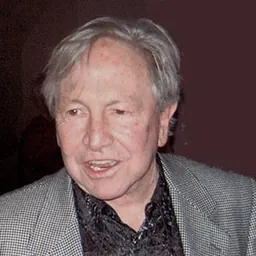
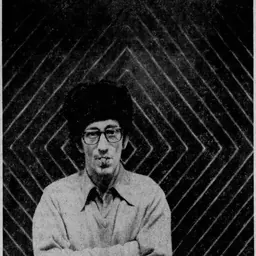
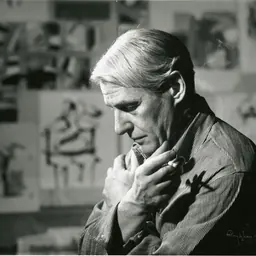
Named in this biography and alive at the same time




Related people
Same field, nearest in time

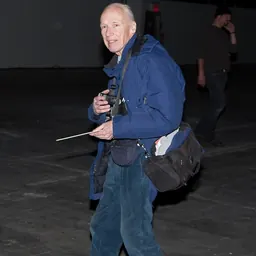



Contemporaries
People whose lives overlapped Hans Namuth's





Frequently asked questions
Who was Hans Namuth?
American photographer (1915–1990)
When was Hans Namuth born?
Hans Namuth was born on 17 March 1915 in Essen.
When did Hans Namuth die?
Hans Namuth died on 13 October 1990 in East Hampton.
What was Hans Namuth's occupation?
Hans Namuth was a photographer and artist.
What nationality was Hans Namuth?
Hans Namuth was German and American.
Sources & further reading
Cite this page
APA: Biography.guide. (2026). Hans Namuth. https://biography.guide/hans-namuth/
MLA: "Hans Namuth." Biography.guide, https://biography.guide/hans-namuth/.
Chicago: "Hans Namuth." Biography.guide. https://biography.guide/hans-namuth/.
Data last updated: 2026-09-22 · Spot an error? Report a correction.
Page generated 2026-09-27 05:15 UTC