
About Louis Kahn
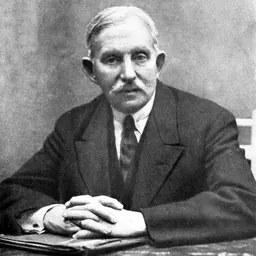
Lived 1901 – 1974 (aged 73). Louis Kahn was a Russian and American architect, university teacher, painter, designer, teacher and philosopher.
Louis Isadore Kahn (born Itze-Leib Schmuilowsky; – March 17, 1974) was an Estonian-born American architect based in Philadelphia. After working in various capacities for several firms in Philadelphia, he founded his own atelier in 1935. While continuing his private practice, he served as a design critic and professor of architecture at Yale School of Architecture from 1947 to 1957. From 1957 until his death, he was a professor of architecture at the School of Design at the University of Pennsylvania.
Kahn created a style that was monumental and monolithic; his heavy buildings for the most part do not hide their weight, their materials, or the way they are assembled. He was awarded the AIA Gold Medal and the RIBA Gold Medal. At the time of his death, he was considered by some as "America's foremost living architect." although some sources mention Pärnu.
He spent his early childhood in Kuressaare on the Baltic Sea island of Saaremaa, then part of the Governorate of Livonia of the Russian Empire. At the age of three, he saw coals in the stove and was captivated by the light of the coal. He put the coal in his apron, which caught on fire and burned his face. He carried these scars for the rest of his life.
In 1906, his family emigrated to the United States, as they feared that his father would be recalled into the military during the Russo-Japanese War. His birth year may have been inaccurately recorded in the process of immigration. According to his son's 2003 documentary film, the family could not afford pencils. They made their own charcoal sticks from burnt twigs so that Louis could earn a little money from drawings. Later he earned money by playing piano to accompany silent movies in theaters. He became a naturalized citizen of the United States on May 15, 1914. His father changed their name to Kahn in 1915.
Career After completing his Bachelor of Architecture in 1924, Kahn worked as senior draftsman in the office of the city architect, John Molitor. He worked on the designs for the 1926 Sesquicentennial Exposition.
In 1928, Kahn made a European tour. He was interested particularly in the medieval walled city of Carcassonne, France, and the castles of Scotland, rather than any of the strongholds of classicism or modernism. After returning to the United States in 1929, Kahn worked in the offices of Paul Philippe Cret, his former studio critic at the University of Pennsylvania, and then with Zantzinger, Borie and Medary in Philadelphia. Kahn worked with Howe in the late 1930s on projects for the Philadelphia Housing Authority and again in 1940, along with German-born architect Oscar Stonorov, for the design of housing developments in other parts of Pennsylvania. A formal architectural office partnership between Kahn and Oscar Stonorov began in February 1942 and ended in March 1947, which produced fifty-four documented projects and buildings.
Kahn did not arrive at his distinctive architectural style until he was in his fifties. Initially working in a fairly orthodox version of the International Style, he was strongly influenced by a stay as architect-in-residence at the American Academy in Rome during 1950, which marked a turning point in his career. After visiting the ruins of ancient buildings in Italy, Greece, and Egypt, he adopted a back-to-the-basics approach. He developed his own style, as influenced by earlier modern movements, but not limited by their sometimes-dogmatic ideologies. In the 1950s and 1960s, as a consultant architect for the Philadelphia City Planning Commission, Kahn developed several plans for the center of Philadelphia that were never executed.
In 1961, he received a grant from the Graham Foundation for Advanced Studies in the Fine Arts to study traffic movement in Philadelphia and to create a proposal for a viaduct system.
He described this proposal at a lecture given in 1962 at the International Design Conference in Aspen, Colorado:
In the center of town the streets should become buildings. This should be interplayed with a sense of movement which does not tax local streets for non-local traffic. There should be a system of viaducts which encase an area which can reclaim the local streets for their own use, and it should be made so this viaduct has a ground floor of shops and usable area. A model which I did for the Graham Foundation recently, and which I presented to Mr. Entenza, showed the scheme.
Kahn's teaching career began at Yale University in 1947. He eventually was named as the Albert F. Bemis Professor of Architecture and Planning at Massachusetts Institute of Technology in 1956. Kahn then returned to Philadelphia to teach at the University of Pennsylvania from 1957 until his death, becoming the Paul Philippe Cret Professor of Architecture. He also was a visiting lecturer at Princeton University School of Architecture from 1961 to 1967.
In 1974, Kahn died of a heart attack soon after a work trip to India. He was made a member of the American Academy of Arts and Sciences in 1968 and awarded the AIA Gold Medal, the highest award given by the AIA, in 1971, and the Royal Gold Medal by the Royal Institute of British Architects (RIBA), in 1972. In 1971, he received the Golden Plate Award of the American Academy of Achievement.
Personal life Kahn had three children with three women. With his wife Esther he had a daughter, Sue Ann. With Harriet Pattison, he had a son, Nathaniel Kahn. Anne Tyng was an architect and teacher, while Harriet Pattison was a pioneering landscape architect. Kahn's obituary in The New York Times, written by Paul Goldberger, mentions only Esther and his daughter by her as survivors.
Designs
Yale University Art Gallery, New Haven, Connecticut (1951–1953), the first significant commission of Louis Kahn. The ceilings, which are three feet (0.9 meters) thick, consist of a grid of triangular openings that draw the eye upward into dimly-lit, three-sided pyramidal spaces. These exposed spaces provide the means for channeling the heating, cooling, and electrical services throughout the galleries. Richards Medical Research Laboratories, University of Pennsylvania, Philadelphia, Pennsylvania (1957–1965), a breakthrough in Kahn's career that helped set new directions for modern architecture with its clear expression of served and servant spaces and its evocation of the architecture of the past. The Salk Institute, La Jolla, California (1959–1965) was to be a campus composed of three main clusters: meeting and conference areas, living quarters, and laboratories. Only the laboratory cluster, consisting of two parallel blocks enclosing a water garden, was built. The two laboratory blocks frame a long view of the Pacific Ocean, accentuated by a thin linear fountain that seems to reach for the horizon. It has been named "arguably the defining work" of Kahn. First Unitarian Church, Rochester, New York (1959–1969), named as one of the greatest religious structures of the twentieth century by Paul Goldberger, the Pulitzer Prize-winning architectural critic. Tall, narrow window recesses create an irregular rhythm of shadows on the exterior while four light towers flood the sanctuary walls with indirect, natural light. Shaheed Suhrawardy Medical College and Hospital, Dhaka, East Pakistan (now Bangladesh) Indian Institute of Management, Ahmedabad, in Ahmedabad, India (1961) Eleanor Donnelly Erdman Hall, Bryn Mawr College, Bryn Mawr, Pennsylvania (1960–1965), designed as a modern Scottish castle. Phillips Exeter Academy Library, Exeter, New Hampshire (1965–1972), awarded the Twenty-five Year Award by the American Institute of Architects in 1997. Its dramatic atrium features enormous circular openings into the book stacks. Kimbell Art Museum, Fort Worth, Texas (1967–1972), features repeated bays of cycloid-shaped barrel vaults with light slits along the apex, which bathe the artwork on display in an ever-changing diffuse light. Arts United Center, Fort Wayne, Indiana (1973), The only building realized of a ten-building Arts Campus vision, Kahn's only theatre and building in the Midwest Hurva Synagogue, Jerusalem, Israel, (1968–1974), unbuilt Yale Center for British Art, Yale University, New Haven, Connecticut (1969–1974) Franklin D. Roosevelt Four Freedoms Park, Roosevelt Island, New York (1972–1974), construction completed 2012 Jatiya Sangsad Bhaban (National Assembly Building) in Dhaka, East Pakistan (now Bangladesh) was Kahn's last project, developed 1962 to 1974. Kahn got the design contract with the help of Muzharul Islam, one of his students at Yale University, who worked with him on the project. The Bangladeshi Parliament building is the centerpiece of the national capital complex designed by Kahn, which includes hostels, dining halls, and a hospital. According to Robert McCarter, author of Louis I. Kahn, "it is one of the twentieth century's greatest architectural monuments, and is without question Kahn's magnum opus."
Timeline of works
All dates refer to the year project commenced 1935 – Jersey Homesteads Cooperative Development, Hightstown, New Jersey 1940 – Jesse Oser House, 628 Stetson Road, Elkins Park, Pennsylvania 1944 – Carver Court, Foundry Street, Coatsville, Pennsylvania 1947 – Phillip Q. Roche House, 2101 Harts Lane, Conshohocken, Pennsylvania 1950 – Morton and Lenore Weiss House, 2935 Whitehall Rd, East Norriton Township, Pennsylvania 1951 – Yale University Art Gallery, 1111 Chapel Street, New Haven, Connecticut 1952 – City Tower Project, Philadelphia, Pennsylvania (unbuilt) 1954 – Jewish Community Center (including Trenton Bath House), 999 Lower Ferry Road, Ewing, New Jersey 1954 – Jewish Community Center, New Haven, Connecticut, now Holcombe Green Hall, Yale School of Art. Remodeled in 2000 by Deborah Berke Partners. 1956 – Wharton Esherick Workshop at what is now the Wharton Esherick Museum,1520 Horseshoe Trail, Malvern, Pennsylvania (designed with Wharton Esherick and Anne Tyng) 1957 – Richards Medical Research Laboratories, University of Pennsylvania, 3700 Hamilton Walk, Philadelphia, Pennsylvania 1957 – Fred E. and Elaine Cox Clever House, 417 Sherry Way, Cherry Hill, New Jersey 1959 – Margaret Esherick House, 204 Sunrise Lane, Chestnut Hill, Philadelphia, Pennsylvania 1958 – Tribune Review Publishing Company Building, 622 Cabin Hill Drive, Greensburg, Pennsylvania 1959 – Salk Institute for Biological Studies, 10 North Torrey Pines Road, La Jolla, California 1959 – First Unitarian Church, 220 South Winton Road, Rochester, New York 1960 – Erdman Hall Dormitories, Bryn Mawr College, Morris Avenue, Bryn Mawr, Pennsylvania 1960 – Norman Fisher House, 197 East Mill Road, Hatboro, Pennsylvania 1961 – Point Counterpoint, a converted barge performance venue used by the American Wind Symphony Orchestra 1961 – Philadelphia's Mikveh Israel, Philadelphia, Pennsylvania (unbuilt) 1961 – Indian Institute of Management, Ahmedabad, India 1962 – Jatiya Sangsad Bhaban, the National Assembly Building of Bangladesh, Dhaka, Bangladesh 1963 – President's Estate, Islamabad, Pakistan (unbuilt) 1965 – Phillips Exeter Academy Library, Front Street, Exeter, New Hampshire 1965 – Phillips Exeter Academy Dining Hall, Elm Street, Exeter, New Hampshire 1966 – Kimbell Art Museum, 3333 Camp Bowie Boulevard, Fort Worth, Texas 1966 – Olivetti-Underwood Factory, Valley Road, Harrisburg, Pennsylvania 1966 – Temple Beth El of Northern Westchester, Chappaqua, New York 1968 – Hurva Synagogue, Jerusalem, Israel (unbuilt) 1969 – Yale Center for British Art, Yale University, 1080 Chapel Street, New Haven, Connecticut 1971 – Steven Korman House, Sheaff Lane, Fort Washington, Pennsylvania 1973 – Arts United Center (Formerly known as the Fine Arts Foundation Civic Center), Fort Wayne, Indiana 1974 – Franklin D. Roosevelt Four Freedoms Park, Roosevelt Island, New York City, completed 2012. 1976 – Point Counterpoint II, an improved concert venue for the American Wind Symphony Orchestra, is debuted posthumously 1979 – Flora Lamson Hewlett Library of the Graduate Theological Union, Berkeley, California
Legacy
Louis Kahn Memorial Park, S. 11th and Pine Streets, Philadelphia, Pennsylvania Louis Kahn's work infused the International style with a fastidious, highly personal taste. Isamu Noguchi called him "a philosopher among architects." He was concerned with creating strong formal distinctions between served spaces and servant spaces. What he meant by servant spaces was not spaces for servants, but rather spaces that serve other spaces, such as stairwells, corridors, restrooms, or any other back-of-house function such as storage space or mechanical rooms. His palette of materials tended toward heavily textured brick and bare concrete, the textures often reinforced by juxtaposition to highly refined surfaces such as travertine marble. Kahn argued that brick can be more than the basic building material:
If you think of Brick, you say to Brick, 'What do you want, Brick?' And Brick says to you, 'I like an Arch.' And if you say to Brick, 'Look, arches are expensive, and I can use a concrete lintel over you. What do you think of that, Brick?' Brick says, 'I like an Arch.' And it's important, you see, that you honor the material that you use. ... You can only do it if you honor the brick and glorify the brick instead of shortchanging it. His prominent apprentices include Muzharul Islam, Moshe Safdie, Robert Venturi, Jack Diamond, and Charles Dagit.
Many years after his death, Kahn continues to provoke controversy. Before his Franklin D. Roosevelt Four Freedoms Park at the southern tip of Roosevelt Island was built, the editors of The New York Times opined:
There's a magic to the project. That the task is daunting makes it worthy of the man it honors, who guided the nation through the Depression, the New Deal and a world war. As for Mr. Kahn, he died in 1974, as he passed alone through New York City's Penn Station. In his briefcase were renderings of the memorial, his last completed plan.
The editorial describes Kahn's plan as:
... simple and elegant. Drawing inspiration from Roosevelt's defense of the Four Freedoms—of speech and religion, and from want and fear—he designed an open 'room and a garden' at the bottom of the island. Trees on either side form a 'V' defining a green space, and leading to a two-walled stone room at the water's edge that frames the United Nations and the rest of the skyline.
A group spearheaded by William J. vanden Heuvel raised over $50 million in public and private funds between 2005 and 2012 to establish the memorial. Franklin D. Roosevelt Four Freedoms Park officially opened to the public on October 24, 2012.
In popular culture Kahn was the subject of the 2003 Oscar-nominated documentary film My Architect: A Son's Journey, presented by Nathaniel Kahn, his son. Kahn's complicated family life inspired the "Undaunted Mettle" episode of Law & Order: Criminal Intent.
In the 1993 film Indecent Proposal, character David Murphy (played by Woody Harrelson), referenced Kahn during a lecture to architecture students, attributing the quote "Even a brick wants to be something" to Kahn.
Pulitzer Prize-winning composer Lewis Spratlan, with collaborators Jenny Kallick and John Downey (Amherst College, class of 2003), composed the chamber opera Architect as a character study of Kahn. The premiere recording was due to be released in 2012 by Navona Records.
Gallery
Don’t just read it —
keep it.
Full-length biographies made to live with: read them, listen on the way to work, watch them tonight.
- E-book
- Audio
- Video
Instant download · yours to keep · every purchase keeps this site free
Important facts
People in Louis Kahn's life
Named in this biography and alive at the same time






Related people
Same field, nearest in time

Contemporaries
People whose lives overlapped Louis Kahn's

Frequently asked questions
Who was Louis Kahn?
Estonian-American architect (1901–1974)
When was Louis Kahn born?
Louis Kahn was born on 20 February 1901 in Kuressaare.
When did Louis Kahn die?
Louis Kahn died on 17 March 1974 in Pennsylvania Station, New York City.
What was Louis Kahn's occupation?
Louis Kahn was an architect, university teacher, painter, designer, teacher and philosopher.
What nationality was Louis Kahn?
Louis Kahn was Russian and American.
Sources & further reading
Cite this page
APA: Biography.guide. (2026). Louis Kahn. https://biography.guide/louis-kahn/
MLA: "Louis Kahn." Biography.guide, https://biography.guide/louis-kahn/.
Chicago: "Louis Kahn." Biography.guide. https://biography.guide/louis-kahn/.
Data last updated: 2026-09-20 · Spot an error? Report a correction.
Page generated 2026-09-27 05:27 UTC