
About Hans Mahle
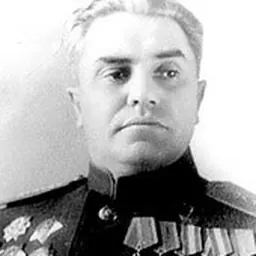
Lived 1911 – 1999 (aged 87). Hans Mahle was a German politician, german resistance to Nazism and ulbricht Group.
Hans Mahle (born Heinrich Mahlmann: 22 September 1911 – 18 May 1999) was a German party official, working successively for the Communist Party (KPD), the Socialist Unity Party (SED) and, after being co-opted into its leadership team in 1961, for the Socialist Unity Party of West Berlin. During the Second World War he became a founding member of the Soviet-sponsored National Committee for a Free Germany. As the war ended, on 30 April 1945, he was one of 30 men quietly delivered in a Soviet army truck to Bruchmühle, just outside Berlin, as a member of the so-called “Ulbricht Group”. He was part of the first of the three ten man cohorts, who had been flown across from the east, via Minsk, as far as the Oder, but the final part of the journey was undertaken with greater discretion. The men had arrived from Moscow with a meticulously detailed nation building plan, which would unfold in the Soviet occupation zone over the next few years. In a departure from the original plan, however, on 12 May 1945 Mahle was redeployed to an even more important project for which he was particularly well suited, on account of his wartime experience of radio technology and his talents, recognised and much prized by the Soviet party leadership, for “political education”. The Soviet military mayor-administrator in Berlin, Nikolai Berzarin ordered him to take charge of what became the East German Broadcasting Service. He remained a figure of major political importance in the Soviet occupation zone throughout the rest of the decade. However, by 1950 senior comrades were beginning to distance themselves from him, a clear sign that he was losing the leader's backing. In 1951 he was dismissed from his post on suspicion of espionage. His fall from grace was not as brutal nor as total as he might have feared at the time, and by 1956 he was the beneficiary of a gradual rehabilitation process. He never recovered his former status and influence within the party, however.
Life Provenance and early years Heinrich August Ludwig Mahlmann (as Mahle was registered and identified officially till changing his name in 1945) was born into a working-class family in Hamburg. He grew up, after his mother lost her jobs as a cook when he was not quite 6, in Hamburg-Eppendorf. He was the younger by two years of his parents’ two sons. His father had been conscripted and was away when the family had to move, Adolf Mahlmann had nevertheless had the good fortune to suffer a serious injury early during the war, whereby he had lost his trigger finger. His physical disability meant he was unable to fire a gun, and he was therefore kept way from the worst of the fighting for much of the time. Politics was in the blood. Adolf Mahlmann would be a co-founder of the Communist Party in Hamburg less than a decade after his younger son's birth, and would die as an inmate of the Buchenwald concentration camp on account of his political convictions and activism. At the time of his birth Hans Mahlmann's parents were both in domestic service, employed over many years at one of the three homes of the wealthy businessman and ship owner Edmund Siemers. Adolf Mahlmann (1876-1945), had worked at the Siemers’ house as the coachman. His mother, born Helene Grashorn (1878-1959), was the cook. The family lived, till 1917, in a basement apartment beneath their employer's 25 room Hamburg villa. After a period of homelessness with their worldly good transported in a little cart, they found a two-room apartment space. At Easter 1918 Mahlmann entered the local school, though the asthma he had contracted during an early childhood marked by wartime austerity and hunger meant that initially he missed two thirds of the classes. His health appears to have improved subsequently.
On leaving school, he undertook a commercial apprenticeship. By this time he had already been an early member of the local “Young Pioneer Children's organisation” for several years. Another early member of the movement whom he came to know as a child was Irma Thälmann. From 1928 he and Irma Thälmann were members of the same “Young Pioneer” troupe. Meanwhile, in 1926 he joined the Young Communists. Membership, at least in Mahlmann's case involved courier work for the party, initially within Germany and later internationally. Two years later, still aged just 17, but having nevertheless completed his two-year commercial apprenticeship, Mahlmann became district leader of the “Young Pioneers” for the entire Hamburg region, while at the same time taking on the leadership of the Young Communists for the organisation's north-western sub-region ("Unterbezirk Nordwest").
Communist Party In 1932 he reached the age of 21 and joined the Communist Party itself. He accepted nomination as “First Secretary of the Pioneer Organisation in Germany”.
Underground In the end, the meeting with Große became a week-long briefing session from a man who had been a member of the Communist Party almost since its creation and a leader in the Young Communists for almost as long. Later that year, he was on a “courier mission” when he was arrested and briefly imprisoned in Amsterdam. The episode may have involved an element of entrapment and false indictment involving a “Gestapo spy”, but sources are vague and sometimes inconsistent over the sequence of events in Mahle's political career at this time. On his arrival in Kuybyshev he received a mandate from the Comintern to start a re-education programme for the growing number of German prisoners of war being captured alive by the Red army. This led him, in December 1941, to the Spaski Sawod prison camp at Karaganda in Kazakhstan, as a member of a team of German communist instructors. One of these was Walter Ulbricht who by this time, like the political mentor of Mahle's teenage years, Ernst Thälmann, was emerging as one of the few Germans in whom Stalin was prepared to invest a measure of trust.
Reflecting positive assessments by his Soviet hosts of his re-education work at Karaganda, Mahle was invited to participate in a Comintern meeting at Ufa early in 1942 at which he was offered and accepted the opportunity to take charge at “Sturmadler” ("Storm Eagle"), which was a new German-language radio station designed to appeal to Hitler Youth members and other younger German soldiers who had ended up in Soviet captivity. In reality, “Sturmadler” would be operated under Mahle's direction as the youth channel of the so-called German People's Radio, though his power to control this important propaganda channel did not go uncontested. Anton Ackermann was supportive of Mahle, and for some it was enough that “Sturmadler” should be an anti-Hitler radio service, but when it came to more detailed considerations, other leading figures in the exiled German communist party were keen to have their own input as to the objectives and output of the channel. Some of the discussions became very heated.
Ulbricht group On 30 April 1945 a thirty-man national building team arrived under conditions of secrecy in Berlin from Moscow with a detailed plan for rebuilding and reconfiguring the part of Germany that would soon be administered as the Soviet occupation zone. The team, which some sources identify as three teams each of ten men, came to be known, after its existence was disclosed in 1955, as the Ulbricht Group. One ten man contingent, led by Gustav Sobottka, moved on to Mecklenburg in order to focus on the northern part of the Soviet zone. Another, under the leadership of Anton Ackermann, were based in Saxony. The third group, usually seen as the lead group, remained in Berlin under the leadership of Walter Ulbricht who had overall leadership (always subject to Soviet agreement) of the entire project, and would remain in power as the executive leader of the resulting East German state till 1971. (Some sources state that the Ulbricht group comprised not 30 men but 29, and that there were only 9 in the cohort that remained in Berlin during May 1945, under the direct control of Ulbricht himself.) That is because one of them, Wolfgang Leonhard, later became disenchanted by the absence of the genuine political pluralism in evidence, as the carefully prepared plans which he had understood to have been finalised by January 1945 in Moscow were changed during the implementation stage after May 1945 in Berlin. He was also surprised and increasingly appalled by the brutally autocratic attitude to German comrades that Walter Ulbricht adopted on returning to Berlin from Moscow. In 1949, Leonhard fled via Yugoslavia and from there, after about a year, to West Germany, where he reinvented himself as an authoritative historian and pundit. He was therefore airbrushed out of the records in East Germany, reducing the number reported of Ulbricht Group members from 30 to 29 in sources placing reliance on East German reports of the later Ulbricht era.
Mahle was initially installed in the city centre Tiergarten quarter which he already knew well from his time as an underground resistance activist. It was Walter Ulbricht who set the agenda, and Ulbricht's first priority for Mahle was that he should participate in the urgent business of making the key appointments. It was at Ulbricht's instigation that Mahle contacted the widely respected surgeon Ferdinand Sauerbruch who was persuaded, after a certain amount of discussion, to accept appointment as the first post-war Head of the Health department in the ”Magistrat von Berlin” (city administration). Another victory for Mahle was his success in persuading Andreas Hermes to take responsibility for food distribution. Hermes was widely seen as an exceptional administrator. He remained in charge at the reborn “Berliner Rundfunk” till August 1946.
“Order No. 2” issued on 10 June 1945 by the Soviet military administrators was followed a few days later with the reproduction in the press of the so-called “Call by the Central Committee from the Communist Party of Germany to the German People to rebuild and antifascist democratic Germany”.
Don’t just read it —
keep it.
Full-length biographies made to live with: read them, listen on the way to work, watch them tonight.
- E-book
- Audio
- Video
Instant download · yours to keep · every purchase keeps this site free
Important facts
People in Hans Mahle's life
Named in this biography and alive at the same time



Related people
Same field, nearest in time





Contemporaries
People whose lives overlapped Hans Mahle's





Frequently asked questions
Who was Hans Mahle?
German politician (1911-1999)
When was Hans Mahle born?
Hans Mahle was born on 22 September 1911 in Hamburg.
When did Hans Mahle die?
Hans Mahle died on 18 May 1999 in Berlin.
What was Hans Mahle's occupation?
Hans Mahle was a politician, german resistance to Nazism and ulbricht Group.
What nationality was Hans Mahle?
Hans Mahle was German.
Sources & further reading
Cite this page
APA: Biography.guide. (2026). Hans Mahle. https://biography.guide/hans-mahle/
MLA: "Hans Mahle." Biography.guide, https://biography.guide/hans-mahle/.
Chicago: "Hans Mahle." Biography.guide. https://biography.guide/hans-mahle/.
Data last updated: 2026-09-22 · Spot an error? Report a correction.
Page generated 2026-09-27 05:11 UTC