
About Hans K. Ziegler
Lived 1911 – 1999 (aged 88). Hans K. Ziegler was a German and American physicist, military flight engineer, inventor and electrical engineer.
Hans Karl Ziegler (March 1, 1911 – December 11, 1999) was a German-American engineer and physicist who was a pioneer in the development of communication satellites and the use of photovoltaic solar cells to power space satellites. A native of Germany, he served as a research leader during World War II and later immigrated to the United States under Operation Paperclip, becoming a key figure in early American space and military electronics programs. Ziegler spent three decades at the U.S. Army Signal Corps laboratories (later Electronics Command) at Fort Monmouth, New Jersey, ultimately rising to the position of Chief Scientist and Technical Director of the Army’s electronics research and development laboratory. He played a crucial role in introducing solar power for spacecraft, earning the moniker "father of spacecraft solar power" for his early advocacy of solar energy in satellites. Ziegler received several prestigious awards for his work, including the Army’s Exceptional Civilian Service Award, and is one of the few Operation Paperclip scientists to have been honored by both Nazi Germany and the United States for his contributions.
Personal life and education Ziegler was born on March 1, 1911, in Munich, Germany. He attended the Technische Hochschule (Technical University of Munich), where he studied electrical engineering and earned his doctorate (Ph.D.) in 1936. In this capacity, Ziegler’s work shifted toward military electronics for the Wehrmacht and Luftwaffe. His projects included developing electronic fuzes for bombs, shells, and mines, as well as other communications and electronic systems needed by the German military. Over Navy skepticism about the new technology, Ziegler persistently advocated for photovoltaic power; Vanguard 1 ended up equipped with four small solar cell panels that recharged its batteries. The satellite became the world’s first spacecraft powered by solar energy, and its instruments, powered by the sun, operated successfully for over seven yearsg. This achievement proved the viability of solar photovoltaics in space and established solar panels as the standard power source for satellites thereafter. Communications satellites: Ziegler also contributed to the design of the first communications satellite. His division at Fort Monmouth developed the electronic communications payload for Project SCORE (Signal Communications by Orbiting Relay Equipment). Launched in December 1958, SCORE was the world’s first communications satellite, relaying a recorded message from President Eisenhower. Ziegler’s work on SCORE’s equipment helped demonstrate the concept of using orbiting vehicles to send messages across the globe. Weather and science satellites: The Signal Corps under Ziegler provided key instrumentation for early scientific satellites. His team built the cloud cover imaging electronic package flown on Explorer 7 (1959 Alpha) and contributed to the TIROS-1 weather satellite launched in 1960. Ziegler himself served as a Defense Department delegate to the International Geophysical Year (IGY) meetings; he was part of the U.S. delegation to the Fifth CSAGI conference in Moscow in 1958 during the IGY, sharing expertise as satellites began to be used for scientific research. In 1964, he also advised on U.S. scientific activities in Antarctica (at the South Pole station) under the National Science Foundation’s direction.
Ziegler’s foresight in applying solar power to space systems was particularly influential. After examining Bell Laboratories’ new silicon solar cells in May 1954, he immediately recognized their potential for aerospace use. In a 1954 report, he wrote that the silicon solar cell “may well render [itself] into an important source of electrical power” and noted that if all building rooftops were equipped with solar cells, they could generate enough electricity to meet the country’s power needs. The following year, in September 1955, Ziegler famously told Major General James Dunne O'Connell, the head of the Signal Corps, that “in the long run, mankind has no choice but to turn to the sun if it wants to survive”. His persistent advocacy for photovoltaic power led directly to the solar-enabled Vanguard and Explorer satellites, validating the concept.
Chief Scientist and Later Career On August 1, 1959, Ziegler was formally appointed Chief Scientist of the U.S. Army Signal Research and Development Laboratory at Fort Monmouth, succeeding Dr. Harold Zahl in the lab’s top scientific post. In this role, he oversaw all research initiatives of the laboratory during a critical period of technological growth spurred by the Space Race. When the U.S. Army reorganized its R&D structure in 1962–63, creating the Electronics Command (ECOM) under Army Materiel Command, Ziegler was appointed Deputy for Science and Chief Scientist of the new U.S. Army Electronics Command in 1963. He continued to guide Army research in communications, radar, and electronic devices through the 1960s. In 1971, Ziegler became Director of the U.S. Army Electronics Technology and Devices Laboratory (ETDL), a position he held until his retirement in 1977. As director of ETDL, he managed advanced research in electronics and materials, including semiconductor technology and emerging innovations that would impact military communications and computing equipment.
Throughout his U.S. career, Ziegler was a prolific contributor to scientific literature and a leader in professional circles. He published numerous technical papers and held several patents related to electronics and satellite technology. Ziegler was elected a Fellow of the IEEE (Institute of Electrical and Electronics Engineers) for his achievements, and he was also named a fellow of the American Academy of Science. He served as president of the Fort Monmouth chapter of the Armed Forces Communications and Electronics Association in 1960–61, fostering collaboration between military labs and industry.
Legacy and Honors Ziegler received numerous awards for his work. In 1963, the U.S. Department of Defense honored him with the Meritorious Civilian Service Award, recognizing him as a “world pioneer in communications satellites and solar energy systems to power satellites”. Upon his retirement in 1977, Ziegler was awarded the Army’s highest civilian decoration, the Decoration for Exceptional Civilian Service, for his outstanding contributions over three decades. (He is one of the very few individuals to have held high honors from both the Third Reich and the United States, having been decorated with Nazi Germany’s Golden Party Badge and the U.S. Army’s Exceptional Civilian Service Medal in his lifetime.) In addition to his IEEE Fellowship, Ziegler was active in scholarly societies and was a member of the New York Academy of Sciences and other professional organizations.
Don’t just read it —
keep it.
Full-length biographies made to live with: read them, listen on the way to work, watch them tonight.
- E-book
- Audio
- Video
Instant download · yours to keep · every purchase keeps this site free
Important facts
People in Hans K. Ziegler's life
Named in this biography and alive at the same time
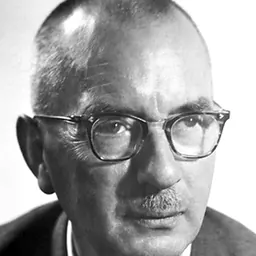


Related people
Same field, nearest in time
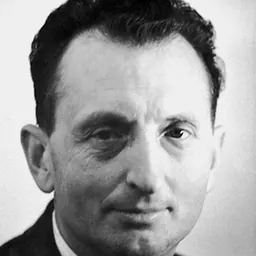




Contemporaries
People whose lives overlapped Hans K. Ziegler's






Frequently asked questions
Who was Hans K. Ziegler?
German physicist (1911-1999)
When was Hans K. Ziegler born?
Hans K. Ziegler was born on 1 March 1911 in Munich.
When did Hans K. Ziegler die?
Hans K. Ziegler died on 11 December 1999 in New Jersey, United States.
What was Hans K. Ziegler's occupation?
Hans K. Ziegler was a physicist, military flight engineer, inventor and electrical engineer.
What nationality was Hans K. Ziegler?
Hans K. Ziegler was German and American.
Sources & further reading
Cite this page
APA: Biography.guide. (2026). Hans K. Ziegler. https://biography.guide/hans-k-ziegler/
MLA: "Hans K. Ziegler." Biography.guide, https://biography.guide/hans-k-ziegler/.
Chicago: "Hans K. Ziegler." Biography.guide. https://biography.guide/hans-k-ziegler/.
Data last updated: 2026-09-20 · Spot an error? Report a correction.
Page generated 2026-09-27 05:03 UTC