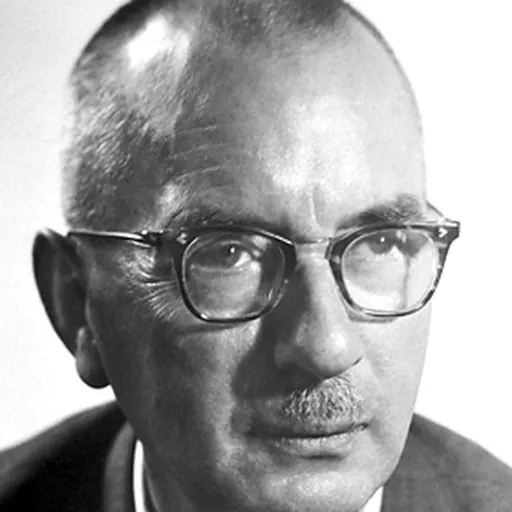
About Karl Ziegler
Lived 1898 – 1973 (aged 74). Karl Ziegler was a German chemist, engineer, university teacher and art collector, known for Organoaluminium chemistry, Organolithium reagent and Thorpe reaction.
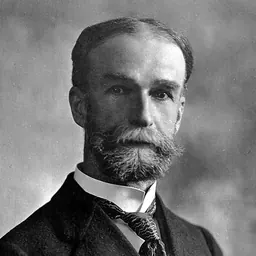
Karl Waldemar Ziegler (; 26 November 1898 – 12 August 1973) was a German chemist who won the Nobel Prize in Chemistry in 1963, with Giulio Natta, for work on polymers. The Nobel Committee recognized his "excellent work on organometallic compounds [which]...led to new polymerization reactions and ... paved the way for new and highly useful industrial processes".
Biography
Early life and education
Karl Ziegler was born on 26 November 1898 in Helsa near Kassel, Germany and was the second son of Karl Ziegler, a Lutheran minister, and Luise Rall Ziegler. He attended Kassel-Bettenhausen in elementary school. An introductory physics textbook first sparked Ziegler's interest in science. It drove him to perform experiments in his home and to read extensively beyond his high school curriculum. He was also introduced to many notable individuals through his father, including Emil Adolf von Behring, recognized for the diphtheria vaccine. His extra study and experimentation help explain why he received an award for most outstanding student in his final year at high school in Kassel, Germany. He received his Ph.D. in 1920, studying under Karl von Auwers. In 1933 Ziegler published his first major work on large ring systems, "Vielgliedrige Ringsysteme" which presented the fundamentals for the Ruggli-Ziegler dilution principle.
In 1936 he became Professor and Director of the Chemical Institute (Chemisches Institut) at the University of Halle-Saale and was also a visiting lecturer at the University of Chicago. received the War Merit Cross 2nd Class in October 1940.
From 1943 until 1969, Ziegler was the Director of the Max Planck Institute for Coal Research (Max-Planck-Institut fur Kohlenforschung) formerly known as the Kaiser-Wilhelm Institute for Coal Research (Kaiser-Wilhelm-Institut fur Kohlenforschung) in Mülheim an der Ruhr as a successor to Franz Fischer. At least one of his grandchildren, Cordula Witte, attended his Nobel Prize reception as there is a picture of the two of them happily dancing.
As a man of many discoveries, Karl Ziegler was also a man of many patents. As a result of his patent agreement with the Max Planck Institute, Ziegler was a wealthy man. With part of this wealth, he set up the Ziegler Fund with some 40 million deutsche marks to support the institute's research.
Many-membered ring compounds
Ziegler's work with many-membered ring compounds also utilized the reactive nature of alkali metal compounds. He used strong bases such as the lithium and sodium salts of amines, to accomplish the cyclization of long-chain hydrocarbons possessing terminal cyano groups. The initially formed ring compound was then converted to the desired macrocyclic ketone product. Ziegler's synthetic method, which included running reactions at high dilution to favor the intramolecular cyclization over competing intermolecular reactions, resulted in yields superior to those of existing procedures (Laylin): he was able to prepare large-ringed alicyclic ketones, C14 to C33, in yields of 60–80%. Ziegler and co-workers published the first of their series of papers on the preparation of large ring systems in 1933. For his work in this area and in free-radical chemistry he was awarded the Liebig Memorial Medal in 1935. Wilhelm Exner Medal (1971). Memorial tablet of the German Chemical Society under the Historic Landmarks of Chemistry program (Historische Stätten der Chemie) at the Max Planck Institute for Coal Research in Mülheim an der Ruhr (2008) Honorary doctorates from the Technical University of Hannover, Giessen University, University of Heidelberg and Darmstadt Technical University The Karl-Ziegler-Schule in Mülheim was named after Ziegler The Karl Ziegler Foundation is located at the German Chemical Society and gives the Science Award, the (worth 50,000 euros)
Don’t just read it —
keep it.
Full-length biographies made to live with: read them, listen on the way to work, watch them tonight.
- E-book
- Audio
- Video
Instant download · yours to keep · every purchase keeps this site free
Important facts
People in Karl Ziegler's life
Named in this biography and alive at the same time



Related people
Same field, nearest in time


Contemporaries
People whose lives overlapped Karl Ziegler's




Frequently asked questions
Who was Karl Ziegler?
German chemist (1898–1973)
When was Karl Ziegler born?
Karl Ziegler was born on 26 November 1898 in Helsa.
When did Karl Ziegler die?
Karl Ziegler died on 12 August 1973 in Mülheim an der Ruhr.
What was Karl Ziegler's occupation?
Karl Ziegler was a chemist, engineer, university teacher and art collector.
What was Karl Ziegler known for?
Karl Ziegler was known for Organoaluminium chemistry, Organolithium reagent, Thorpe reaction, Wohl–Ziegler bromination, Ziegler process and Ziegler–Natta catalyst.
What nationality was Karl Ziegler?
Karl Ziegler was German.
Sources & further reading
Cite this page
APA: Biography.guide. (2026). Karl Ziegler. https://biography.guide/karl-ziegler/
MLA: "Karl Ziegler." Biography.guide, https://biography.guide/karl-ziegler/.
Chicago: "Karl Ziegler." Biography.guide. https://biography.guide/karl-ziegler/.
Data last updated: 2026-09-23 · Spot an error? Report a correction.
Portrait: Wikimedia Commons · author & licence
Page generated 2026-09-27 05:06 UTC