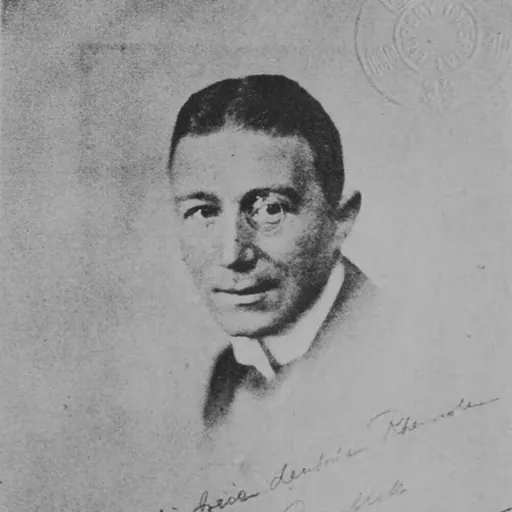
About Hans Adam Dorten
Lived 1880 – 1963 (aged 83). Hans Adam Dorten was a German judge, politician, lawyer, jurist and prosecutor.
Hans Adam Dorten (10 February 1880 – April 1963) was a German career lawyer who in 1919 became a separatist leader in the militarily occupied Rhineland, following German defeat in the First World War.
The period was a confused one during which political objectives were not always firmly fixed, nor clearly set out, but it is understood that Dorten's preference was for a Rhineland separated from "protestant" Prussia, and economically more closely aligned with France. At the end of 1923, a final attempt to establish an independent Rhenish state having failed, he escaped to Nice in France: here he resumed his legal career and worked on his memoirs.
Life
Early years Hans Adam Dorten was born in Endenich and attended primary and secondary schools in nearby Bonn. His father was the wealthy owner of a porcelain manufacturing company. On leaving school, he went on to study Law at Heidelberg University, the Ludwig-Maximilians-Universität München, and the University of Bonn, also receiving a Doctorate in Law in 1907 from Leipzig University. He had already, in August 1902, taken his "Civil Service Oath", and he also worked for a period at the District Prosecutor's Office in Düsseldorf. He then took a job at the district court in Waldbröl where, in 1912, he was appointed a junior judge. He was recorded as a "non-immigrant", intending to visit Cleveland and San Francisco.
First World War Dorten was appointed State prosecutor in Berlin's District Court Number 3 with effect from 1 October 1914. Before he could take up his new appointment, however, war intervened: the opening of August 1914 found Germany scrambling to react to the Austrian declaration, on 28 July, of war against Serbia. Dorten's future career path was changed on 3 August 1914 when he was conscripted into the army.
During the war he served in the 54th "Commando" Corps, ending up as a junior officer (Hauptmann). His agenda was anti-Socialist and pro-Rhineland. He financed his activities with his accumulated personal assets. He had married a very rich wife. Dorten's political purposes were not always clear-cut to contemporaries, but in retrospect many historians believe that his defining political objective was a Rhenish Republic, to operate at least initially as a part of the emerging German state. Despite extensive contacts with local political committees and with leading Rhineland politicians from the political centre such as Konrad Adenauer, Dorten was unable to gain a position of leadership in the separatist movement, however. That was partly because of his own uncompromising rejection of any sort of accommodation with the (moderately left-wing residual majority) Social Democratic Party, and partly because he was calling for an economic rapprochement with France. the regional newspaper. It subsequently transpired that also on various occasions during 1919, he held talks at his home at Hilda Street 14 in Wiesbaden with officers from the French army of occupation, including General Mangin himself. The French made no secret of their enthusiasm the idea of peeling the Rhineland off from the rest of Germany,
Proclamation of the Rhenish Republic in Wiesbaden The Rhenish Republic was proclaimed in Wiesbaden on 1 June 1919, with Hans Adam Dorten as its "president". After a week, it was impossible to deny that the "Putsch" had failed, in the face of large-scale popular protests, and opposition from all the municipal councils and other relevant organisations in the region. Dorten had expected backing from the French occupation forces, but they took a position of strict neutrality. The founders of the Rhenish Republic were unable to pursue their project in the face of combined opposition from the people and the municipalities.
A warrant was issued by the Leipzig based Supreme Court for Dorten's arrest, on a charge of treason; but the warrant could not be executed in the Rhineland due to the occupation.
Separatist agitation after the failed "Putsch" Dorten did not give up. 26 August 1923 found him in Mönchengladbach, attempting to address a rally. The separatists were attacked by "nationalists loyal to the Berlin government", and Dorten had to pretend to be an American journalist in order to escape the mob.
There was another attempt to establish a Rhenish Republic in October 1923, and Dorten again played a leading role. The volume was published only in 1945, to be followed by a German language translation in 1979.
Don’t just read it —
keep it.
Full-length biographies made to live with: read them, listen on the way to work, watch them tonight.
- E-book
- Audio
- Video
Instant download · yours to keep · every purchase keeps this site free
Important facts
People in Hans Adam Dorten's life
Named in this biography and alive at the same time
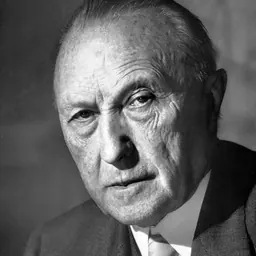
Related people
Same field, nearest in time

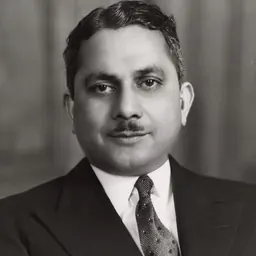

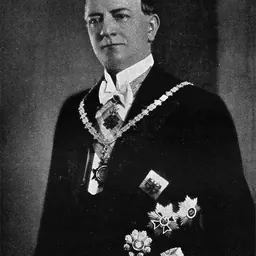
Contemporaries
People whose lives overlapped Hans Adam Dorten's




Frequently asked questions
Who was Hans Adam Dorten?
German judge, politician and lawyer (1880-1963)
When was Hans Adam Dorten born?
Hans Adam Dorten was born on 10 February 1880 in Endenich.
When did Hans Adam Dorten die?
Hans Adam Dorten died on 1 April 1963 in Nice.
What was Hans Adam Dorten's occupation?
Hans Adam Dorten was a judge, politician, lawyer, jurist and prosecutor.
What nationality was Hans Adam Dorten?
Hans Adam Dorten was German.
Sources & further reading
Cite this page
APA: Biography.guide. (2026). Hans Adam Dorten. https://biography.guide/hans-adam-dorten/
MLA: "Hans Adam Dorten." Biography.guide, https://biography.guide/hans-adam-dorten/.
Chicago: "Hans Adam Dorten." Biography.guide. https://biography.guide/hans-adam-dorten/.
Data last updated: 2026-09-22 · Spot an error? Report a correction.
Portrait: Wikimedia Commons · author & licence
Page generated 2026-09-27 04:59 UTC