
About Hannah Tracy Cutler
Lived 1815 – 1896 (aged 80). Hannah Tracy Cutler was an American journalist, homeopath, suffragette, abolitionism in the United States and suffragist.
National stature
Although Tracy did not attend the first three National Women's Rights Conventions, held in the East, she did attend the 1853 convention, held in Cleveland, as well as the 1854 convention, in Philadelphia, where she spoke alongside Ernestine Rose, Frances Gage, Lucy Stone, Lucretia Mott, Thomas Wentworth Higginson and William Lloyd Garrison. Cutler expressed to the convention her belief that the spirit of the Bible was more important than the letter. Rather than focusing on isolated passages that had no modern-day application, Cutler recommended her audience "proclaim the beautiful spirit breathed through all its commands and precepts." After the 1855 convention that met in Cincinnati adopted a plan of circulating woman suffrage petitions in as many states as possible, Tracy agreed to take up the work in Illinois.
In late May 1856, Cutler was on her way to preside over a Woman's Temperance Convention in Chicago when she heard about arson and crimes committed in Lawrence, Kansas against abolitionists. During the successful temperance convention, Cutler conceived and planned for a Woman's Kansas Aid Convention to follow two weeks afterward, for the purpose of helping displaced citizens and preventing Kansas from becoming a slave state. Frances Dana Barker Gage and Josephine Griffing assisted in the work of gathering supplies and forwarding them to those in need in Kansas. Spurred by the women's effort, Gerrit Smith, Thurlow Weed and other politically active men organized a National Kansas Aid Convention in Buffalo, New York, beginning July 10. Cutler and Gage attended; soon, the Woman's Society was consolidated into the national group. resulting in legislation for expanded property rights for New York women passed the next year. Cutler consulted repeatedly with Abraham Lincoln before he left for Washington, D.C.,
During the Civil War, Cutler served as president of the Western Union Aid Commission in Chicago. From 1862 to 1864, the Commission worked to provide for war refugees of all colors streaming into Chicago. Her son John Martin Tracy and the sons of Colonel Samuel Cutler served in the Union Army. In 1869, Cutler was approached by Anthony and Stanton to join their splinter group of more radical feminists. Cutler kept notes of the meetings, and provided Lucy Stone with a typewritten account of the events which led to the formation, behind Stone's back, of the National Woman Suffrage Association (NWSA). The machinations of Susan B. Anthony and Elizabeth Cady Stanton were described in detail by Cutler. Stone responded to Anthony and Stanton by forming the American Woman Suffrage Association (AWSA) in November, in Cleveland, November 24–25, 1869 in front of a "vast hall being well filled." Cutler chaired the afternoon session on the second day; then served as president of AWSA in 1870–1871. then at a mass meeting for Ohioans in Dayton in late April. At their home in Cleveland, Samuel Cutler "could not endure the spring winds on the Lakes," so the two moved back to Illinois in 1870. She continued, "The women of America pay taxes for the support of the Government, and their consent should be had in matters affecting their welfare and their lives. ...the only way to remedy the evil is to get the ballot." A woman suffrage convention was held in Mt. Pleasant in mid-June; Cutler was the leading speaker, and helped the Iowans form the Iowa Woman Suffrage Society. Later that summer, Bloomer and Cutler lectured in Oskaloosa, Iowa and sparked the formation of a woman suffrage society there, building on a much earlier visit by Frances Dana Barker Gage in 1854. In December 1870, Cutler spoke several times in Lincoln, Nebraska while on her way to California. "Her womanliness and logic won and convinced her hearers", but didn't result in the formation of a local woman suffrage organization until Susan B. Anthony came through later that winter.
In 1871, Cutler made the opening and closing addresses at the annual AWSA convention in Philadelphia. After speeches by Lucy Stone, Julia Ward Howe, Lucretia Mott and others, Cutler spoke about the right to vote:
Samuel Cutler died in 1873.
From December 1881 through April 1882, Cutler lived in Hollister, California. She gave a well-received speech from a Congregational pulpit one Sunday in Hollister in early April, and was reported as being "en route for the East".
In 1882, under consideration in Nebraska was an amendment which would remove the word 'male' from the constitution and thus allow women to vote. Both AWSA and NWSA held their annual conventions in Omaha, Nebraska in September for the purpose of influencing votes. Lucy Stone, Henry Browne Blackwell and Cutler were among the featured speakers at the AWSA convention in mid-September, and all three remained afterward to canvass the state. From October 2 to November 4, Cutler gave 24 speeches while touring by rail. The effort failed, but one of the 11 counties that passed the measure was where Cutler spent the days immediately preceding the vote. Cutler finished writing a biographical essay about her first husband and about her own life's work. The essay was published in a collection of biographies about "Eminent Citizens" of Illinois. On December 13, 1884 Cutler published in the Woman's Journal a eulogy for her longtime friend, Frances Dana Barker Gage.
On December 21, 1887, Cutler was appointed by Anthony and Stone to a committee tasked with joining the AWSA with the NWSA to form the National American Woman Suffrage Association (NAWSA). For the next two years, Cutler worked with Alice Stone Blackwell and Rachel Foster Avery to help establish a common structure and mission for the combined organization.
Death and legacy Cutler's daughter Melanie Tracy Earle followed in her mother's footsteps to become a journalist. She died in Ocean Springs, Mississippi in 1889. Melanie left behind her husband Parker Earle, a horticulturist, who died in 1917.
In 1892 at the Ocean Springs home of her daughter, writer and journalist Mary Tracy Mott, Hannah Tracy Cutler suffered a paralytic attack on top of an advancing case of glaucoma.
Cutler died February 11, 1896 Phillipia, or a Woman's Question (Dwight, Illinois, 1886) The Fortunes of Michael Doyle, or Home Rule for Ireland (Chicago, 1886)
Don’t just read it —
keep it.
Full-length biographies made to live with: read them, listen on the way to work, watch them tonight.
- E-book
- Audio
- Video
Instant download · yours to keep · every purchase keeps this site free
Important facts
People in Hannah Tracy Cutler's life
Named in this biography and alive at the same time

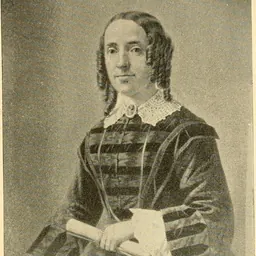
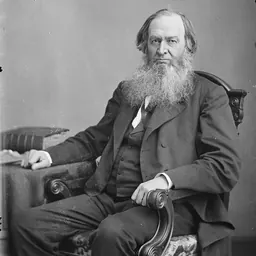

Related people
Same field, nearest in time

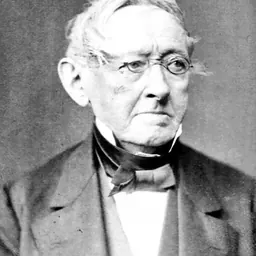

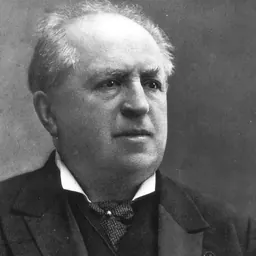
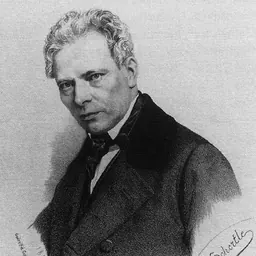
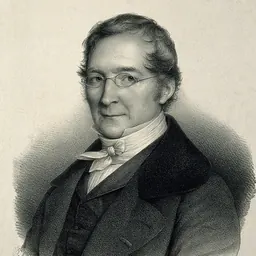
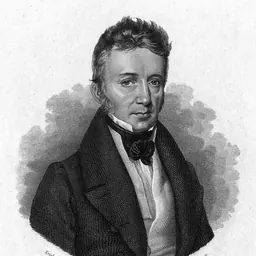
Contemporaries
People whose lives overlapped Hannah Tracy Cutler's


Frequently asked questions
Who was Hannah Tracy Cutler?
American abolitionist (1815–1896)
When was Hannah Tracy Cutler born?
Hannah Tracy Cutler was born on 25 December 1815 in Becket.
When did Hannah Tracy Cutler die?
Hannah Tracy Cutler died on 11 February 1896 in Ocean Springs.
What was Hannah Tracy Cutler's occupation?
Hannah Tracy Cutler was a journalist, homeopath, suffragette, abolitionism in the United States and suffragist.
What nationality was Hannah Tracy Cutler?
Hannah Tracy Cutler was American.
Sources & further reading
· Wikipedia: Hannah Tracy Cutler
· DBpedia: Hannah Tracy Cutler
Cite this page
APA: Biography.guide. (2026). Hannah Tracy Cutler. https://biography.guide/hannah-tracy-cutler/
MLA: "Hannah Tracy Cutler." Biography.guide, https://biography.guide/hannah-tracy-cutler/.
Chicago: "Hannah Tracy Cutler." Biography.guide. https://biography.guide/hannah-tracy-cutler/.
Data last updated: 2026-09-22 · Spot an error? Report a correction.
Page generated 2026-09-27 05:02 UTC