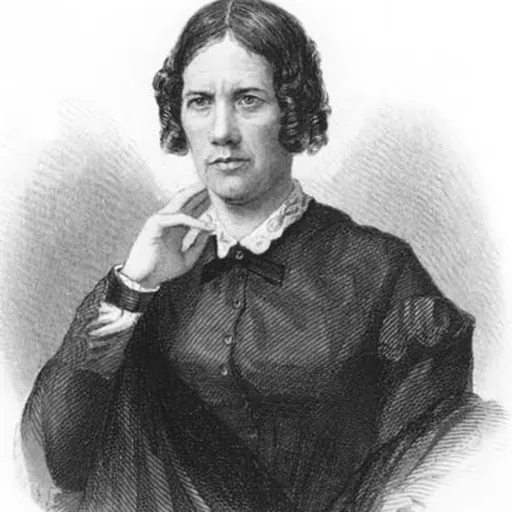
About Frances Dana Barker Gage
Lived 1808 – 1884 (aged 76). Frances Dana Barker Gage was an American writer, poet, children's writer, journalist, women's rights activist and novelist.
The Colonel Joseph Barker House in April 2010. It is the house in which Gage grew up.
Frances Dana Barker Gage (pen name, Aunt Fanny; October 12, 1808November 10, 1884) was a leading American reformer, feminist and abolitionist. She worked closely with Susan B. Anthony and Elizabeth Cady Stanton, along with other leaders of the early women's rights movement in the United States. She was among the first to champion voting rights for all citizens without regard to race or gender and was a particularly outspoken supporter of giving newly freed African American women the franchise during Reconstruction, along with African American men who had formerly been slaves.
Early life and education Frances Dana Barker was born near Marietta, Ohio on October 12, 1808, the daughter of farmers Elizabeth Dana (1771–1835) and Col. Joseph Barker (1765–1843); her family's house is still in existence and has been designated a historic site. Frances was the tenth of eleven children. In 1788 the Barkers left New Hampshire and crossed the Alleghenies with Rufus Putnam, and were among the first settlers in the United States Northwest Territory. On January 1, 1829, she married James L. Gage (1800–1863), an abolitionist lawyer from McConnelsville, Ohio. He was a Universalist and a friend of the evangelist Stephen R. Smith. Traveling Universalist preachers, like George Rogers and Nathaniel Stacy, often stayed in the Gage household.
Career
Activism Gage wrote that her woman suffrage work began when she was ten years old, in 1818. She recalled an incident in which she helped to make a barrel and was reprimanded by her father. As she returned to her place, she heard her father lament to the cooper, "What a pity she was not a boy!" Gage wrote that this was a turning point for her, the incident bringing up hatred to the limitations of sex and laying the foundation for her later activism. lengthening the speech, adding the oft-repeated "ain't I a woman" refrain, and rendering it in a minstrel-like imitation of the speech of Southern slaves – speech patterns which Truth, having grown up in New York speaking Dutch, did not possess. Despite its dubious historicity and racist undertones, her version has become the standard text and account of that famous speech.
In 1853, she moved to St. Louis, Missouri, where she was often threatened with violence due to her anti-slavery views. Gage's radicalism had limited outlets in a slave state, such as Missouri. She and her family moved back to Columbus, Ohio in 1860. James' health was declining and the family had survived three mysterious fires, likely brought on by Frances' abolitionist views.
When we hold the ballot, we shall stand just there. Men will forget to tell us that politics are degrading. They will bow low, and actually respect the women to whom they now talk platitudes; and silly flatteries, sparkling eyes, rosy cheeks, pearly teeth, ruby lips, the soft and delicate hands of refinement and beauty, will not be the burden of their song; but the strength, the power, the energy, the force, the intellect and the nerve, which the womanhood of this country will bring to bear, and which will infuse itself through all the ranks of society, must make all its men and women wiser and better.
Publications Gage wrote children's books and poems, under the pen name of "Aunt Fanny." Her books include Fanny at School, Fanny's Birthday, and Fanny's Journey. She wrote for The Ohio Cultivator and other regional journals; she portrayed herself as a warm, domestic persona who offered advice and guidance to isolated housewives in Ohio. She wrote essays, letters, poetry, and novels. Among the other publications to which she contributed were the Western Literary Magazine, New York's Independent, Missouri Democrat, Cincinnati's The Ladies' Repository, Field Notes, and The National Anti-Slavery Standard, as well as being an early contributor to the Saturday Review. Gage published Poems (1867); Elsie Magoon, or the Old Still-House in the Hollow: A Tale of the Past (1872); Steps Upward (1873); and Gertie's Sacrifice, or Glimpses of Two Lives (1869). "A Hundred Years Hence" was a hymn composed by Gage and first sung in 1875.
Oppression and war will be heard of no more Nor the blood of a slave leave his print on our shore, Conventions will then be a useless expense, For we'll all go free suffrage, a hundred years hence.
Personal life She did not practice her religion all her life.
There came a time when Universalists refused to go with me as an abolitionist, an advocate for the rights of women, for earnest temperance pleaders," she wrote late in life. "Then it came to me that Christ's death as an atonement for sinners was not truth, but he had died for what he believed to be truth. Then came the war, then trouble, then paralysis, and for 14 years I have not listened to a sermon because I am too great a cripple. I have read much, thought much, and feel that life is too precious to be given to doctrines. In the autumn of 1862, Frances and her daughter Mary traveled to the Sea Islands in South Carolina to train ex-slaves. In 1863, James Gage became critically ill and died in Columbus, Ohio. Frances Gage suffered a debilitating stroke in 1867. She died in Greenwich, Connecticut on November 10, 1884.
Selected works Aunt Fanny series Fanny at School Fanny's Birthday Fanny's Journey
Other fiction Elsie Magoon, or the Old Still-House in the Hollow: A Tale of the Past (1872) Steps Upward (1873) Gertie's Sacrifice, or Glimpses of Two Lives (1869)
Poetry Poems (1867)
Hymns "A Hundred Years Hence"
Don’t just read it —
keep it.
Full-length biographies made to live with: read them, listen on the way to work, watch them tonight.
- E-book
- Audio
- Video
Instant download · yours to keep · every purchase keeps this site free
Important facts
People in Frances Dana Barker Gage's life
Named in this biography and alive at the same time

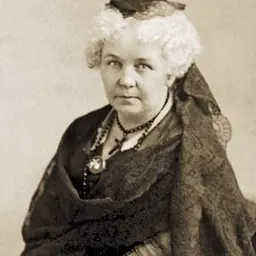


Related people
Same field, nearest in time



Contemporaries
People whose lives overlapped Frances Dana Barker Gage's





Frequently asked questions
Who was Frances Dana Barker Gage?
American writer (1808-1884)
When was Frances Dana Barker Gage born?
Frances Dana Barker Gage was born on 12 October 1808 in Marietta.
When did Frances Dana Barker Gage die?
Frances Dana Barker Gage died on 10 November 1884 in Greenwich.
What was Frances Dana Barker Gage's occupation?
Frances Dana Barker Gage was a writer, poet, children's writer, journalist, women's rights activist and novelist.
What nationality was Frances Dana Barker Gage?
Frances Dana Barker Gage was American.
Sources & further reading
· Wikipedia: Frances Dana Barker Gage
· DBpedia: Frances Dana Barker Gage
Cite this page
APA: Biography.guide. (2026). Frances Dana Barker Gage. https://biography.guide/frances-dana-barker-gage/
MLA: "Frances Dana Barker Gage." Biography.guide, https://biography.guide/frances-dana-barker-gage/.
Chicago: "Frances Dana Barker Gage." Biography.guide. https://biography.guide/frances-dana-barker-gage/.
Data last updated: 2026-09-23 · Spot an error? Report a correction.
Portrait: Wikimedia Commons · author & licence
Page generated 2026-09-27 05:07 UTC