
About Hannah Jenkins Barnard
Lived 1754 – 1825 (aged 70–71). Hannah Jenkins Barnard was a christian minister and cleric.
Hannah Jenkins Barnard (1754 – 27 November 1825) was a Quaker (Society of Friends) minister from Dutchess County, New York. Early in her career, she was active throughout New York and then New England. She was considered an "eloquent speaker" and was esteemed among fellow Quakers. She became interested in traveling across the Atlantic Ocean to speak at meetings in England, Ireland, and Scotland. Because she was a woman, it took two years before she received approval for the trip.
Barnard was a proponent of the Inward light doctrine that claims it is more important to rely on one's own beliefs than to strictly follow biblical passages. The group of people with this belief was called the New Lights. These doctrines were in opposition to the beliefs of the evangelical branch of the Quakers.
Fellow Quaker minister Elizabeth Coggeshall traveled with Barnard in 1798 to England, Scotland, and Ireland where they visited Friends Meetings. By 1800, Barnard was charged with heresy at the Yearly Meeting in London. She was subject to fourteen months of proceedings before she returned to the United States with Coggeshall.
In 1801, she published "An Appeal to Ethics Society of Friends, on the Primitive Simplicity of the Christian Principle and Discipline". |name=pob to Valentine Jenkins and his wife. Her father was a farmer and her parents raised her as a Baptist. Hannah Jenkins joined the Quakers in 1773, around the age of 18, at Oblong Friends Meeting House.
Hannah Jenkins married Peter Barnard, a widower with three children, at the Oblong Friends Meeting House in Quaker Hill, New York on October 20, 1779. In July 1784, they received approval to remove for to Hudson, New York. At that time they had three children and a young woman apprentice who moved with the family. At the time of her trip to the British Isles (1798–1801), Coggeshall had two daughters.
Early ministry By 1786, Barnard was a representative of the Friends eight times at the New York Quarterly Meeting. She also became one of the representatives of the Nine Partners Quarterly Meeting, which spanned the areas of the Hudson River, north of Millbrook.
Time abroad and disownment Barnard arrived in Falmouth in July 1798. She and a female companion, a single mother named Elizabeth Coggeshall from Rhode Island, visited Scotland, Ireland, and England as a missionary "to spread the gospel message".
New Lights and evangelicals
Toward the end of the 18th-century, a chasm occurred within the Quaker faith when some members adopted the principle of Inward light, looking to one's own experience of God, rather than strict interpretation of biblical passages, which was held by the evangelical branch. She questioned the accuracy of some of the Bible passages in the Old Testament.
While Barnard and Coggeshall were in Ireland, an American minister named David Sands heard of her teachings and was taken aback by them. Despite the shock given to a great deal of traditional British and Irish Quakers, Barnard's teachings became popular with the communities she reached, and she was granted a certificate of approval from the Irish Committee of Friends in 1800, just before leaving the country. With Weatherill, she noted how the London Yearly Meetings considered her to be overly rational, and then removed from her Hudson Meeting group as a result of this judgment. She compared her exile to bringing the darkness to light, insinuating that her removal from the Friends is more telling about their own religious and political motivations than the validity of her convictions. and arrived at her home in the late fall of 1801.
The London Quarterly had swiftly reported her to the Friends Quarterly and Yearly Meeting committees in Hudson, who were quick to disown Barnard from their Meetings. She was charged once more in 1801 in Hudson, New York, with heresy, and found herself going through a similar process as she had in England. This time, the court was determined to reach a proper judgment. By the end of 1801, Barnard was formally expelled from all Meeting groups in the Hudson, and was not allowed to return to the British Isles to reconnect with the Friends there.
In 1802 she became ill, though she did not identify the illness with which she was afflicted. In June 1802, she was disowned from the Hudson Friends, partly due to the disownment by the London Meeting as well as what they described as a contentious disposition during the local proceedings. Despite her illness, and loss of community, Barnard did not grieve her former membership and ministry. She had told a friend that if the Society of Friends admitted that they made a mistake in judging and disowning her, she would return to the Hudson Meeting. Upon her death, the New York Christian Inquirer stated that although disowned, she was loyal to the Society of Friends.
Later years Barnard became a member of the Unitarian Church, which was an alternative for "New Lights" Quakers.
She established a peace society in Hudson after the War of 1812. In 1820, she and her husband published "Dialogues on Domestic and Rural Economy, and The Fashionable Follies of The World". Written to improve a woman's position within the household through practical and productive skills, it was the only book of the time written for rural women. It offered solutions to specific problems or tasks, which were written in story form.
Barnard died in 1825 and her husband Peter died in 1830. He had remained a Quaker, attending the Hudson Meeting until his death. They are both buried in the Hudson City Cemetery.
Don’t just read it —
keep it.
Full-length biographies made to live with: read them, listen on the way to work, watch them tonight.
- E-book
- Audio
- Video
Instant download · yours to keep · every purchase keeps this site free
Important facts
People in Hannah Jenkins Barnard's life
Named in this biography and alive at the same time

Related people
Same field, nearest in time
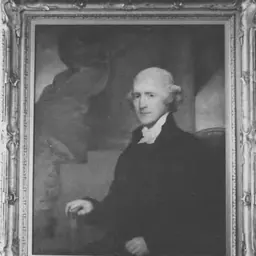

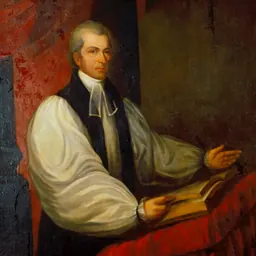


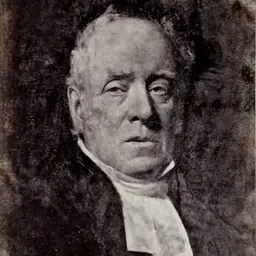
Contemporaries
People whose lives overlapped Hannah Jenkins Barnard's




Frequently asked questions
Who was Hannah Jenkins Barnard?
1754-1825 , disowned Quaker minister
When was Hannah Jenkins Barnard born?
Hannah Jenkins Barnard was born in 1754.
When did Hannah Jenkins Barnard die?
Hannah Jenkins Barnard died in 1825.
What was Hannah Jenkins Barnard's occupation?
Hannah Jenkins Barnard was a christian minister and cleric.
Sources & further reading
· Wikipedia: Hannah Jenkins Barnard
· DBpedia: Hannah Jenkins Barnard
Cite this page
APA: Biography.guide. (2026). Hannah Jenkins Barnard. https://biography.guide/hannah-jenkins-barnard/
MLA: "Hannah Jenkins Barnard." Biography.guide, https://biography.guide/hannah-jenkins-barnard/.
Chicago: "Hannah Jenkins Barnard." Biography.guide. https://biography.guide/hannah-jenkins-barnard/.
Data last updated: 2026-09-20 · Spot an error? Report a correction.
Page generated 2026-09-27 05:28 UTC