
About James Madison
Lived 1749 – 1812 (aged 62). James Madison was an American christian minister and presbyter.
James Madison (August 27, 1749 – March 6, 1812) was the first bishop of the Diocese of Virginia of the Episcopal Church in the United States and the eighth president of the College of William and Mary. He held the latter office from 1777 until his death in 1812—a tenure encompassing the American Revolutionary War, the removal of the Virginian capital from Williamsburg to Richmond, the disestablishment of the Anglican Church, the founding of the Episcopal Church, and the first decades of the new republic. As a leader of both Virginia's religious community and its oldest college, he occupied an influential position in the commonwealth, which he used to agitate for an ideology that blended radical Republicanism, Christianity, and the ideals of the Enlightenment. One historian described him as an "American Jacobin."
Madison was also an accomplished scholar and teacher in his own right. Madison also experimented with magnetism and psychiatric treatment, made sophisticated meteorological and astronomical observations, and conducted archaeological research in the Kanawha Valley.
Early life and family Madison was born on August 27, 1749 in Barterbrook Augusta County, Virginia, and grew up near the present-day town of Port Republic at Madison Hall, an estate which his father acquired in 1751. He was the son of John and Agatha (née Strother) Madison, prosperous Virginia planters. His mother Agatha was the daughter of William Strother of King George County. On John's side, he was second cousin to James Madison Jr. of Montpelier, who would later be the 4th President of the United States. During the French and Indian War, he constructed fortifications on the family estate. Another brother, Thomas Madison, married Patrick Henry's sister Susanna and was a soldier and member of the House of Delegates representing Botetourt County—he signed the Fincastle Resolutions in 1775. His youngest brother, George Madison, fought in the Revolutionary War, Northwest Indian War, and the War of 1812, in which he was captured at the Battle of Frenchtown. He was later elected the sixth Governor of Kentucky.
Education Madison was educated at home and at a private school in Maryland before matriculating at the College of William and Mary in 1768. His undergraduate years in Williamsburg coincided with the arrival of two notable British professors and clergymen, Reverend Samuel Henley (1740–1815) and Reverend Thomas Gwatkin (1741–1800). Gwatkin, a friend of Jeremy Bentham, held the chair of natural philosophy and mathematics and engaged extensively with Enlightenment thought.
Madison graduated from William & Mary with high honors in 1771. On July 29, 1772, he received the gold Botetourt Medal endowed as a prize for classical learning by the Governor of Virginia, Norborne Berkeley, 4th Baron Botetourt. That same summer, in August 1772, he delivered an oration at the college that made plain his radical sympathies and support for legislative government. Despite the encouragement of his father and his friends, he refused to practice further.
Early career
Professor of Natural History and Mathematics, Anglican Minister In 1773, Madison's former professor Thomas Gwatkin vacated William & Mary's chair of natural philosophy and mathematics to become master of the college's grammar school. This was no easy task in British America, however, as there was no bishop in the colonies. For this reason, in 1775, during the opening of the American Revolutionary War, Madison set sail for England to be consecrated by Richard Terrick, Bishop of London. For his part, Madison had no interest in staying longer than was necessary in Britain, which he found to be "degenerate" and "anti-American." Before departing, Henley entrusted his valuable personal library to Madison for safekeeping. To replace these three positions, the Board announced new professorships in "Law & Police" (filled by George Wythe), "Modern Languages" (filled by Carlo Bellini), and "Chymistry & Medicine" (filled by James McClurg). It also modified Andrews' position, making him chair of "Ethics & the Belles Lettres." These were the United States' first professorships in law, modern languages, and fine arts.
In a 1780 letter to Yale College president Ezra Stiles, Madison proudly described his new republican and secular "university," which afforded students unprecedented freedom to choose their courses:"The Doors of the University are open to all, nor is even a knowledge in the Ant. Languages a previous Requisite for Entrance. The Students have the Liberty of attending whom they please, and in what order they please, or all the diffr Lectures in a Term if they think proper—" Jefferson's revolution would soon have to give way to the broader revolution unfolding in the colonies, however. With Benedict Arnold's British troops now on the Virginia Peninsula, the state legislature voted in April 1780 to permanently move the capital from Williamsburg to Richmond. thumb The 1807 map of Virginia, commissioned by MadisonMadison sought to step down from his duties as bishop in 1805; whether an assistant bishop was chosen, as he appears to have wished, is somewhat unclear. He remained as President of the College of William and Mary for 35 years, serving until his death, although quite infirm in his last years and unable to attend the General Convention. Bishop Madison died in Williamsburg on March 6, 1812, about a year after he ordained future bishop William Meade as a deacon.
The Reverend Dr. Madison also presided over the first convention of the newly formed Diocese of Virginia of the Episcopal Church in the United States of America in 1785 and was consecrated as a bishop on September 19, 1790, in the Lambeth Palace in London.
Death Madison's health began to falter in late middle-age as he suffered from heart disease. As early as 1805, he had proposed that the Episcopal Church elect an assistant bishop to aid him with his duties—he was afraid that he lacked the stamina to keep up. Just over a month later, on March 6, 1812, he died.
Madison, who had served William & Mary as a professor and president for nearly 40 years, was interred in the college chapel—an honor given to only a select few, including popular colonial governor Norborne Berkeley, 4th Barton Botetourt and Founding Father Peyton Randolph. Immediately after his death, students founded the Bishop James Madison Society, a secret society that remains active more than 200 years later.
Madison was succeeded as president of William & Mary by Reverend John Bracken, his longtime colleague and master of the William and Mary grammar school. By then, Bracken was himself in poor health and unprepared to steer the college through the War of 1812. His tenure would only last until 1814, when the Board forced his resignation. The subsequent decades witnessed a reactionary turn away from Madison's republicanism at the college, reaching its apex with the ascension of proslavery ideologist Thomas Roderick Dew to the presidency in 1836.
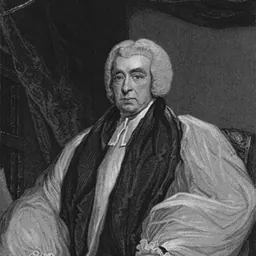
Consecrators The Most Reverend John Moore, 88th Archbishop of Canterbury The Right Reverend Beilby Porteus, Bishop of London The Right Reverend John Thomas, Bishop of Rochester James Madison was the 4th bishop consecrated for the Episcopal Church.
Don’t just read it —
keep it.
Full-length biographies made to live with: read them, listen on the way to work, watch them tonight.
- E-book
- Audio
- Video
Instant download · yours to keep · every purchase keeps this site free
Important facts
People in James Madison's life
Named in this biography and alive at the same time



Related people
Same field, nearest in time



Contemporaries
People whose lives overlapped James Madison's




Frequently asked questions
Who was James Madison?
American bishop (1749–1812)
When was James Madison born?
James Madison was born on 27 August 1749 in Port Republic.
When did James Madison die?
James Madison died on 6 March 1812 in Williamsburg.
What was James Madison's occupation?
James Madison was a christian minister and presbyter.
What nationality was James Madison?
James Madison was American.
Sources & further reading
· DBpedia: James Madison (bishop)
Cite this page
APA: Biography.guide. (2026). James Madison. https://biography.guide/james-madison-christian-minister/
MLA: "James Madison." Biography.guide, https://biography.guide/james-madison-christian-minister/.
Chicago: "James Madison." Biography.guide. https://biography.guide/james-madison-christian-minister/.
Data last updated: 2026-09-27 · Spot an error? Report a correction.
Page generated 2026-09-27 05:16 UTC