
About Hanna Berger
Lived 1910 – 1962 (aged 51). Hanna Berger was a German and Austrian music educator, choreographer, resistance fighter, dancer, dance teacher and screenwriter.
Hanna Berger (born Johanna Elisabeth Hochleitner-Köllchen; 23 August 1910 – 15 January 1962) was an Austrian dancer, choreographer, teacher, director, theatre director, writer and lifelong anti-Nazi and communist. She was described as part of the free dance movement.
Life Johanna Elisabeth Hochleitner-Köllchen was the child of Maria Hochleitner was illegitimate. Her father was described as coming from the bourgeois social class She spent the first years of her childhood partly with her grandfather and partly with her mother in the working-class district of Meidling in Vienna. To make a living and to afford her fees, she would give dance lessons working under the name Hanna Wolfram and work as a masseuse. They became partners in a relationship that lasted until 1950, when Cremer decided to move to the new East Germany. They split for a number of reasons. Cremer did not like the "Americanisation" of Vienna and increased focus on communists who were being stigmatised. The other more important reason was the scandal over the memorial to the victims of fascism at the Vienna Central Cemetery. The memorial represented a naked bronze figure of a resistance fighter, which was considered controversial by church members. Theodor Innitzer, the Archbishop of Vienna wanted a fig leaf placed on the sculpture, which Cremer did not accept. Another reason for the couples split was Cremer's many affairs. She danced in the Women's Dances (Frauentänze) cycle, ("The Seer", "Witches' Dance"), among others. Among other things, it states:
"Truth is always unpleasant to National Socialism, whether it is expressed in a work of art or in discussions at stampedes."
On 11 October 1937, she made her evening debut as a choreographer and dancer as part of an eleven-part solo at the Berlin Bach-Saal. She performed a set of dances under specific themes, "Three Romantic Studies: Summer, Late Summer, Summer in Paris", "Everyday Story: Girl, Lover, Abandoned Mother, Mourning Woman". The dance had been banned by the Nazis and was only shown due to the exigency of the Austrian ambassador, who was patron of the event.
"The dancer wore a field gray coat, soldier's cap and boots. The noisy music that her companion Ulrich Kessler wrote for this dance consisted of a march-like drumming motif that the soldier obeyed with stamping steps, and now and then a bright, lingering metallic ringing that caused him to duck his head for a moment to press one's chin into one's uniform collar as if to face the threat of a nearby missile; immediately afterwards the old defiant rhythm again. Finally the soldier is hit - a sudden pause - but he only falls when, always under the spell of the march rhythm, he has answered the enemy with a wide swing. War is represented here in the image of an enduring, silent heroism." She found support and protection in the form of city counciller Viktor Matejka who recognised the nature of her dance as being militant and politically expressive and offered her a safe place to dance at the .
In 1938, shortly before the annexation of Austria by Germany on 13 March 1938, she followed Fritz Cremer to Rome. She taught at the Royal Academy of Dramatic Art in Rome. After six months she passed the examination for an academic post and she was promoted to a position of professor. Through Hans Coppi, a friend of Schürmann-Horster, Berger was linked to Harro Schulze-Boysen. The group had a strong belief in the superiority of communism over capitalism and fascism.
Her trial took place at the Berlin People's Court (Volksgerichtshof). Berger managed to survive her trial due to her skillful defence, presenting herself as politically completely inexperienced. which effectively ended their relationship.
The years between 1945 and 1952 were to be her most creative and productive, when she became a recognised celebrity while openly showing her political convictions. He also wrote the music to three dance pieces, among other things, including "Dance ads" by Schoop in 1956 and "The sad hunter" and "Amores Pastorals" in 1958, which was choreographed and put on Austrian television.
By studying film design at the Vienna Music Academy from 1955 to 1957, she hoped for a new career as a filmmaker. On behalf of the City of Vienna, she was able to study with Marcel Marceau in Paris. As one of the first of his students, she earned a teaching diploma. She also performed work by Grete Wiesenthal. She is buried in a grave of honour in the Meidling Cemetery in the City of Vienna. She is considered one of the great names in free dance, alongside Grete Wiesenthal and . Hanna Berger incorporates aspects of many styles and forms of art into her works. Her solos dances focus on the feeling of a situation she expresses with an apparent minimum of technique. They are not permanently choreographed, some moments are defined, others must be improvised freely by the dancer or dancer. A politically committed artist, she also often incorporates political elements into her solos. The program "Hanna Berger: Retouchings” was curated in 2006 by Andrea Amort at the Festspielhaus St. Pölten in Sankt Pölten. Fragmentary works by Berger were choreographed as new creations by Nicholas Adler, , , Rose Breuss and Willi Dorner. The program was shown at festivals in Washington, Braunschweig and Vienna. Esther Koller danced "L'Inconnue de la Seine" in the 2011 opening of an exhibition for the achievements of women teaching at the University of Music and Performing Arts, Vienna.
In 2010, Andrea Amort, a historian and professor at the Vienna Conservatory, published Hanna Berger, Spuren einer Tonzerin im Widerstand, Esther Koller danced L'Unknown de la Seine in 2011 for the opening of an exhibition at the Vienna University of Music and Performing Arts. In 2019, as part of the Alles tanzt exhibition. Kosmos Wiener Tanzmoderne at the Vienna Theatre Museum, Eva-Maria Schaller presents a long version of the Unknown of the Seine.
Don’t just read it —
keep it.
Full-length biographies made to live with: read them, listen on the way to work, watch them tonight.
- E-book
- Audio
- Video
Instant download · yours to keep · every purchase keeps this site free
Important facts
People in Hanna Berger's life
Named in this biography and alive at the same time



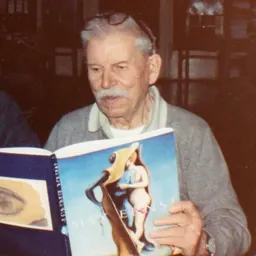

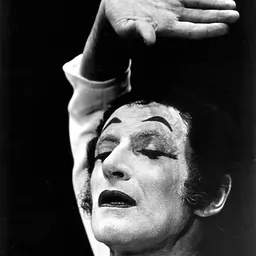

Related people
Same field, nearest in time
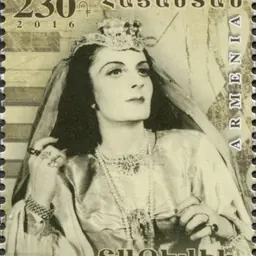
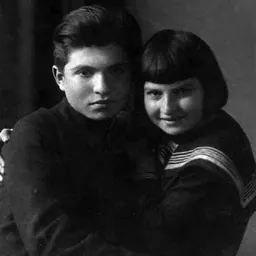
Contemporaries
People whose lives overlapped Hanna Berger's





Frequently asked questions
Who was Hanna Berger?
German music educator (1910–1962)
When was Hanna Berger born?
Hanna Berger was born on 23 August 1910 in Vienna.
When did Hanna Berger die?
Hanna Berger died on 15 January 1962 in East Berlin, Charité.
What was Hanna Berger's occupation?
Hanna Berger was a music educator, choreographer, resistance fighter, dancer, dance teacher and screenwriter.
What nationality was Hanna Berger?
Hanna Berger was German and Austrian.
Sources & further reading
Cite this page
APA: Biography.guide. (2026). Hanna Berger. https://biography.guide/hanna-berger/
MLA: "Hanna Berger." Biography.guide, https://biography.guide/hanna-berger/.
Chicago: "Hanna Berger." Biography.guide. https://biography.guide/hanna-berger/.
Data last updated: 2026-09-20 · Spot an error? Report a correction.
Page generated 2026-09-27 05:20 UTC