
About Viktor Matejka
Lived 1901 – 1993 (aged 91). Viktor Matejka was an Austrian writer and politician.
Viktor Matejka (4 December 1901 – 2 April 1993) was a Viennese politician and writer.
He spent most of the Hitler years as a detainee at one of two concentration camps. In the summer of 1943, inmates at Dachau presented a satirical focusing on Adolf Hitler, watched by the camp's SS guards. The episode was described in his obituary, half a century later, as "probably the most dangerous stage performance in the world, as well as the most absurd". The leader of the improvised performance group was Viktor Matejka. Later he liked to assert that he had survived Nazism through a blend of cunning and skill, which only the malicious and ignorant would have called "collaboration".
Life Provenance and early years Viktor Matejka was born the third of his parents' children into a lower middle-class Catholic family at Korneuburg, a small town a couple of hours' walk up-river of Vienna. His father was a former "tavern singer" who subsequently worked as a court bailiff. His mother was a former domestic servant. Matejka grew up in nearby Stockerau under conditions of some poverty. Obsessed even as a child with the importance of education, and encouraged by his mother, he saved up the money he received for serving as an altar boy and used the resulting savings to pay the fee necessary to sit the entrance exam for admission to an academically oriented secondary school ("Gymnasium"). As his school career progressed he continued to take jobs where he could find them in order to supplement the family income, taking on tutoring work and, on at least one occasion, working as a film-extra. After that he embarked immediately on a career as a journalist. His passionate faith in education never left him, however. During the 1930s Matejka also teamed up for a time with Nikolaus Hovorka to produce the pocket-book format political journal, "Berichte zur Kultur- und Zeitgeschichte" ("Reports on cultural and contemporary history").
Dachau and Flossenbürg
Following his arrest Matejka discovered that the security services already knew all about his foreign contacts in considerable detail. He spent the next two and a half weeks at the Roßauerlände police jail, before being transported across the (former) border to the concentration camp in Bavaria. During his time in the Flossenbürg camp Matejka developed friendships with the communist Karl Röder (who had been a concentration camp inmate since 1933) and the pastor-theologian Emil Felden from Bremen. The articles selected included Hitler speeches and army reports, along with features on the arts, literature, music and philosophy, all neatly cut out and grouped according to subject matter.
Early release On 7 July 1944 Matejka was released from the camp and returned to Vienna. He managed to get himself admitted to hospital as a patient in order to avoid the risk of recruitment into the German army. The avoidance of conscription, and possibly also the early release which preceded it, involved him in the use of several medical certificates, some of which were genuinely produced by physicians: others were simple forgeries. He then "disappeared underground" (lived out of official sight and without a registered domicile or an identity card) till the war ended. Matejka became something of an intellectual figurehead; and he seems during the later 1940s to have succeeded in living beyond the party discipline that constrained comrades without his robust intellectual hinterland and record of fearless public service during the 1930s.
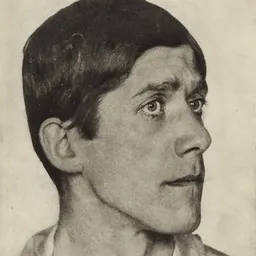
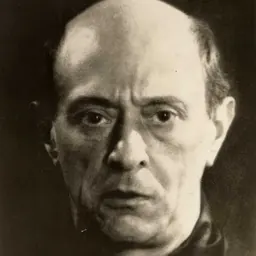
City Elections held in November 1945 were disappointing for the Communist Party which was already being tarnished in the public mind by its links to the Soviet Union. Awareness of Red army atrocities against ethnic German civilians - notably the atrocities against women - had seeped quickly into the public consciousness. Nevertheless, before the election even took place the coalition partners had agreed that, at least in Vienna, their governing coalition should remain in place after it. So although the election left the Social Democrats with 58 council seats while the Communists won only 6, the Communists were still represented in the city senate. This time, however, there was one Communist Senator whereas before November there had been three. In order to comply with the pre-election coalition agreement the Social Democrats gave up one of their senate seats in favour of Viktor Matejkar. He remained the KPÖ senate member, and retained the arts and education portfolio, till 7 December 1949. Matejka's senatorial term was, in addition, characterised by promotion of a number of contemporary artists who subsequently became well known. Unlike many politicians, he was also not afraid to campaign for the return to Austria artists, such as Franz Werfel, Arnold Schoenberg and the polymath Oskar Kokoschka, who had been driven into exile during the National Socialist years. Sources attribute his lack of success in enticing exiled artists to "come home" to an absence of backing from other politicians at both a city and a national level. He backed the establishment in Vienna of the Institute for Arts and Humanities (Institut für Wissenschaft und Kunst) as an information exchange between academic institutions and the wider world and worked effectively to revive Vienna's cultural life more generally.
Beyond senatorial office In the 1949 city elections the Communist share of the vote slipped a little further: after the election there was no longer space for the party in the governing coalition. Matejka resigned his seat in the senate, but represented the party as a Vienna councillor (Gemeinderat) and member of the regional parliament (Landtag) till 1954. He continued to serve as a member of the party central committee till 1957, and only resigned from the Communist Party itself in 1966. Matejka had always taken a highly individualistic - some commentators prefer the adjectives "candid" and "unorthodox" - approach to his journalism, and that approach was on display in his many "Tagebuch" contributions. Circulation reached 10,000 copies by 1952, and peaked at 20,000. In February 1957 he was replaced as co-producer and editor in chief at "Tagebuch", but he remained a member of the publication's "editorial college" till his retirement from it at the end of 1966.
Matejka sustained a high public profile through his old age as an exceptionally prolific contributor, notably in the letters pages, to serious newspapers and news magazines. In addition between 1983 and 1993 he published three highly quotable autobiographical books about his overlapping careers in journalism, education administration and politics. A public exhibition of paintings from his collection was held during April 1982 at the "Wiener Secession" exhibition hall.
Personal Viktor Matejka married the artist Gerda Matejka-Felden on 23 June 1932. The bride converted to Roman Catholicism in order to facilitate the union. The marriage lasted till 5 May 1948, but the two of them remained in close contact till Gerda's death in 1984. Indeed, they continued to live together in the same apartment for several years after the divorce.
It is not unusual in mainland Europe for streets to be named or renamed to honour well-regarded public figures. In the case of Viktor Matejka it was not a street but a public stairway that was named for him. The elegant "Viktor-Matejka-Stiege", beside the Apollo Cinema, close to Matejka's former home in the central district of Vienna-Mariahilf, provides a connection for pedestrians between the Eggerthgasse (...alley) and the Kaunitzgasse. The staircase, formerly known as the "Eggerthstiege" ("Eggerth steps") was re-named in 1998, and has enjoyed the protected status of a historic monument ("Denkmalschutz") since 2003.
Published output (selection)
Don’t just read it —
keep it.
Full-length biographies made to live with: read them, listen on the way to work, watch them tonight.
- E-book
- Audio
- Video
Instant download · yours to keep · every purchase keeps this site free
Important facts
Family & relationships
People in Viktor Matejka's life
Named in this biography and alive at the same time


Related people
Same field, nearest in time






Contemporaries
People whose lives overlapped Viktor Matejka's

Frequently asked questions
Who was Viktor Matejka?
Austrian author (1901–1993)
When was Viktor Matejka born?
Viktor Matejka was born on 4 December 1901 in Korneuburg.
When did Viktor Matejka die?
Viktor Matejka died on 2 April 1993 in Vienna.
What was Viktor Matejka's occupation?
Viktor Matejka was a writer and politician.
What nationality was Viktor Matejka?
Viktor Matejka was Austrian.
Sources & further reading
Cite this page
APA: Biography.guide. (2026). Viktor Matejka. https://biography.guide/viktor-matejka/
MLA: "Viktor Matejka." Biography.guide, https://biography.guide/viktor-matejka/.
Chicago: "Viktor Matejka." Biography.guide. https://biography.guide/viktor-matejka/.
Data last updated: 2026-09-26 · Spot an error? Report a correction.
Page generated 2026-09-27 05:14 UTC