
About Franz Werfel
Lived 1890 – 1945 (aged 54). Franz Werfel was an Austrian and American writer, poet, playwright, screenwriter, science fiction writer and librettist.
Franz Viktor Werfel (; 10 September 1890 – 26 August 1945) was a Czech novelist, playwright, and poet whose career spanned World War I, the Interwar period, and World War II. He is primarily known as the author of The Forty Days of Musa Dagh (1933, English tr. 1934, 2012), a novel based on events that took place during the Armenian genocide of 1915, and The Song of Bernadette, a novel about the life and visions of the French Catholic saint Bernadette Soubirous, which was made into a Hollywood film of the same name.
Early life Born in Prague, then in Kingdom of Bohemia, which was part of Austria-Hungary, Werfel was the first of three children of a wealthy manufacturer of gloves and leather goods, Rudolf Werfel. His mother, Albine Kussi, was the daughter of a mill owner. His two sisters were Hanna Fuchs-Robettin (born 1896) and Marianne Amalie (born 1899). His family was Jewish. As a child, Werfel was raised by his Czech Catholic governess, Barbara Šimůnková, who often took him to mass in Prague's main cathedral.
Like the children of other progressive German-speaking Jews in Prague, Werfel was educated at a Catholic school run by the Piarists, a teaching order that allowed for a rabbi to instruct Jewish students for their bnei mitzvah. as a telephone operator. His duties both exposed him to the vicissitudes of total war as well as provided him with enough of a haven to continue writing Expressionist poems, ambitious plays, and letters voluminously. His eclectic mix of humanism, confessionalism, autobiography, as well as mythology and religiosity developed further during this time. His poems and plays ranged from scenes of ancient Egypt (notably the potentially monotheistic religion of Akhenaton) to occult allusions (Werfel had participated in séances with his friends Brod and Kafka) and incorporate a parable from the Baháʼí Faith in the poem "Jesus and the Carrion Path". His bias for Christian subjects, as well as his antipathy for Zionism, eventually alienated many of his Jewish friends and readers, including early champions such as Karl Kraus. Others, however, stood by him, including Martin Buber, who published a sequence of poems from Werfel's wartime manuscript, Der Gerichtstag (Judgment Day, published in 1919) in his monthly journal, Der Jude (The Jew). and wrote of Werfel in his prefatory remark:
Since I was first moved by his poems, I have opened (knowing well, I should say, it's a problem) the gates of my invisible garden [i.e., an imaginarium] to him, and now he can do nothing for all eternity that would bring me to banish him from it. Compare, if you will, a real person to an anecdotal one, a late book to an earlier, the one you see to you yourself; but I am not putting a value on a poet, only recognizing that he is one—and the way he is one.
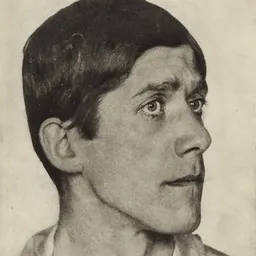
In the summer of 1917, Werfel left the frontline for the Military Press Bureau in Vienna, where he joined other notable Austrian writers serving as propagandists, among them Robert Musil, Rilke, Hugo von Hofmannsthal, and Franz Blei. Through the latter, Werfel met and fell in love with Alma Mahler, widow of Gustav Mahler, the former lover of the painter Oskar Kokoschka, and the wife of the architect Walter Gropius, then serving in the Imperial German Army on the Western Front. Alma, who was also a composer, had already set one of Werfel's poems to music, despite Werfel's being much younger, shorter, and having Jewish features that she, being both anti-Semitic and attracted to Jewish men, initially found distasteful. Werfel lectured on this subject across Germany. The Nazi newspaper Das Schwarze Korps denounced him as a propagandist of "alleged Turkish horrors perpetrated against the Armenians". The same newspaper, suggesting a link between the Armenian and the later Jewish genocide, condemned "America's Armenian Jews for promoting in the U.S.A. the sale of Werfel's book".
Werfel was forced to leave the Prussian Academy of Arts in 1933. His books were burned by the Nazis.
Fry and Unitarian Waitstill Sharp organized a secret crossing over the Pyrenees on foot. Assisted by Justus Rosenberg, they went to Madrid and then traveled on to Portugal. They stayed in Monte Estoril, at the Grande Hotel D'Itália, between 8 September and 4 October 1940. On the same day they checked out, they boarded the S.S. Nea Hellas headed for New York City, arriving on 13 October.
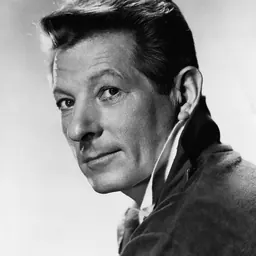
Werfel and his family settled in Los Angeles, where they met other German and Austrian emigrants, such as Mann, Reinhardt, and Erich Wolfgang Korngold as well as Czech (as Werfel was a Czechoslovak citizen). In southern California, Werfel wrote his final play, Jacobowsky and the Colonel (Jacobowsky und der Oberst) which was made into the 1958 film Me and the Colonel starring Danny Kaye; Giselher Klebe's opera Jacobowsky und der Oberst (1965) is also based on this play. Before his death, he completed the first draft of his last novel Star of the Unborn (Stern der Ungeborenen), which was published posthumously in 1946.
Conversion to Catholicism According to John J. Devlin, pastor of Saint Victor Parish in West Hollywood, Franz Werfel received baptism on his deathbed from a German priest. The matter, however, was not made public out of consideration for his Jewish father and mother.
Honours and awards
1926 Grillparzer Prize 1927 Czechoslovak State Award 1930 Schiller Prize 1937 Austrian Cross of Honour for Science and Art, 1st class 1949 Naming of Werfelstrasse in Hernals (Vienna) 1975 Grave of honor in the Zentralfriedhof (Vienna) 1990 Stamp Austria, Franz Werfel 1890–1945 1995 Stamp Germany, Franz Werfel, 50th anniversary of Werfel's death 1995 Stamp Armenia, Franz Werfel and 40 Days of Musa Dagh Hero 2000 Monument on Schillerplatz in Vienna 2006 Posthumous Award of Armenian Honorary Citizenship; the plaque was presented to the Austrian National Library.
Don’t just read it —
keep it.
Full-length biographies made to live with: read them, listen on the way to work, watch them tonight.
- E-book
- Audio
- Video
Instant download · yours to keep · every purchase keeps this site free
Important facts
Family & relationships
People in Franz Werfel's life
Named in this biography and alive at the same time



Related people
Same field, nearest in time





Contemporaries
People whose lives overlapped Franz Werfel's




Frequently asked questions
Who was Franz Werfel?
Austrian-Bohemian novelist, playwright and poet (1890-1945)
When was Franz Werfel born?
Franz Werfel was born on 10 September 1890 in Prague.
When did Franz Werfel die?
Franz Werfel died on 26 August 1945 in Beverly Hills, Los Angeles.
What was Franz Werfel's occupation?
Franz Werfel was a writer, poet, playwright, screenwriter, science fiction writer and librettist.
What nationality was Franz Werfel?
Franz Werfel was Austrian and American.
Sources & further reading
Cite this page
APA: Biography.guide. (2026). Franz Werfel. https://biography.guide/franz-werfel/
MLA: "Franz Werfel." Biography.guide, https://biography.guide/franz-werfel/.
Chicago: "Franz Werfel." Biography.guide. https://biography.guide/franz-werfel/.
Data last updated: 2026-09-20 · Spot an error? Report a correction.
Page generated 2026-09-27 05:33 UTC