
About Hal Ashby
Lived 1929 – 1988 (aged 59). Hal Ashby was an American film director, film producer, film editor, actor, film actor and director.
William Hal Ashby (September 2, 1929 – December 27, 1988) was an American film director and editor. His work exemplified the countercultural attitude of the era. He directed wide-ranging films featuring iconic performances. He is associated with the New Hollywood wave of filmmaking with filmmakers such as Martin Scorsese, Woody Allen, Mike Nichols and Sidney Lumet.
Before his career as a director, Ashby edited films for Norman Jewison, notably The Russians Are Coming, the Russians Are Coming (1966), which earned Ashby an Oscar nomination for Best Editing, and In the Heat of the Night (1967), which earned him his only Oscar for the same category. Ashby received a third Oscar nomination, this time for Best Director for Coming Home (1978). Other films directed by Ashby include The Landlord (1970), Harold and Maude (1971), The Last Detail (1973), Shampoo (1975), Bound for Glory (1976), and Being There (1979). Harold and Maude and Being There have been inducted into the National Film Registry.
Early life and education Ashby was born September 2, 1929, in Ogden, Utah, the youngest of four siblings born to Mormon parents Eileen Ireta (née Hetzler) and James Thomas Ashby, a dairy farm owner. Ashby's parents divorced in 1936, after which his father remarried.
Following the divorce, Ashby and his siblings lived with their mother, briefly in Logan, Utah, before relocating to Portland, Oregon, where his elder brother took a job in the timber industry. His mother, a cooking enthusiast, opened a restaurant in Portland. After several years in Portland, the family returned to Ogden, where Ashby primarily lived with his father. When Ashby was 12 years old, his father died by suicide.
Career 1967–1978: Breakthrough and stardom As Ashby was entering adult life, he moved from Utah to Los Angeles, California, where he pursued a bohemian lifestyle and ultimately became an assistant film editor through a long apprenticeship. His career gained momentum when he served as the editor of The Loved One (1965), an adaptation of the Evelyn Waugh novel that involved such New Hollywood contemporaries as screenwriter Terry Southern and cinematographer Haskell Wexler. After being nominated for the Academy Award for Film Editing in 1967 for The Russians Are Coming, the Russians Are Coming, His big break occurred one year later when he won the award for In the Heat of the Night. Ashby often stated that the practice of editing provided him with the best filmmaking background outside of traditional university study and carried the techniques learned as an editor with him when he began directing.
At the urging of mentor Norman Jewison, Ashby directed his first film, The Landlord—an early rumination on the social dynamics of gentrification in Park Slope, Brooklyn—in 1970. While his birth date placed him within the Silent Generation, the filmmaker (who had been a habitual marijuana smoker since 1950), eagerly embraced the hippie lifestyle, adopting vegetarianism and growing his hair long before it became de rigueur.
Over the next ten years, Ashby directed several acclaimed and popular films. Many were about outsiders and adventurers traversing the pathways of life. They included the off-beat romance Harold and Maude (1971), The Last Detail (1973), and the social satire Being There (1979), with Peter Sellers, giving the star a well-received role after many felt he had lapsed into self-parody. His most significant commercial success was Shampoo (1975), a collaboration with Warren Beatty and Robert Towne that satirized late-1960s sexual and social mores through the life of a hairdresser modeled after such contemporaneous figures as Jay Sebring and Jon Peters. Bound for Glory (1976), a muted biography of Woody Guthrie starring David Carradine, was the first film to use a Steadicam.
In June 1973, Michael Douglas and Saul Zaentz hired Ashby to direct One Flew Over the Cuckoo's Nest, after the original director Miloš Forman became unavailable due to the reimposition of censorship in his native Czechoslovakia after the Warsaw Pact invasion of Czechoslovakia and after Forman's initial replacement Richard Rush was unable to secure studio funding. Ashby was responsible for casting Jack Nicholson as R.P. McMurphy, but this resulted in a nine-month delay during which Forman fled to the United States and was rehired as director. Arriving in the post-Jaws and Star Wars era, Coming Home was one of the last films to encapsulate the modestly budgeted, socially realistic ethos of the New Hollywood era, earning nearly $15 million in returns and rentals on a $3 million budget.
1979–1988: Later films Because of his critical success and dependable profitability, shortly after the success of Coming Home, Ashby was able to form a production company, Northstar, under the auspices of Lorimar. After Being There, Ashby became more reclusive, often retreating to his home in Malibu Colony, a gated enclave in the city. Later, it was widely rumored in a likely whisper campaign from Lorimar (whose executives clashed with the director) that Ashby had become dependent upon cocaine, a drug that he only used intermittently after the production of Bound for Glory. As a consequence of these rumors, he slowly became unemployable. Eva Gardos, an editor who worked with Ashby during the period, has asserted that his drug intake remained largely confined to marijuana and psilocybin. of Second-Hand Hearts and Lookin' to Get Out. The latter, a Las Vegas caper that reunited him with Voight and featured Voight's young daughter, Angelina Jolie, was plagued by the increasingly strained relationship between Ashby and Lorimar. Filmed in 1979, Second-Hand Hearts only received a poorly reviewed limited release in 1981 before being pulled from circulation for nearly thirty years. Belatedly released in October 1982, Lookin' to Get Out earned a little under $1 million in returns and rentals on an estimated $17 million budget. During this period, Lorimar executives grew less tolerant of his increasingly perfectionist production (811,000 feet of film were used shooting Lookin' to Get Out) and editing techniques, a montage in the latter film set to The Police's "Message in a Bottle" took six months to perfect but proved to be logistically unusable due to a Lorimar agreement with the American Federation of Musicians.
Initially set to helm Tootsie after two years of negotiations and Ashby-directed wig and makeup tests, Lorimar executives blocked him from working on the film because part of the pre-production period overlapped with final work on the long-gestating Lookin' to Get Out, which was eventually recut by the studio when Ashby's work was deemed to be unsatisfactory. (Decades later, Ashby's cut was rediscovered and released on DVD in 2009.) As Dustin Hoffman had not offered a "formal commitment" to the production at the time of Ashby's dismissal, the director forfeited his $1.5 million fee. While post-production of Lookin' to Get Out continued, Lorimar permitted Ashby to film The Rolling Stones' 1981 American tour documentary, Let's Spend the Night Together, the director was a longtime fan of the group. He collapsed before the final filmed concert at Sun Devil Stadium in Tempe, Arizona, on December 13, 1981. Although Jeff Wexler said Ashby was "partying way beyond his capabilities with the Stones," Caleb Deschanel has said that Ashby (who directed the concert shoot on a gurney) simply had the flu. The film was well-received but gained little traction during a limited theatrical release. In September 1983, Ashby directed Solo Trans, a Neil Young concert video that was released the following year.
The Slugger's Wife, with a screenplay written by Neil Simon, was a critical and commercial failure. Ashby (whose cocaine use had accelerated throughout the shoot)
Unrealized projects
Personal life and death Longtime friend Warren Beatty advised Ashby to seek medical care after he complained of various ailments, including undiagnosed phlebitis. He was soon diagnosed with pancreatic cancer that rapidly spread to his lungs, colon, and liver. In the last five months of his life, he had been in and out of hospitals for treatment; he had been working on developing a film called Hand Carved Coffins even when sick. Ashby died on December 27, 1988, at his home in Malibu, California.
Influence and legacy The Last Detail, Bound for Glory, Coming Home, and Being There were all nominated for the Palme d'Or.
American songwriter and guitarist Guthrie Thomas, who coordinated the music in Bound for Glory and acted in the film, called Ashby "one of the finest motion picture directors of the 20th century."
Michael Cimino's 1996 film The Sunchaser, about a teenager with pancreatic cancer who refuses medical treatment, was dedicated to Ashby.
For the 2012 Sight & Sound Directors Top Ten poll Niki Caro, Cyrus Frisch, and Wanuri Kahiu voted for Harold and Maude, with Frisch describing the film as "an encouragement to think beyond the obvious!"
A 2018 documentary about the director was screened at the Sundance Film Festival. The moving image collection of Hal Ashby is held at the Academy Film Archive. The material at the Academy Film Archive is also complemented by material in the Hal Ashby papers at the academy's Margaret Herrick Library.
Hal Ashby has been an influence to the melodic post-hardcore band Touche Amore. He is referenced in the 3rd song "Hal Ashby", of their album "Spiral in a Straight Line" in the lyrics (“a misguided Hal Ashby catastrophe”).
Filmography Films As director Title Year Notes The Landlord 1970 Cameo: Groom in opening shot Harold and Maude 1971 Cameo: Man watching model train The Last Detail 1973 Cameo: Man at bar Shampoo 1975 Bound for Glory 1976 Coming Home 1978 Cameo: Man doing a peace sign Being There 1979 Cameo: Washington Post worker Second-Hand Hearts 1981 Lookin' to Get Out 1982 Cameo: Man on television Let's Spend the Night Together 1983 Concert film Solo Trans 1984 The Slugger's Wife 1985 8 Million Ways to Die 1986
Other film work Title YearCredited as Notes EditorOther Friendly Persuasion 1956 Uncredited assistant editor The Big Country 1958 Tokyo After Dark 1959 The Diary of Anne Frank The Young Doctors 1961 Editorial consultant The Children's Hour Assistant editor Captain Sindbad 1963 The Best Man 1964 Editorial consultant The Greatest Story Ever Told 1965 Uncredited assistant editor The Loved One The Cincinnati Kid With Brian Smedley-Aston The Russians Are Coming, the Russians Are Coming 1966 With J. Terry Williams In the Heat of the Night 1967 The Thomas Crown Affair 1968 With Ralph E. Winters & Byron BrandtAlso associate producer Gaily, Gaily 1969
Television Title Year Credited as NotesDirector Beverly Hills Buntz 1987 Episode: "Pilot" Jake's Journey 1988 Television pilot
Awards and nominations Year Association Category Project Result Ref.1966 Academy Awards Best Film Editing The Russians Are Coming, The Russians Are Coming 1967 In the Heat of the Night 1978 Best Director Coming Home 1976 Golden Globe Awards Best Director Bound for Glory 1978 Coming Home 1979 Being There 1973 Cannes Film Festival Palme d'Or The Last Detail 1976 Bound for Glory 1978 Coming Home 1979 Being There
Accolades received by films directed by Ashby
Directed Academy Award Performances
Don’t just read it —
keep it.
Full-length biographies made to live with: read them, listen on the way to work, watch them tonight.
- E-book
- Audio
- Video
Instant download · yours to keep · every purchase keeps this site free
Important facts
People in Hal Ashby's life
Named in this biography and alive at the same time
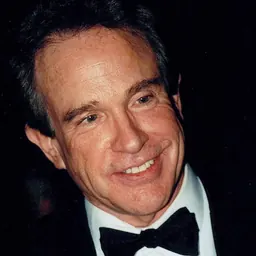

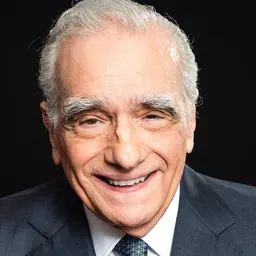

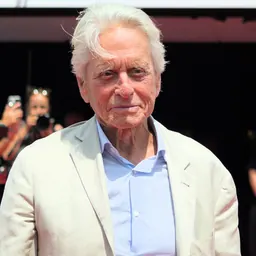

Related people
Same field, nearest in time



Contemporaries
People whose lives overlapped Hal Ashby's

Frequently asked questions
Who was Hal Ashby?
American film director and film editor (1929-1988)
When was Hal Ashby born?
Hal Ashby was born on 2 September 1929 in Ogden.
When did Hal Ashby die?
Hal Ashby died on 27 December 1988 in Malibu.
What was Hal Ashby's occupation?
Hal Ashby was a film director, film producer, film editor, actor, film actor and director.
What nationality was Hal Ashby?
Hal Ashby was American.
Sources & further reading
Cite this page
APA: Biography.guide. (2026). Hal Ashby. https://biography.guide/hal-ashby/
MLA: "Hal Ashby." Biography.guide, https://biography.guide/hal-ashby/.
Chicago: "Hal Ashby." Biography.guide. https://biography.guide/hal-ashby/.
Data last updated: 2026-09-20 · Spot an error? Report a correction.
Page generated 2026-09-27 05:20 UTC