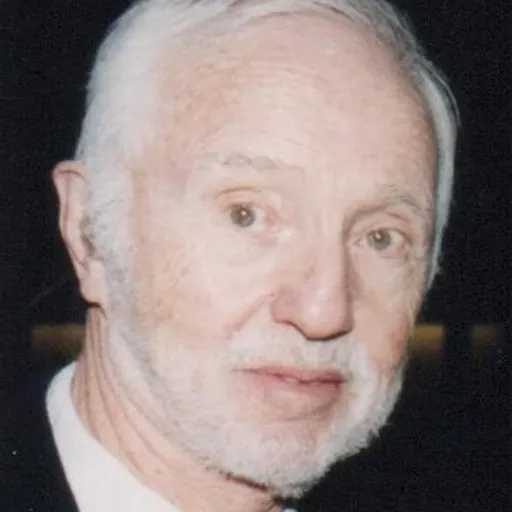
About Haskell Wexler
Lived 1922 – 2015 (aged 93). Haskell Wexler was an American cinematographer, film director, screenwriter, camera operator, actor and director, known for Cinéma vérité.
Haskell Wexler (February 6, 1922 – December 27, 2015) was an American filmmaker, cinematographer, and documentarian. In his obituary in The New York Times, he was described as being "renowned as one of the most inventive cinematographers in Hollywood."
Early life and education Wexler was born to a Jewish family in Chicago in 1922. His parents were Simon and Lottie Wexler, whose children included Jerrold, Joyce (Isaacs) and Yale. He attended the progressive Francis Parker School, where he was best friends with Barney Rosset.
After a year of college at the University of California, Berkeley, he volunteered as a seaman in the U.S. Merchant Marine in 1941, as the U.S. was preparing to enter World War II. He became friends with fellow sailor Woody Guthrie, who later gained fame as a folk singer. In November 1942, his ship was torpedoed by a German submarine and sank off the coast of South Africa. He spent 10 days on a lifeboat before being rescued.
He returned to Chicago after his discharge in 1946 and began working in the stockroom at his father's company, Allied Radio. He decided he wanted to become a filmmaker, although he had no experience, and his father helped him set up a small studio in Des Plaines, Illinois. He began by shooting industrial films at Midwest factories. When his studio lost too much money, it was eventually shut down, but the business served as an unofficial film school for Wexler. That same year he served as the cinematographer on his first big-budget film, Elia Kazan's America America. Kazan was nominated for a Best Director Academy Award. Wexler worked steadily in Hollywood thereafter. George Lucas, then 20, met Wexler who shared his hobby of auto racing. Wexler pulled a few strings to help Lucas get admitted to the USC Film School. Wexler would later work with Lucas as a visual consultant for THX 1138 and American Graffiti (1973).
Wexler was cinematographer of Mike Nichols' screen version of Who's Afraid of Virginia Woolf? (1966), for which he won the last Academy Award for Best Cinematography (Black & White) handed out. The following year had Wexler as the cinematographer for the Oscar-winning detective drama, In the Heat of the Night (1967), starring Sidney Poitier. His work was notable for being the first major film in Hollywood history to be shot in color with proper consideration for a person of African descent. Wexler recognized that standard lighting tended to produce too much glare on that kind of dark complexion making the actors look bad. Accordingly, Wexler toned it down to feature Poitier with better photographic results.
Wexler was fired as cinematographer during filming of Francis Ford Coppola's The Conversation and replaced by Bill Butler. He was also fired from Miloš Forman's 1975 film One Flew Over the Cuckoo's Nest and again replaced by Bill Butler. Wexler believed his dismissal on Cuckoo's Nest was due to his radical left political views as highlighted by his concurrent work on the documentary Underground, in which the left-wing urban guerrilla group The Weather Underground were being interviewed while hiding from the law. However, Forman said he had terminated Wexler over mere artistic differences. Both Wexler and Butler received Academy Award nominations for Best Cinematography for One Flew Over the Cuckoo's Nest, though Wexler later said there was "only about a minute or two minutes in that film I didn't shoot.”
However, he won a second Oscar for Bound for Glory (1976), a biography of Woody Guthrie, whom Wexler had met during his time in the Merchant Marine. Bound for Glory was the first feature film to make use of the newly invented Steadicam, in a famous sequence that also incorporated a crane shot. Wexler was also credited as additional cinematographer on Days of Heaven (1978), which won a Best Cinematography Oscar for Néstor Almendros. Wexler was featured on the soundtrack of the film Underground (1976), recorded on Folkways Records in 1976.
He worked on documentaries throughout his career. The documentary Paul Jacobs and the Nuclear Gang (1980) earned an Emmy Award; Interviews with My Lai Veterans (1970) won an Academy Award. His later documentaries included; Bus Riders' Union (2000), about the modernization and expansion of bus services in Los Angeles by the organization and its founder Eric Mann, Who Needs Sleep? (2006), the Independent Lens documentary Good Kurds, Bad Kurds: No Friends But the Mountains (2000), Tell Them Who You Are (2004) and From Wounded Knee to Standing Rock: A Reporter's Journey (2019).
Wexler also directed fictional movies. Medium Cool (1969), a film written by Wexler and shot in a cinéma vérité style, is studied by film students all over the world for its breakthrough form. It influenced more than a generation of filmmakers. In DVD commentary for Criterion Collection, Wexler recalled that the studio execs were flabbergasted the film, "an edgy, Godardian tale that ricocheted from one hot-button topic to the next (poverty, racism, civil rebellion, the war in Vietnam, the Kennedy and King assassinations)." The making of Medium Cool was the subject of a BBC documentary by Paul Cronin, Look Out Haskell, It's Real: The Making of Medium Cool (2001). "Medium Cool" was selected for preservation in the National Film Registry in 2003.
Produced by Lucasfilm and uncredited George Lucas, Wexler's film Latino (1985) was chosen for the 1985 Cannes Film Festival. He both wrote and directed the work. Another directing project was From Wharf Rats to Lords of the Docks (2007), an intimate exploration of the life and times of Harry Bridges, an extraordinary labor leader and social visionary described as "a hero or the devil incarnate--it all depends on your point of view."
In 1988, Wexler won the Independent Spirit Award for Best Cinematography for the John Sayles film Matewan (1987), for which he was also nominated for an Academy Award. His work with Billy Crystal in the HBO film 61* (2001) was nominated for an Emmy.
In 2021, filmmakers Joan Churchill and Alan Barker released a 26-minute documentary, Shoot From the Heart, about Wexler's life and career. Churchill described her intention in making the film this way: “We were making a film about a man who was a passionate activist, who never gave up hope for the world.”
A "lifelong liberal activist," during the final years of his life, Wexler trained his focus on raising awareness of sleep deprivation and long hours in the film industry, culminating in the documentary Who Needs Sleep? (2006), which "examined the routine overworking of Hollywood film crews."
Personal life Wexler was sometimes known by the nickname "Pete".
Wexler married the American actress Rita Taggart in 1989. He had two sons, a daughter, four grandchildren, and one great-granddaughter.
Death Wexler died in his sleep at the age of 93 on December 27, 2015, at his home in Santa Monica, California.
Legacy Six of the films he worked on have been preserved by the National Film Registry for being "culturally, historically, or aesthetically significant": Who's Afraid of Virginia Woolf (inducted in 2013), Days of Heaven (2007), Medium Cool (2003), In the Heat of the Night (2002), American Graffiti (1995) and One Flew Over the Cuckoo's Nest (1993).
In September 2016, George Lucas created the Haskell Wexler Endowed Chair in Documentary at the USC School of Cinematic Arts. The first holder of the Wexler Chair is Michael Renov, Vice Dean of Academic Affairs at SCA and a professor in the Bryan Singer Division of Cinema & Media Studies.
Filmography Cinematographer Short film Year Title Director Notes 1958 T Is for Tumbleweed Louis Clyde Stoumen 1966 One Steven North 1976 Polaroid Glasses Himself 1977 STP Oil Treatment Plymouth Fury With Conrad L. Hall 1978 John Wayne for Great Western Savings Himself
Feature film Hollywood Ending [Woody Allen] [Replaced by Wedigo von Schultzendorff] 2004 Silver City 2007 From Wharf Rats to Lords of the Docks Himself
Television Year Title Director Notes 1956 The Eddy Arnold Show Ben Park Episode "Betty Johnson, The Jordanaires" 1998 Sandra Bernhard: I'm Still Here... Damn It! Marty Callner TV special 2001 61* Billy Crystal TV movie 2007 Big Love Adam Davidson Episode "Rock and a Hard Place"
Documentary works Short film Year Title Director Notes 1953 The Living City HimselfJohn Barnes 1971 Interviews with My Lai Veterans Joseph Strick With Richard Pearce 1978 War Without Winners Himself 1982 Hail Columbia! Graeme Ferguson With Graeme Ferguson, David Douglas, Richard Leiterman,Ronald M. Lautore and Phillip Thomas 1996 Mexico Lorena Parlee With David Douglas, James Neihouse and Álex Phillips Jr. 2000 The Man on Lincoln's Nose Daniel Raim With Daniel Raim and Guido Verweyen 2001 SOA: Guns and Greed Robert Richter With Alan Jacobsen 2013 Medium Cool Revisited Himself
Film Year Title Director Notes 1965 The Bus Himself 1974 Introduction to the Enemy 1976 Underground Emile de AntonioMary LampsonHimself 1979 Paul Jacobs and the Nuclear Gang Jack WillisPenny Bernstein With Zack Krieger 1980 No Nukes Daniel GoldbergAnthony PotenzaJulian Schlossberg Concert film 1982 Richard Pryor: Live on the Sunset Strip Joe Layton Stand-up comedy 1992 Papakolea: A Story of Hawaiian Land Edgy Lee 1997 The Sixth Sun: Mayan Uprising in Chiapas Saul Landau 2000 Good Kurds, Bad Kurds: No Friends But the Mountains Kevin McKiernan With Kevin McKiernan Bus Rider's Union HimselfJohanna Demetrakas 2005 Bastards of the Party Cle Shaheed Sloan With Joan Churchill, Mark Woods and Phil Parmet 2006 Who Needs Sleep? Himself With Alan Barker, Joan Churchill, Tamara Goldsworthy,Kevin McKiernan and Rita Taggart 2009 In the Name of Democracy: The Story of Lt. Ehren Watada Nina Rosenblum Something's Gonna Live Daniel Raim With Daniel Raim and Guido Verweyen 2010 Will the Real Terrorist Please Stand Up? Saul Landau With Roberto Chile 2011 Bringing King to China Kevin McKiernan 2012 Occupy Los Angeles Joseph G. Quinn 2013 Eagles: Live at the Capital Centre (March 1977) Victoria Hochberg Four Days in Chicago Himself 2019 From Wounded Knee to Standing Rock: A Reporter's Journey Kevin McKiernan TV movie;Posthumous release
Director Short film Year Title Director Producer 1976 Polaroid Glasses 1977 STP Oil Treatment 1978 John Wayne for Great Western Savings
Feature film Year Title Director Writer Producer Notes 1969 Medium Cool 1983 Bus II Co-directed with Thom Tyson 1985 Latino 2007 From Wharf Rats to Lords of the Docks
Documentary short Year Title Director Producer Notes 1953 The Living City Co-directed with John Barnes (Both were uncredited) 1978 War Without Winners 2013 Medium Cool Revisited
Documentary film Year Title Director Writer Producer Notes 1965 The Bus 1971 Brazil: A Report on Torture Co-directed with Saul Landau 1974 Introduction to the Enemy 1976 Underground Co-directed with Emile de Antonio and Mary Lampson 1980 No Nukes Documentary footage only 2000 Bus Rider's Union Co-directed with Johanna Demetrakas 2006 Who Needs Sleep? 2013 Four Days in Chicago
Acting credits Film Year Title Role Notes 1969 Medium Cool Cameraman on Scaffold Uncredited 1978 Coming Home Officer Awarding Medals 2002 Out of These Rooms Alice'a husband 2007 Battle in Seattle Himself
Short film Year Title Role 2005 The Big Empty Bookstore customer 2014 The Moving Picture Co. 1914 Cameraman / Carpenter
Accolades and honors +Awards and nominationsNominations Academy Awards BAFTA Film Awards Primetime Emmy Award Independent Spirit Awards Wexler received two Academy Awards for Best Cinematography: Who's Afraid of Virginia Woolf? and Bound for Glory. He was additionally nominated for One Flew Over the Cuckoo's Nest, Matewan, and Blaze. In 1970, Wexler was nominated for a Directors Guild of America Award for Outstanding Directing – Feature Film for Medium Cool. In 1977, Wexler was nominated for a BAFTA Award for Best Cinematography for One Flew Over the Cuckoo's Nest. In 1988, Wexler won an Independent Spirit Award for Best Cinematography for Matewan. In 1993, Wexler won a Lifetime Achievement Award from the American Society of Cinematographers, the first active cameraman to be awarded. In 1996, he was awarded a star on the Hollywood Walk of Fame, the first cinematographer in 35 years to be so honored. In 2007, he received a Lifetime Achievement Award from the Independent Documentary Association and the same from the Society of Operating Cameramen. In 2014, the Location Managers Guild of America awarded Wexler the Humanitarian Award at its inaugural awards show.
Don’t just read it —
keep it.
Full-length biographies made to live with: read them, listen on the way to work, watch them tonight.
- E-book
- Audio
- Video
Instant download · yours to keep · every purchase keeps this site free
Important facts
Family & relationships
People in Haskell Wexler's life
Named in this biography and alive at the same time






Related people
Same field, nearest in time



Contemporaries
People whose lives overlapped Haskell Wexler's





Frequently asked questions
Who was Haskell Wexler?
American filmmaker (1922-2015)
When was Haskell Wexler born?
Haskell Wexler was born on 6 February 1922 in Chicago.
When did Haskell Wexler die?
Haskell Wexler died on 27 December 2015 in Santa Monica.
What was Haskell Wexler's occupation?
Haskell Wexler was a cinematographer, film director, screenwriter, camera operator, actor and director.
What was Haskell Wexler known for?
Haskell Wexler was known for Cinéma vérité.
What nationality was Haskell Wexler?
Haskell Wexler was American.
Sources & further reading
Cite this page
APA: Biography.guide. (2026). Haskell Wexler. https://biography.guide/haskell-wexler/
MLA: "Haskell Wexler." Biography.guide, https://biography.guide/haskell-wexler/.
Chicago: "Haskell Wexler." Biography.guide. https://biography.guide/haskell-wexler/.
Data last updated: 2026-09-22 · Spot an error? Report a correction.
Portrait: Wikimedia Commons · author & licence
Page generated 2026-09-27 05:02 UTC