
About Haile Selassie I
Lived 1892 – 1975 (aged 83). Haile Selassie I was a politician, monarch and ruler.
Haile Selassie I (born Ras Tafari Makonnen or Lij Tafari; 23 July 189227 August 1975) was Emperor of Ethiopia from 1930 to 1974. He rose to power as the Regent Plenipotentiary of Ethiopia under Empress Zewditu between 1916 and 1930.
Widely considered to be a defining figure in modern Ethiopian history, he is accorded divine importance in Rastafari, an Abrahamic religion that emerged in the 1930s. A few years before he began his reign over the Ethiopian Empire, Selassie defeated Ethiopian army commander Ras Gugsa Welle Bitul, nephew of Empress Taytu Betul, at the Battle of Anchem. He belonged to the Solomonic dynasty, founded by Emperor Yekuno Amlak in 1270.
Selassie, seeking to modernise Ethiopia, introduced political and social reforms including the 1931 constitution and the abolition of slavery in 1942. He led the empire during the Second Italo-Ethiopian War, and after its defeat was exiled to the United Kingdom. When the Italian occupation of East Africa began, he traveled to Anglo-Egyptian Sudan to coordinate the Ethiopian struggle against Fascist Italy; he returned home after the East African campaign of World War II. He dissolved the Federation of Ethiopia and Eritrea, established by the United Nations General Assembly in 1950, and annexed Eritrea as one of Ethiopia's provinces, while also fighting to prevent Eritrean secession. As an internationalist, Selassie led Ethiopia's accession to the United Nations. In 1963, he presided over the formation of the Organisation of African Unity, the precursor of the African Union, and served as its first chairman. By the early 1960s, prominent African socialists such as Kwame Nkrumah envisioned the creation of a "United States of Africa". Their rhetoric was anti-Western; Selassie saw this as a threat to his alliances. He attempted to influence a more moderate posture within the group.
Amidst popular uprisings, Selassie was overthrown by the Derg, a military junta, in the 1974 coup d'état. With support from the Soviet Union, the Derg began governing Ethiopia as a Marxist–Leninist state. In 1994, three years after the fall of the Derg regime, it was revealed to the public that the Derg had assassinated Selassie at the Jubilee Palace in Addis Ababa on 27 August 1975. He has been criticised for his suppression of rebellions among the landed aristocracy , which consistently opposed his changes. Others have criticised Ethiopia's failure to modernise rapidly enough. His administration was criticised as autocratic and illiberal by groups such as Human Rights Watch. According to some sources, late into Selassie's administration, the Oromo language was banned from education, public speaking and use in administration, though there was never a law that criminalised any language. His government relocated many Amhara people into southern Ethiopia.
Name Haile Selassie was known as a child as Lij Tafari Makonnen . Lij is translated as "child" and serves to indicate that a youth is of noble blood. His given name Tafari means "one who is respected or feared". Like most Ethiopians, his personal name "Tafari" is followed by that of his father Makonnen and that of his grandfather Woldemikael. His name Haile Selassie was given to him at his infant baptism and adopted again as part of his regnal name in 1930. The literal translation of Dejazmatch is "keeper of the door"; it is a title of nobility equivalent to a count. On 27 September 1916, he was proclaimed Crown Prince and heir apparent to the throne (Alga Worrach), On 11 February 1917, he was crowned Le'ul-Ras and is a rank of nobility equivalent to a duke, In 1928, Empress Zewditu planned on granting him the throne of Shewa; however, at the last moment opposition from certain provincial rulers caused a change and his title Negus or "King" was conferred without geographical qualification or definition.
On 2 November 1930, after the death of Empress Zewditu, Tafari was crowned Negusa Nagast, literally "King of Kings", rendered in English as "Emperor". Upon his ascension, he took as his regnal name Haile Selassie I. Haile means in Ge'ez "Power of" and Selassie means trinitytherefore Haile Selassie roughly translates to "Power of the Trinity". Selassie's full title in office was "By the Conquering Lion of the Tribe of Judah, His Imperial Majesty Haile Selassie I, King of Kings of Ethiopia, Lord of Lords, Elect of God". (Ge'ez ; girmāwī ḳedāmāwī 'aṣē ḫayle śillāsē, mō'ā 'anbessā ze'imneggede yihudā niguse negest ze'ītyōṗṗyā, siyume 'igzī'a'bihēr.)
To Ethiopians, Selassie has been known by many names, including Janhoy ("His Majesty") Talaqu Meri ("Great Leader") and Abba Tekel ("Father of Tekel", his horse name). Rastafari employs many of these appellations, also referring to him as Jah, Jah Jah, Jah Rastafari, and HIM (the abbreviation of "His Imperial Majesty"). He was born on 23 July 1892, in the village of Ejersa Goro, in the Hararghe province of Ethiopia. Tafari's mother, Woizero ("Lady") Yeshimebet Ali Abba Jifar, was paternally of Oromo descent and maternally of Silte heritage, while his father, Ras Makonnen Wolde Mikael, was maternally of Amhara descent but his paternal lineage remains disputed. Tafari's paternal grandfather belonged to a noble family from Shewa and was the governor of the districts of Menz and Doba, which are located in Semien Shewa. Tafari's mother was the daughter of a ruling chief from Were Ilu in Wollo province, Dejazmach Ali Abba Jifar.
Ras Makonnen was the grandson of King Sahle Selassie who was once the ruler of Shewa. He served as a general in the First Italo–Ethiopian War, playing a key role at the Battle of Adwa;
Governorship
Tafari assumed the titular governorship of Selale in 1906, a realm of marginal importance, but one that enabled him to continue his studies.
Marriage
On 3 August 1911, Tafari married Menen Asfaw of Ambassel, niece of the heir to the throne Lij Iyasu. Menen Asfaw was 22 years old while Tafari was 19 years of age. Menen had already married two previous noblemen, while Tafari had one previous wife and one child. The marriage between Menen Asfaw and Selassie lasted for 50 years. Although possibly a political match designed to create peace between Ethiopian nobles, the couple's family had said they married with mutual consent. Selassie described his spouse as a "woman without any malice whatsoever".
Regency The extent to which Tafari Makonnen contributed to the movement that would come to depose Lij Iyasu has been discussed extensively, particularly in Selassie's own detailed account of the matter. Iyasu was the designated but uncrowned emperor of Ethiopia from 1913 to 1916. Iyasu's reputation for scandalous behavior and a disrespectful attitude towards the nobles at the court of his grandfather, Menelik II, damaged his reputation. Iyasu's flirtation with Islam was considered treasonous among the Ethiopian Orthodox Christian leadership of the empire. On 27 September 1916, Iyasu was deposed. In his place, the daughter of Menelik II (the aunt of Iyasu) was named Empress Zewditu, while Tafari was elevated to the rank of Ras and was made heir apparent and Crown Prince. In the power arrangement that followed, Tafari accepted the role of Regent Plenipotentiary (Balemulu 'Inderase) and became the de facto ruler of the Ethiopian Empire (Mangista Ityop'p'ya). Zewditu would govern while Tafari would administer.
While Iyasu had been deposed on 27 September 1916, on 8 October he managed to escape into the Ogaden Desert and his father, Negus Mikael of Wollo, had time to come to his aid. On 27 October, Negus Mikael and his army met an army under Fitawrari Habte Giyorgis loyal to Zewditu and Tafari. During the Battle of Segale, Mikael was defeated and captured. Any chance that Iyasu would regain the throne was ended, and he went into hiding. On 11 January 1921, after avoiding capture for about five years, Iyasu was taken into custody by Gugsa Araya Selassie.
On 11 February 1917, the coronation for Zewditu took place. She pledged to rule justly through her regent, Tafari. While Tafari was the more visible of the two, Zewditu was not simply an honorary ruler, but her position was complicated, compared to other Ethiopian monarchs, requiring her to arbitrate the claims of competing factions. In other words, she had the last word. Unlike other monarchs, Tafari carried the burden of daily administration. Despite this, at first his position was relatively weak. His personal army was poorly equipped, his finances were limited, and he had little leverage to withstand the combined influence of the Empress, the Minister of War, or the provincial governors. Nonetheless, Zewditu's authority gradually weakened while Tafari's power increased. She focused on more praying and fasting and much less in her official duties, which allowed Tafari to later have greater influence than even the Empress.
During his Regency, the new Crown Prince developed the policy of cautious modernisation initiated by Menelik II. Also, during this time, he survived the 1918 flu pandemic, having come down with the illness as someone fairly "prone to" the effects of disease throughout his life. He secured Ethiopia's admission to the League of Nations in 1923 by promising to eradicate slavery; each emperor since Tewodros II had issued proclamations to halt slavery, but without effect: the internationally scorned practice persisted well into Selassie's reign with an estimated 2 million slaves in Ethiopia in the early 1930s.
Travel abroad
In 1924, Ras Tafari toured Europe and the Middle East visiting Jerusalem, Alexandria, Paris, Luxembourg, Brussels, Amsterdam, Stockholm, London, Geneva, Gibraltar and Athens. With him on his tour was a group that included Ras Seyum Mangasha of western Tigray Province; Ras Hailu Tekle Haymanot of Gojjam province; Ras Mulugeta Yeggazu of Illubabor Province; Ras Makonnen Endelkachew; and Blattengeta Heruy Welde Selassie. The primary goal of the trip to Europe was for Ethiopia to gain access to the sea. In Paris, Tafari was to find out from the French Foreign Ministry (Quai d'Orsay) that this goal would not be realised. However, failing this, he and his retinue inspected schools, hospitals, factories, and churches. Although patterning many reforms after European models, Tafari remained wary of European pressure. To guard against economic imperialism, Tafari required that all enterprises have at least partial local ownership. Of his modernisation campaign, he remarked, "We need European progress only because we are surrounded by it. That is at once a benefit and a misfortune."
Throughout Tafari's travels in Europe, the Levant, and Egypt, he and his entourage were greeted with enthusiasm and fascination. Seyum Mangasha accompanied him and Hailu Tekle Haymanot who, like Tafari, were sons of generals who contributed to the victorious war against Italy a quarter-century earlier at the Battle of Adwa. Another member of his entourage, Mulugeta Yeggazu, actually fought at Adwa as a young man. The "Oriental Dignity" of the Ethiopians and their "rich, picturesque court dress" were sensationalised in the media; among his entourage he even included a pride of lions, which he distributed as gifts to President Alexandre Millerand and Prime Minister Raymond Poincaré of France, to King George V of the United Kingdom, and to the Zoological Garden (Jardin Zoologique) of Paris, France.
In this period, the Crown Prince visited the Armenian monastery of Jerusalem. There, he adopted 40 Armenian orphans (አርባ ልጆች Arba Lijoch, "forty children"), who had lost their parents during the Armenian Genocide. Tafari arranged for the musical education of the youths, and they came to form the imperial brass band.
Reign
King and Emperor
Tafari's authority was challenged in 1928 when Dejazmach Balcha Safo went to Addis Ababa with a sizeable armed force. When Tafari consolidated his hold over the provinces, many of Menelik's appointees refused to abide by the new regulations. Balcha Safo, the governor (Shum) of coffee-rich Sidamo Province, was particularly troublesome. The revenues he remitted to the central government did not reflect the accrued profits, and Tafari recalled him to Addis Ababa. The old man came in high dudgeon and, insultingly, with a large army. (Balcha Safo brought an army of ten thousand with him from Sidamo.) On 18 February, while Balcha Safo and his personal bodyguard
Ethiopian Revolution
In February 1974, four days of serious riots in Addis Ababa against sudden economic inflation left five dead. The Emperor responded by announcing on national television a reduction in petrol prices and a freeze on the cost of basic commodities. This calmed the public, but the promised 33% military wage hike was not substantial enough to pacify the army, which then mutinied, beginning in Asmara and spreading throughout the empire. This mutiny led to the resignation of Aklilu Habte-Wold as prime minister on 27 February 1974. Selassie again went on television to agree to the army's demands for still greater pay, and named Endelkachew Makonnen as the new prime minister. Despite Endalkachew's many concessions, discontent continued in March with a four-day general strike that paralyzed the nation. In April, protests by Ethiopian Muslims broke out in response to discrimination perpetrated by the regime, with approximately 100,000 individuals participating.
Imprisonment
The Derg, a clique of junior officers and enlisted men, set up in June to investigate the military's demands, took advantage of the government's disarray to depose the 82-year-old Selassie on General Aman Mikael Andom, a Protestant of Eritrean origin,
Following the 1974 coup d'état, much of the Ethiopian royal family fled the country, were imprisoned, or were killed.
Though initially most of the imperial family was detained at the late Duke of Harar's residence in the north of the capital, most were later moved into Addis Ababa's Kerchele Prison, also known as "Alem Bekagn". On 23 November, 60 former high officials of the imperial government were summarily executed by firing squad, including Selassie's grandson, Rear Admiral Iskinder Desta, General Aman and two former prime ministers. These killings, known to Ethiopians as "Black Saturday", were condemned by the Crown Prince; the Derg responded to his rebuke by revoking its acknowledgment of his imperial legitimacy, and announcing the end of the Solomonic dynasty. Asrat Woldeyes denied that complications had occurred and rejected the government version of his death. The prostate operation in question apparently had taken place months before the state media claimed, and Selassie had apparently enjoyed strong health in his last days.
In 1994, three years after the Derg regime was overthrown, an Ethiopian court charged several former military officers with genocide and murder, claiming that it had obtained documents attesting to a high-level order from the military regime to assassinate Selassie in 1975 for leading a "feudal regime". The court found them guilty of strangling the Emperor on his bed within that same year. Documents provided from the trial have been widely circulated online showing the Derg's final assassination order and bearing the military regime's seal and signature. The veracity of these documents has been corroborated by multiple former members of the Derg regime.
Funeral and veneration The Soviet-backed People's Democratic Republic of Ethiopia, the Derg's successor, fell in 1991. In 1992, Selassie's bones were found under a concrete slab on the palace grounds. Selassie's coffin rested in Bhata Church for nearly a decade, near his great-uncle Menelik II's resting place. On 5 November 2000, the Holy Trinity Cathedral in Addis Ababa gave him a funeral, but the government refused calls to declare the ceremony an official imperial funeral. This may have been due to the government's reluctance to endorse or give even subtle political recognition to Royalists.
Rastafari reaction Prominent Rastafari figures such as Rita Marley participated in the funeral, but most Rastafari rejected the event and refused to accept that the bones were Selassie's remains. There is some debate within the Rastafari movement as to whether he actually died in 1975.
Rastafari messiah
Among some followers of the Rastafari movement (taken from Selassie's pre-imperial name Rasmeaning Head, a title equivalent to Duke), which emerged in Jamaica during the 1930s, he is viewed as the messiah who will lead the peoples of Africa and the African diaspora to freedom. His official titles are Conquering Lion of the Tribe of Judah and King of Kings of Ethiopia, Lord of Lords and Elect of God, and his lineage is said to be from Solomon and Sheba. These notions are perceived by Rastafari as confirmation of the return of the messiah in the Book of Revelation. Rastafari faith in the divinity of Selassie began after news reports of his coronation reached Jamaica, particularly via the two Time magazine articles on the coronation before and after the event. Selassie's own perspectives permeate the philosophy of the movement.
In 1961, the Jamaican government sent a delegation of both Rastafari and non-Rastafari leaders to Ethiopia to discuss repatriation with the Emperor. He told the Rastafari delegation "Tell the Brethren to be not dismayed, I personally will give my assistance in the matter of repatriation."
Selassie visited Jamaica on 21 April 1966, and approximately one hundred thousand Rastafari went to Palisadoes Airport in Kingston to greet him. and chalices were openly smoked, causing "a haze of ganja smoke" to drift through the air. Selassie arrived at the airport but was unable to come down the airplane's steps, as the crowd rushed the tarmac. He returned into the plane. The Jamaican authorities were obliged to request Ras Mortimer Planno, a well-known Rasta leader, to climb the steps, enter the plane, and negotiate the Emperor's descent. This day is held by scholars to be a turning point for the movement, and it is commemorated by Rastafari as Grounation Day. From then on, the Jamaican authorities were asked to ensure that Rastafari representatives were present at all state functions attended by the Emperor,
Selassie defied expectations of the Jamaican authorities and never rebuked the Rastafari for their belief in him as God. Instead, he presented the movement's faithful elders with gold medallions. During PNP leader (later Jamaican prime minister) Michael Manley's visit to Ethiopia in October 1969, the Emperor recalled his 1966 reception with amazement, and stated that he felt that he had to be respectful of their beliefs. This was the visit when Manley received the Rod of Correction or Rod of Joshua as a present from the Emperor, thought to have helped him to win the 1972 election in Jamaica.
Rita Marley converted to the Rastafari faith after seeing Selassie on his Jamaican trip. She claimed that she saw a stigmata print on the palm of Selassie's hand as he waved to the crowd. Rastafari became much better known throughout much of the world due to the popularity of Bob Marley. Marley's posthumously released song "Iron Lion Zion" may refer to Selassie.
Selassie's position In a 1967 interview with the CBC's Bill McNeil, Selassie denied his alleged divinity. For many Rastafari, the CBC interview is not interpreted as a denial. According to Robert Earl Hood, Selassie neither denied nor affirmed his divinity.
After his return to Ethiopia, Selassie dispatched Archbishop Abuna Yesehaq Mandefro to the Caribbean. According to Yesehaq, this was to help draw Rastafari and other West Indians to the Ethiopian church. Some sources suggest that certain islanders and their leaders were resenting the services of their former colonial churches, and vocalised their interest of establishing the Ethiopian church in the Caribbean.
In 1969, Manley visited the Emperor at his palace in Addis Ababa before his election as prime minister of Jamaica in 1972. Selassie spoke about his 1966 visit to Jamaica and told Manley that, though he was confused by the Rastafarians' beliefs, he respected them.
In 1948, Selassie donated 500 hectares of land at Shashamane, south of Addis Ababa, to the Ethiopian World Federation Incorporated for the use of people of African descent who supported Ethiopia during the war. Numerous Rastafari families settled there and still live as a community to this day. This was controversial among the locals, as the Rastas settled on traditionally Oromo land.
Residences and finance
In 1974, Ethiopian media during the revolution claimed the Emperor had a net worth of 11 billion dollars. However, records indicate that Selassie's entire net worth was just £22,000.00 as late as 1959. He was also accused by the Derg to have hoarded millions in Swiss banks, claiming Selassie illegally acquired the money from exploiting the Ethiopian people.
The Jubilee Palace, built in 1955, served as the official residence of the head of state of Ethiopian Empire from 1955 to 1974. The Palace sits on in the center of Addis Ababa, the capital of Ethiopia since 1889. The Palace's estimated initial construction cost and its value today are undisclosed, but due to its size, location and historical importance, its value would be in the hundreds of millions of dollars.
Selassie owned a large fleet of cars including ones gifted to him during overseas visits, which may be worth millions of dollars. In addition, a battle took place over a decade regarding his Patek Phillipe watch, which was initially offered in a Christie's auction with an estimated value of over $1 million. However, after the feud ended, the watch was withdrawn from the auction.
Personal life
Visual, performing, and literary arts
In his private life, Selassie advocated the growth of Ethiopian art. He believed that arts could 'rebuild' the country. He was interested in a modern outlook towards traditional Ethiopian arts, including those of the Ethiopian Orthodox Church. He addressed Afewerk Tekle, an Ethiopian laureate, when he left for Europe to gain skills to improve Ethiopian art. Later, Tekle created multiple artworks putting Ethiopian life on display. Selassie created an art program which enrolled multiple artists, including Agegnehu Engida. He gave a scholarship to Ale Felege Selam. Selassie travelled regularly to Bishoftu to see displays of paintings by Ethiopian artists such as Lemma Guya. Selassie was impressed by Guya's paintings of Ethiopian military aircraft. Guya later joined the Airforce but continued to paint with Selassie's support.
Selassie commissioned the opening of Ethiopia's first Hager Fikir Theater House in 1935 and the National Theatre in Addis Ababa in 1955.
Selassie wrote an autobiography, "My Life and Ethiopia's Progress", covering his years as ruler. He began the first volume while in exile during the Second Italo-Ethiopian War. He allegedly wrote the second volume towards the end of the war, though it is widely believed that officials assembled the materials and constructed the book.
Sports
During his reign, Selassie expanded international Ethiopian sports, including the Ethiopian Football Federation and Ethiopian national basketball team. He awarded Ethiopia the AFCON award when it won its first title. He supported Ethiopia in the 1960 Olympics and gave Olympian Abebe Bikila with multiple national awards such as the Star of Ethiopia and the Order of Menelik II. He supported other Ethiopian athletes, such as Mamo Wolde, by writing personal letters to them.
Religion
Selassie was an adherent of the Ethiopian Orthodox Tewahedo Church. He was raised following Ethiopia's traditional Christian background. He was born Tafari Makonnen; after his coronation, he adopted his baptismal name as his official and legal name. He participated in the 1966 Berlin Congress for World Evangelism organised by evangelist Billy Graham.
He tried to unify the Oriental Orthodox community extending into Egypt, Armenia, and Syria. Despite this, he did not try to stop the Ethiopian Orthodox Tewahedo Church from having its own Patriarch when it was granted autocephaly by the Egyptian Coptic Church. He adhered to the intracontinental and overseas relations between the Orthodox churches, and believed that it would be reasonable to try to move unification forward. He maintained a good relationship with Pope Cyril VI of Alexandria, Patriarch of the Coptic Church in Egypt. Pope Cyril was awarded the Star of Solomon by Selassie for his role in nominating Abuna Basilios as the first Ethiopian Patriarch of the Tewahedo Church. Christianity played an official role in the Constitutional Monarchy, but to a limited degree compared to his predecessors. Under Selassie's reign in 1942, Islamic courts were allowed to have judicial power concerning Muslim matters. He also recognized concerns from the Muslim community and gave audiences to its respective leaders.
Family
Selassie, being the head of the Royal Family, legally had precedent over all matters within his household. He contrasted with the Solomonic dynasty and gave more political powers, dukedoms, and government offices to members of his immediate family, including his grandson Rear Admiral Iskinder Desta. An individual source according to Paulos Milkias, a professor at Montreal, Canada, claimed that Desta threatened his grandfather with death at gunpoint unless he changed the successional line (although this was never definitively confirmed). Selassie only wanted to give him an apolitical position as a commissioned officer in the Ethiopian military, and Iskinder was made deputy commander of the Imperial Ethiopian Navy in 1958.
In 1963, Prince Philip, Duke of Edinburgh is said to have helped Haile Selassie to put his grandson in the elite Gordonstoun school. Selassie was able to put his other grandchildren into top schools throughout the U.S. and Europe, such as Columbia University.
Legacy
Public opinion and media depiction
During the early years of his reign, especially in the 1930s and 1940s when Fascist Italy invaded Ethiopia, media coverage of Selassie was predominantly positive. He was portrayed as a hero resisting fascist forces and a symbol of hope for Africa, aligning with the Allies during World War II. In 1935, during the invasion, he was even named Time magazine's "Man of the Year". British Pathé reported that Selassie's return was "As an Emperor returns and triumphs to his people." During one of his interviews with Meet the Press during a 1963 state visit to the U.S., a time when the Civil Rights movement was in full swing, Selassie condemned race-based oppression and advocated for Pan-African unity. However, media responses were mixed. NBC News ridiculed the visit months later, prompting The New York Times to defend the Ethiopian Emperor, questioning NBC's intent and criticizing its insensitivity. The paper remarked that "NBC News cannot afford to be a handmaiden of the State Department" and asked what "civilized purpose" was served by ridiculing the visit, to the probable embarrassment of Ethiopian diplomats in the U.S.
During the 1950s, when the Silver Jubilee of the Emperor's reign was celebrated, he adopted the 1955 Constitution which legally gave more democratic rights to the public, and legally restricted the monarch's power. Following the end of World War II, Selassie sought to limit the influence of the Ethiopian Orthodox Tewahedo Church. During the 1950s, he was widely regarded as a modernizing and capable leader in Ethiopia. In the 1970s, due to economic turmoil and a famine, Selassie's reputation suffered. Mass protests broke out against his reign. It was widely believed he should abdicate because of his old age and the failure of his land reform policy. These factors ultimately led to his removal from power.
Selassie's legacy remains a topic of debate. He played a leading role in founding Addis Ababa University and the Organisation of African Unity, the latter of which would later become the African Union. He was also a prominent anti-colonial leader. Time magazine listed him among the most important figures in political history, placing him in the "Top 25 Political Icons" of all time.
In 1997, Selassie was mentioned in the Ween song Mutilated Lips. In 2001, Ethiopian pop star Teddy Afro released a song titled "Haile Selassie", depicting its namesake in a nationalistic light.
Selassie appears as a leader of Ethiopia in Civilization V: Gods and Kings.
In 2021, a false headline had circulated of Queen Elizabeth II and Prince Philip bowing down to Selassie and his wife during the Queen's state visit to Ethiopia at Jubilee Palace. A documentary titled Grandpa Was an Emperor was released by Selassie's great-granddaughter (Emebet Yeshi Kassa) in 2021, showcasing the life of the Ethiopian royal family. In the 2024 biopic Bob Marley: One Love, Selassie is depicted in Rastafarian religious lore. There is a part where Selassie, whilst riding a horse, takes alongside him a young Bob Marley.
Selassie has been depicted by photographers, artists, and sculptors such as Edward Copnall, Beulah Woodard, Jacob Epstein, William H. Johnson, Yevonde Middleton and Alvin Gittins.
Memorials Multiple memorials were built for Selassie, mainly in Ethiopia. One of these memorials was unveiled in 2019 at the African Union's Headquarters in Addis Ababa. This memorial was made to honor his long efforts of Pan-Africanism and anti-colonialism during his rule. A wax statue of Haile Selassie can be found in Addis Ababa's Unity Park. A high school in Kingston, Jamaica is named after Haile Selassie. In 2020, a bust statue built in 1957 was destroyed by protestors as a response to the assassination of Oromo singer Hachalu Hundessa. One of the three major expressways in Nairobi, Kenya is named after Haile Selassie.
Titles, styles, arms, and honours
23 July 1892 – 1 November 1905: Lij Tafari Makonnen 1 November 1905 – 11 February 1917: Dejazmach Tafari Makonnen 7 October 1928 – 2 November 1930: Negus Tafari Makonnen 2 November 1930 – 12 September 1974: By the Conquering Lion of the Tribe of Judah, His Imperial Majesty Haile Selassie I, King of Kings, Lord of Lords, Elect of God.
National orders
As sovereign
Foreign Coat of Arms
Military ranks Selassie held the following ranks: Field Marshal, Imperial Ethiopian Army Admiral of the Fleet, Imperial Ethiopian Navy
Issue
Ancestry
(Note: This family tree only includes the historical figures' paternal ancestries)
+Legend
EMPEROR (bold, capital letters)
Marriage
Descent
Uncertain/purported/legendary descent
Don’t just read it —
keep it.
Full-length biographies made to live with: read them, listen on the way to work, watch them tonight.
- E-book
- Audio
- Video
Instant download · yours to keep · every purchase keeps this site free
Important facts
People in Haile Selassie I's life
Named in this biography and alive at the same time


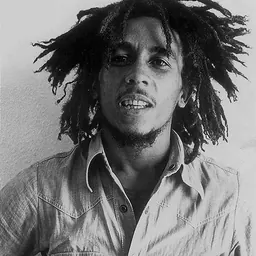



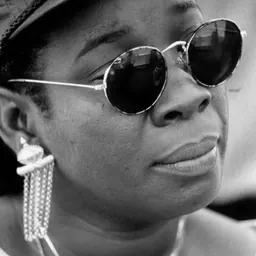
Related people
Same field, nearest in time





Contemporaries
People whose lives overlapped Haile Selassie I's
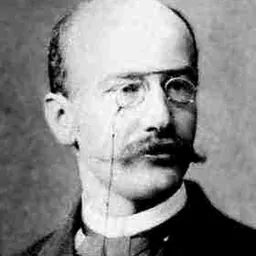
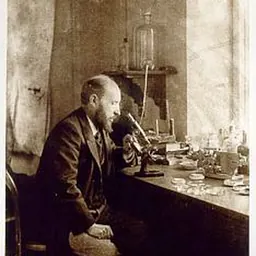

Frequently asked questions
Who was Haile Selassie I?
Emperor of Ethiopia from 1930 to 1974
When was Haile Selassie I born?
Haile Selassie I was born on 23 July 1892 in Ejersa Goro.
When did Haile Selassie I die?
Haile Selassie I died on 27 August 1975 in Addis Ababa.
What was Haile Selassie I's occupation?
Haile Selassie I was a politician, monarch and ruler.
What nationality was Haile Selassie I?
Haile Selassie I's recorded nationality: Ethiopian Empire.
Sources & further reading
Cite this page
APA: Biography.guide. (2026). Haile Selassie I. https://biography.guide/haile-selassie-i/
MLA: "Haile Selassie I." Biography.guide, https://biography.guide/haile-selassie-i/.
Chicago: "Haile Selassie I." Biography.guide. https://biography.guide/haile-selassie-i/.
Data last updated: 2026-09-20 · Spot an error? Report a correction.
Page generated 2026-09-27 05:32 UTC