
About Hadi al-Alawi
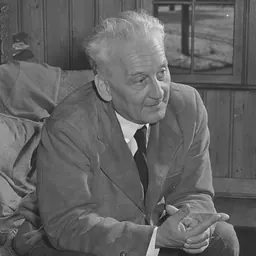
Lived 1932 – 1998 (aged 65–66). Hadi al-Alawi was an intellectual, historian, linguist, writer and translator.
Hadi Alwai (; 1932 – 27 September 1998) was an Iraqi Marxist scholar, Islamic historian, and Arab linguist. Born in Baghdad, Alawi grew up in a poor family of Hashemite descent and graduated from Baghdad University Department of Economics in 1956.
After graduating, Alawi left Iraq and travelled to China, then moved to Syria, where he lived in exile until he died and was buried in Damascus in 1998.
Alawi's research covers topics of Islam and Chinese philosophy. He has written several books and research papers on Islam, Chinese history, and languages.
Biography Hadi Alwai was born in Baghdad in 1932 or 1933. He lived in Karada Maryam a rural suburb of Baghdad in poverty. His father was an uneducated worker. His grandfather Salman, a religious scholar, died when Hadi was five years old.
He participated in the Iraqi national movement starting in the 1950s. He then changed to the Marxist approach. He established a close relationship with the communist movement, and in 1976, he was forced to leave Iraq, causing him to move between China, Britain, Lebanon, and Syria.
Beliefs The first research about him was published in 1960 in "Al-Muthaqaf magazine". Alwai was interested in the modern Arab and Islamic scientific renaissance. He considered that the first Arab renaissance began with Sadr al-Din al-Shirazi and not with the French campaign against Egypt.
Alwai was notable among his Iraqi and Arab contemporary scholars for his ideas about the East and his knowledge related to the Islamic and Chinese civilization as well as his knowledge of the Latin, Hebrew, Aramaic, and Chinese languages.
He sought complete impartiality, impersonality, and limitlessness of the intellectual, until he was called the cosmic intellectual. Alwai was also associated with Sufi, with his tendencies, behavior, and contributions to the heritage of Eastern Sufism. "In this context, (he) does not glorify the East nor preserve its religious and mythological taboos. Rather, he interprets them and searches for human destinies through his relational systems and various environments."
For Alwai, Islamic history is a system of progression of its previous stages and has internal dynamics economically, socially, politically, and culturally. In his view, there is no theological cognitive break between Jahiliyya and Islam. Rather, there was a transformative knowledge that led to changing the mechanism of relationships and their closed institutions by turning them into a new totalitarian system on the ideological and authoritarian levels.
Alwai searched for his linguistic project, of which only three dictionaries were completed. The dictionaries were a new form of the Arabic language by combining it between the spoken and classical dialects, to bring the common and written levels closer which are used by scholars, knowledge, and culture. He took steps to break the academic rules of language by introducing spoken vocabulary and synonyms versus classical in his writings and research without converging into "sukuniya" and its conservative laws. He worked on a project to reform the Arabic language "by facilitating syntax approximation between the writing language and the language of speech, and addressing the problems of the idiom language."
Don’t just read it —
keep it.
Full-length biographies made to live with: read them, listen on the way to work, watch them tonight.
- E-book
- Audio
- Video
Instant download · yours to keep · every purchase keeps this site free
Important facts
Related people
Same field, nearest in time





Contemporaries
People whose lives overlapped Hadi al-Alawi's



Frequently asked questions
Who was Hadi al-Alawi?
Iraqi philosopher, historian and linguist
When was Hadi al-Alawi born?
Hadi al-Alawi was born in 1932 in Baghdad.
When did Hadi al-Alawi die?
Hadi al-Alawi died on 27 September 1998 in Damascus.
What was Hadi al-Alawi's occupation?
Hadi al-Alawi was an intellectual, historian, linguist, writer and translator.
What nationality was Hadi al-Alawi?
Hadi al-Alawi's recorded nationality: Kingdom of Iraq, First Republic of Iraq, Ba'athist Iraq.
Sources & further reading
Cite this page
APA: Biography.guide. (2026). Hadi al-Alawi. https://biography.guide/hadi-al-alawi/
MLA: "Hadi al-Alawi." Biography.guide, https://biography.guide/hadi-al-alawi/.
Chicago: "Hadi al-Alawi." Biography.guide. https://biography.guide/hadi-al-alawi/.
Data last updated: 2026-09-20 · Spot an error? Report a correction.
Page generated 2026-09-27 04:59 UTC