
About Neil McInnes
Lived 1924 – 2017 (aged 92). Neil McInnes was an Australian intellectual, journalist and civil servant.
Neil McInnes (6 September 1924 – 28 April 2017 ) was an Australian intellectual, journalist and senior public servant.
His career as a journalist spanned the mid-1940s to the late 1970s in Australia, India and France. His scholarly work focused on the theoretical underpinnings of Marxism as well as the communist parties of Western Europe. In the Australian public service, he occupied several high level posts in intelligence and security from the late 1970s to 2009.
Early life and background
Neil McInnes was born on 6 September 1924 in Sydney, the fifth of seven children. He was educated at Sydney Boys' High School where he won a number of awards, notably for debating. He studied medicine and physiology at The University of Sydney between 1942 and 1947, however he did not graduate. McInnes also took Philosophy 1 with the Challis Professor of Philosophy John Anderson whose influence permeated several generations of students, known as the Andersonians. During World War II, the intellectual life of Sydney was still centred on the university, but towards the end of the war, a small group of students began to meet in various houses to discuss a broad range of intellectual concerns. Along with McInnes, the informal membership of the group included leading students in English, French, German, History, Philosophy and Science such as Paul Foulkes, Ernest Foulkes, Henry Harris, Noel Hush, George Munster, Jim Baker and Bill Maidment. This undergraduate association went by various names, notably The Apostles, though Anderson reportedly coined the name ‘The Poseurs Push’ for the group. McInnes established lifelong friendships with many of these students, as well as others who were also influenced by Anderson, notably Eugene Kamenka. McInnes contributed to student publications, chiefly Hermes and Honi Soit, for a time edited by fellow student Murray Sayle, who soon left the university to start his long and distinguished career as a journalist. At this time McInnes also became close to Harry Hooton, who was drawn to intellectual circles around Sydney University and opposed the generally favoured realist philosophy of Anderson and its activist offshoot, the Libertarian Society. McInnes and Hooton carried on corresponding for many years.
Career Journalism
In 1947, McInnes left Sydney with his lifelong companion June (Julie) Turner (1924-2005). He moved to Cairns to work as a journalist for The Cairns Post, sharing a house with Murray Sayle who was also working on the newspaper at the time.
In 1948 he left Australia for Calcutta to become a deputy editor for one of India's oldest newspapers, The Statesman. In 1952 he was promoted to editor of the Calcutta-based financial newspaper Capital. In 1953 and 1954, he was also the permanent correspondent in India of the London-based Commonwealth journal of international affairs, The Round Table.
Following several extended trips to Europe, he moved permanently to France in 1955, living in Paris and later in the Fontainebleau area for ten years. He devoted his time to research and writing. In 1965 Neil McInnes returned to Australia to work for The Australian Financial Review. He moved back to Paris at the end of 1966 when he took up the position of European editor of The Wall Street Journal and Barron’s Financial Weekly. He continued writing for The Australian Financial Review and also wrote for The Guardian.
Intellectual thought
In the 1960s, McInnes started publishing scholarly articles on Marxist theory, critically examining the roots of the development of Marxism, notably in western European countries such as Germany and France. He focused much of his early work on studying the influence of Georges Sorel on Marxist ideas. He regularly contributed articles on this topic to journals such as Survey, Encounter and Politics. This was a time when a widespread effort was under way to challenge the post-war sympathies with the USSR of many Western intellectuals and fellow travellers, particularly among liberals and the non-Communist Left (notably through the Congress for Cultural Freedom). In the 1970s during his time in Paris as a financial journalist, he wrote four respected books which provided an in-depth analysis on the development and theoretical underpinnings of the Communist parties of Western Europe and Eurocommunism. He was close to a number of French neo-liberal intellectuals known for their opposition to Marxist ideology, notably Jacques Rueff, Raymond Aron and Jean-Francois Revel, who considered that the battle against communism was also one of ideas.
Public service career
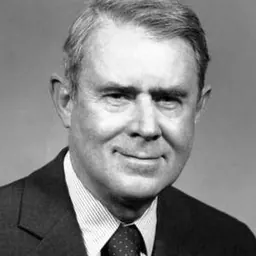
In 1978, McInnes was recruited by Prime Minister Malcolm Fraser to become the Deputy Director (economic) of the newly created Office of National Assessments (ONA), established to provide intelligence assessments on political, strategic and economic issues directly to the Prime Minister. It was reported that Cyrus Vance recommended McInnes to Fraser for this appointment. In 1982 he was promoted to Head of Policy Coordination within the Department of Defence, where his responsibilities included oversight of intelligence and security agencies. He was a Deputy Secretary in the Department of Prime Minister and Cabinet between 1983 and 1986. In this capacity, he was closely involved in providing intelligence and security policy advice to Prime Minister Hawke on both national and international matters. He accompanied the Prime Minister on official visits abroad, notably to the White House in February 1985.
In 1986, McInnes became the inaugural Inspector-General of Intelligence and Security, a position he held until his retirement in September 1989. The creation of this office followed a recommendation by Mr Justice Hope in his Royal Commission reports on the intelligence and security agencies with respect to their accountability.
In June 1989, McInnes was appointed a Member of the Order of Australia (AM) for public service.
Later life
Between 1990 and 2005, McInnes returned to his career observing and commenting on a range of topics relating to political philosophy and international relations. His articles were published in Quadrant and The National Interest.
Between 1990 and 2008 McInnes was a consultant to the Australian Secret Intelligence Service (ASIS), where he acted as ombudsman. He retired from active public life in 2009 at the age of 85.
He died in Canberra in 2017 aged 92.
Don’t just read it —
keep it.
Full-length biographies made to live with: read them, listen on the way to work, watch them tonight.
- E-book
- Audio
- Video
Instant download · yours to keep · every purchase keeps this site free
Important facts
People in Neil McInnes's life
Named in this biography and alive at the same time




Related people
Same field, nearest in time



Contemporaries
People whose lives overlapped Neil McInnes's

Frequently asked questions
Who was Neil McInnes?
Australian writer
When was Neil McInnes born?
Neil McInnes was born on 6 September 1924.
When did Neil McInnes die?
Neil McInnes died on 28 April 2017 in Canberra.
What was Neil McInnes's occupation?
Neil McInnes was an intellectual, journalist and civil servant.
What nationality was Neil McInnes?
Neil McInnes was Australian.
Sources & further reading
· DBpedia: Neil McInnes (1924–2017)
Cite this page
APA: Biography.guide. (2026). Neil McInnes. https://biography.guide/neil-mcinnes-intellectual/
MLA: "Neil McInnes." Biography.guide, https://biography.guide/neil-mcinnes-intellectual/.
Chicago: "Neil McInnes." Biography.guide. https://biography.guide/neil-mcinnes-intellectual/.
Data last updated: 2026-09-20 · Spot an error? Report a correction.
Page generated 2026-09-27 05:22 UTC