
H. R. Cox
American bacteriologist
About H. R. Cox
Lived 1907 – 1986 (aged 79). H. R. Cox was an American bacteriologist and parasitologist.
Herald Rea Cox (1907–1986) was an American bacteriologist. The bacterial family Coxiellaceae and the genus Coxiella, which include the organism that causes Q fever, are named after him.
Biography Born in Terre Haute, Indiana, he graduated from Indiana State Normal School, now Indiana State University, in 1928 before obtaining his doctorate from the Johns Hopkins Bloomberg School of Public Health.
In the 1930s, Cox joined the U.S. Public Health Service as Principal Bacteriologist at the Rocky Mountain Laboratory in Hamilton, Montana. While there, he studied rickettsia, a group of organisms that causes Rocky Mountain spotted fever and typhus. In 1938, he discovered that rickettsia could be grown in fertile egg membranes, which led to the development of vaccines to combat Rocky Mountain spotted fever and vaccines for several strains of typhus.
The family Coxiellaceae and the genus Coxiella, which contain the organism that causes Q fever, are named for Cox.
In 1942, Cox became head of the Virus and Rickettsial Research Department at Lederle Laboratories in New York. At that time, public health attention focused on finding a vaccine for polio. Cox was one of many researchers competing to find a breakthrough, which is generally credited to Jonas Salk (1952). Although Cox's egg technique was in widespread use by 1943, it had not been successful for polio. In 1947, John Franklin Enders and others demonstrated that monkey tissue provided a suitable medium to grow the virus in the lab. Salk employed the Enders method, incubating the virus using rhesus monkey kidneys and testicles. Cox eschewed the technique because of the danger monkey virus represented. In October, 1952, Cox reported that he had grown the Lansing strain of polio virus in fertile hens' eggs, and in 1961, he announced an oral polio vaccine. Meanwhile, human trials of Albert Sabin's successful oral vaccine had begun in 1957, and it would be licensed for general use in 1961.
Within Lederle Laboratories, Cox competed with co-worker Hilary Koprowski, as each had developed a successful polio vaccine.
Honors 1940: Theobald Smith Award, American Association for the Advancement of Science (for Rocky Mountain Spotted Fever vaccine) 1942: Doctor of Science, University of Montana 1946: Typhus Commission Medal 1951: Ricketts Award 1958: Distinguished Alumni Award, Indiana State University 1961: President, American Society for Microbiology 1971: Honorary Member, Society of American Bacteriologists, American Society for Microbiology
Archived papers
American Society for Microbiology Archives
Don’t just read it —
keep it.
Full-length biographies made to live with: read them, listen on the way to work, watch them tonight.
- E-book
- Audio
- Video
Instant download · yours to keep · every purchase keeps this site free
Important facts
People in H. R. Cox's life
Named in this biography and alive at the same time
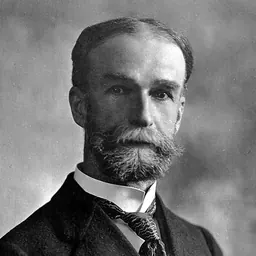

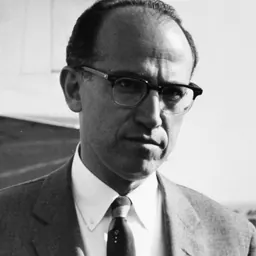




Related people
Same field, nearest in time



Contemporaries
People whose lives overlapped H. R. Cox's


Frequently asked questions
Who was H. R. Cox?
American bacteriologist (1907-1986)
When was H. R. Cox born?
H. R. Cox was born on 28 February 1907 in Terre Haute.
When did H. R. Cox die?
H. R. Cox died on 17 August 1986 in Hamilton.
What was H. R. Cox's occupation?
H. R. Cox was a bacteriologist and parasitologist.
What nationality was H. R. Cox?
H. R. Cox was American.
Sources & further reading
Cite this page
APA: Biography.guide. (2026). H. R. Cox. https://biography.guide/h-r-cox/
MLA: "H. R. Cox." Biography.guide, https://biography.guide/h-r-cox/.
Chicago: "H. R. Cox." Biography.guide. https://biography.guide/h-r-cox/.
Data last updated: 2026-09-20 · Spot an error? Report a correction.
Page generated 2026-09-27 05:21 UTC