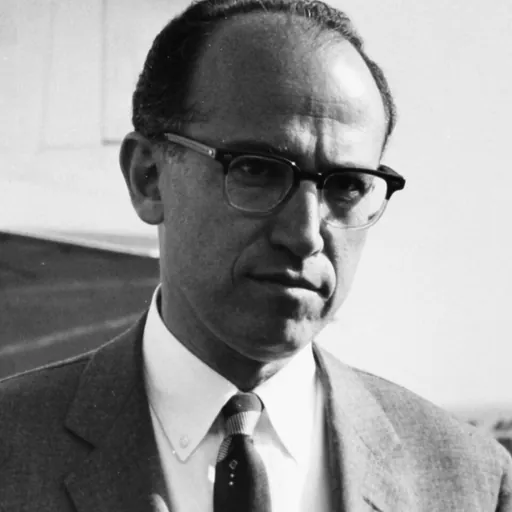
About Jonas Salk
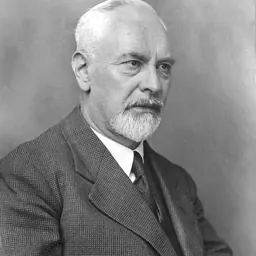
Lived 1914 – 1995 (aged 80). Jonas Salk was an American physician, epidemiologist, inventor, virologist and immunologist, known for Polio vaccine.
Early life and education Jonas Salk was born on October 28, 1914, in New York City to Daniel and Dora (née Press) Salk. He was Jewish-American. His father Daniel was born in New Jersey to Jewish immigrant parents while Dora was born in Minsk and emigrated to the United States when she was 12. Salk's parents did not receive extensive formal education. He had two younger brothers, Herman and Lee, a child psychologist. The family moved from East Harlem to 853 Elsmere Place in the Bronx, with some time spent in Queens at 439 Beach 69th Street, Arverne.
At age 13, Salk entered Townsend Harris Hall Prep School, a public school for intellectually gifted students. Named after the founder of City College of New York (CCNY), it was "a launching pad for the talented sons of immigrant parents who lacked the money—and pedigree—to attend a top private school", according to David Oshinsky, his biographer. In high school, "he was known as a perfectionist...who read everything he could lay his hands on," according to one of his fellow students. Students had to cram a four-year curriculum into just three years. As a result, most dropped out or flunked out, despite the school's motto "study, study, study." However, of the students who graduated, most had the grades to enroll in CCNY, then noted for being a highly competitive college.
Education Salk enrolled in CCNY, where he earned a Bachelor of Science degree in chemistry in 1934. Oshinsky writes that "for working-class immigrant families, City College represented the apex of public higher education. Getting in was tough, but tuition was free. Competition was intense, but the rules were fairly applied. No one got an advantage based on an accident of birth." "As a child I was not interested in science. I was merely interested in things human, the human side of nature, if you like, and I continue to be interested in that."
Medical school After graduating from City College of New York, Salk enrolled in New York University School of Medicine. According to Oshinsky, NYU based its modest reputation on famous alumni, such as Walter Reed, who helped conquer yellow fever. Tuition was "comparatively low, better still, it did not discriminate against Jews...while most of the surrounding medical schools—Cornell, Columbia, University of Pennsylvania, and Yale—had rigid quotas in place." Yale, for example, accepted 76 applicants in 1935 out of a pool of 501. Although 200 of the applicants were Jewish, only five got in.
In his last year of medical school, Salk said, "I had an opportunity to spend time in elective periods in my last year in medical school, in a laboratory that was involved in studies on influenza. The influenza virus had just been discovered about a few years before that. And, I saw the opportunity at that time to test the question as to whether we could destroy the virus infectivity and still immunize. And so, by carefully designed experiments, we found it was possible to do so."
Postgraduate research and early laboratory work In 1941, during his postgraduate work in virology, Salk chose a two-month elective to work in the Thomas Francis' laboratory at the University of Michigan. Francis had recently joined the faculty of the medical school after working for the Rockefeller Foundation, where he had discovered the type B influenza virus. According to Bookchin, "the two-month stint in Francis's lab was Salk's first introduction to the world of virology—and he was hooked."
In 1948, Harry Weaver, the director of research at the National Foundation for Infantile Paralysis, contacted Salk. He asked Salk to find out if there were more types of polio than the three then known and offered additional space, equipment and researchers. For the first year, he gathered supplies and researchers, including Julius Youngner, Byron Bennett, L. James Lewis, Elsie N. Ward, and secretary Lorraine Friedman who joined Salk's team as well. As time went on, Salk began securing grants from the Mellon family and was able to build a working virology laboratory. thumb Magazine photo of Salk to O'Neill, "the most elaborate program of its kind in history, involving 20,000 physicians and public health officers, 64,000 school personnel, and 220,000 volunteers," A 1954 Gallup poll showed that more Americans knew about the polio field trials than could give the full name of the President. leftExtensive publicity and fear of polio led to much increased funding, reaching $67 million by 1955. Despite the funding, research continued on live vaccines. thumb A March of Dimes poster, c. 1957After successful tests on laboratory animals, on July 2, 1952, assisted by the staff at the D.T. Watson Home for Crippled Children, which is now the Education Center at the Watson Institute in Sewickley, Pennsylvania ), Salk injected 43 children with his killed-virus vaccine. A few weeks later, Salk injected children at the Polk State School for the Retarded and Feeble-minded. He vaccinated his own children in 1953. In 1954 he tested the vaccine on about one million children, known as the polio pioneers. The vaccine was announced as safe on April 12, 1955. The foundation allowed itself to go into debt to finance the final research required to develop the Salk vaccine. Salk worked incessantly for two-and-a-half years.
Salk's inactivated polio vaccine came into use in 1955. It is on the World Health Organization's List of Essential Medicines.
Becoming a public figure Celebrity versus privacy
Salk preferred not to have his career as a scientist affected by too much personal attention, as he had always tried to remain independent and private in his research and life, but this proved to be impossible. "Young man, a great tragedy has befallen you—you've lost your anonymity", the television personality Ed Murrow said to Salk shortly after the onslaught of media attention.
The National Foundation for Infantile Paralysis and the University of Pittsburgh in fact had looked into patenting the vaccine, though this was not in order to make a profit as they had already committed to give the formula to pharmaceutical companies for free.
Salk served on the board of directors of the John D. and Catherine T. MacArthur Foundation.
Author Jon Cohen noted, "Jonas Salk made scientists and journalists alike go goofy. As one of the only living scientists whose face was known the world over, Salk, in the public's eye, had a superstar aura. Airplane pilots would announce that he was on board, and passengers would burst into applause. Hotels routinely would upgrade him into their penthouse suites. A meal at a restaurant inevitably meant an interruption from an admirer. Scientists and journalists who regularly dealt with Salk would come to see him in more human terms, but many still initially approached him with the same drop-jawed wonder, as though some of the stardust might rub off."
For the most part, Salk was "appalled at the demands on the public figure he has become and resentful of what he considers to be the invasion of his privacy", wrote The New York Times, a few months after his vaccine announcement. The Times article noted, "at 40, the once obscure scientist ... was lifted from his laboratory almost to the level of a folk hero." He received a presidential citation, a score of awards, four honorary degrees, half a dozen foreign decorations, and letters from thousands of fellow citizens. His alma mater, City College of New York, gave him an honorary degree as Doctor of Laws. But "despite such very nice tributes", The New York Times wrote, "Salk is profoundly disturbed by the torrent of fame that has descended upon him. ... He talks continually about getting out of the limelight and back to his laboratory ... because of his genuine distaste for publicity, which he believes is inappropriate for a scientist."
He enjoyed talking to people he liked, and "he likes a lot of people", wrote the Times. "He talks quickly, articulately, and often in complete paragraphs." And "He has very little perceptible interest in the things that interest most people—such as making money." That belongs "in the category of mink coats and Cadillacs—unnecessary", he said. Called the Salk Institute for Biological Studies, it opened in 1963 in the San Diego neighborhood of La Jolla, in a purpose-built facility designed by the architect Louis Kahn. Salk believed that the institution would help new and upcoming scientists along in their careers, as he said himself, "I thought how nice it would be if a place like this existed and I was invited to work there."
In 1966, Salk described his "ambitious plan for the creation of a kind of Socratic academy where the supposedly alienated two cultures of science and humanism will have a favorable atmosphere for cross-fertilization."
In an interview about his future hopes at the institute, he said, "In the end, what may have more significance is my creation of the institute and what will come out of it, because of its example as a place for excellence, a creative environment for creative minds."
Francis Crick, co-discoverer of the structure of the DNA molecule, was a leading professor at the institute until his death in 2004. The institute also served as the basis for Bruno Latour and Steve Woolgar's 1979 book Laboratory Life: The Construction of Scientific Facts.
AIDS vaccine work Beginning in the mid-1980s, Salk engaged in research to develop a vaccine for AIDS. He cofounded The Immune Response Corporation (IRC) with Kevin Kimberlin and patented Remune, an immunologic therapy, but was unable to secure liability insurance for the product. The project was discontinued in 2007, twelve years after Salk's death.
Activism In 1995 Jonas Salk became one of the original signatories of the Ashley Montagu Resolution which asked the World Court, now the International Court of Justice, to help end genital mutation of children including female genital mutilation, circumcision, and penile subincision.
Salk's biophilosophy
In 1966, The New York Times referred to him as the "Father of Biophilosophy." According to Times journalist and author Howard Taubman, "he never forgets ... there is a vast amount of darkness for man to penetrate. As a biologist, he believes that his science is on the frontier of tremendous new discoveries; and as a philosopher, he is convinced that humanists and artists have joined the scientists to achieve an understanding of man in all his physical, mental and spiritual complexity. Such interchanges might lead, he would hope, to a new and important school of thinkers he would designate as biophilosophers." Salk told his cousin, Joel Kassiday, at a meeting of the Congressional Clearinghouse on the Future on Capitol Hill in 1984 that he was optimistic that ways to prevent most human and animal diseases would eventually be developed. Salk said people must be prepared to take prudent risks, since "a risk-free society would become a dead-end society" without progress.
Salk describes his biophilosophy as the application of a "biological, evolutionary point of view to philosophical, cultural, social and psychological problems." He went into more detail in two of his books, Man Unfolding, and The Survival of the Wisest. In an interview in 1980, he described his thoughts on the subject, including his feeling that a sharp rise and an expected leveling off in the human population would take place and eventually bring a change in human attitudes:
I think of biological knowledge as providing useful analogies for understanding human nature. ... People think of biology in terms of such practical matters as drugs, but its contribution to knowledge about living systems and ourselves will in the future be equally important. ... In the past epoch, man was concerned with death, high mortality; his attitudes were antideath, antidisease", he says. "In the future, his attitudes will be expressed in terms of prolife and prohealth. The past was dominated by death control; in the future, birth control will be more important. These changes we're observing are part of a natural order and to be expected from our capacity to adapt. It's much more important to cooperate and collaborate. We are the co-authors with nature of our destiny.
Just prior to his death, Salk was working on a new book along the theme of biophilosophy, privately reported to be titled Millennium of the Mind.
Personal life and death The day after his graduation from medical school in 1939, Salk married Donna Lindsay, a master's candidate at the New York College of Social Work. David Oshinsky writes that Donna's father, Elmer Lindsay, "a wealthy Manhattan dentist, viewed Salk as a social inferior, several cuts below Donna's former suitors." Eventually, her father agreed to the marriage on two conditions: first, Salk must wait until he could be listed as an official M.D. on the wedding invitations, and second, he must improve his "rather pedestrian status" by giving himself a middle name." Darrell, who also worked with vaccines and genetics and eventually retired from the pediatrics faculty at the University of Washington School of Medicine; and Jonathan Salk, an adult and child psychiatrist and Assistant Clinical Professor at the David Geffen School of Medicine at UCLA. They divorced in 1968, and Salk married French painter Françoise Gilot (formerly the mistress of Pablo Picasso) two years later. He was buried at El Camino Memorial Park in San Diego.
Honors and recognition
1955, one month after the vaccine announcement, he was honored by the Commonwealth of Pennsylvania, where he was given their "highest award for services" by Governor George M. Leader, Meritorious Service Medal, where the governor added... in recognition of his 'historical medical' discovery ... Dr. Salk's achievement is meritorious service of the highest magnitude and dimension for the commonwealth, the country and mankind." The governor, who had three children, said that "as a parent he was 'humbly thankful to Dr. Salk,' and as Governor, 'proud to pay him tribute'.
1955, City University of New York creates the Salk Scholarship fund which it awards to multiple outstanding pre-med students each year 1956, awarded the Lasker Award 1957, the Municipal Hospital building, where Salk conducted his polio research at the University of Pittsburgh, is renamed Jonas Salk Hall and is home to the university's School of Pharmacy and Dentistry. 1958, awarded the James D. Bruce Memorial Award 1958, elected to the Polio Hall of Fame, which was dedicated in Warm Springs, Georgia 1961, Salk Oval on the Gold Coast in Queensland, Australia, named after him 1975, awarded the Jawaharlal Nehru Award and the Congressional Gold Medal 1976, awarded the Academy of Achievement's Golden Plate Award 1976, named the Humanist of the Year by the American Humanist Association 1977, awarded the Presidential Medal of Freedom from President Jimmy Carter, with the following statement accompanying the medal:
Because of Doctor Jonas E. Salk, our country is free from the cruel epidemics of poliomyelitis that once struck almost yearly. Because of his tireless work, untold hundreds of thousands who might have been crippled are sound in body today. These are Doctor Salk's true honors, and there is no way to add to them. This Medal of Freedom can only express our gratitude, and our deepest thanks.
1981, decorated by the Italian government on January 3 as a Grand Officer of the Order of Merit of the Italian Republic 1996, the March of Dimes Foundation created an annual $250,000 cash "Prize" to outstanding biologists as a tribute to Salk. 2006, the United States Postal Service issued a 63-cent Distinguished Americans series postage stamp in his honor. 2007, California Governor Arnold Schwarzenegger and First Lady Maria Shriver inducted Salk into the California Hall of Fame. 2009, BBYO boys chapter chartered in his honor in Scottsdale, Arizona, Named "Jonas Salk AZA #2357" Schools in Mesa, Arizona; The Jonas E Salk Middle School of Spokane Schools District No. 81 in Spokane, Washington; Tulsa, Oklahoma; Bolingbrook, Illinois; Levittown, New York; Old Bridge, New Jersey; Merrillville, Indiana; Sacramento, California; and Mira Mesa, California; are named after him. 2012, October 24, in honor of his birthday, has been named "World Polio Day", and was originated by Rotary International over a decade earlier. 2014, On the 100th anniversary of Salk's birth, a Google Doodle was created to honor the physician and medical researcher. The doodle shows happy and healthy children and adults playing and going about their lives with two children hold up a sign saying, "Thank you, Dr. Salk!"
Documentary films In early 2009, the American Public Broadcasting Service aired its new documentary film, American Experience: The Polio Crusade. On April 12, 2010, to help celebrate the 55th anniversary of the Salk vaccine, a new 66-minute documentary, The Shot Felt 'Round the World, had its world premiere. Directed by Tjardus Greidanus and produced by Laura Davis, the documentary was conceived by Hollywood screenwriter and producer Carl Kurlander to bring "a fresh perspective on the era." In 2014, actor and director Robert Redford, who was once struck with a mild case of polio when he was a child, directed a documentary about the Salk Institute in La Jolla. In Chapter 10 of the 2018 season of Genius Michael McElhatton portrays Salk in a short cameo where he is on a date with Françoise Gilot. In Episode 4 of Life, Larry and the Pursuit of Unhappiness, Adam Lustick portrays Salk in a skit featuring Salk's proud but overbearing mother, who is played by Larry David.
Selected publications Man Unfolding (1972) Survival of the Wisest (1973) World Population and Human Values: A New Reality (1981) Anatomy of Reality: Merging of Intuition and Reason (1983)
Don’t just read it —
keep it.
Full-length biographies made to live with: read them, listen on the way to work, watch them tonight.
- E-book
- Audio
- Video
Instant download · yours to keep · every purchase keeps this site free
Important facts
Family & relationships
People in Jonas Salk's life
Named in this biography and alive at the same time




Related people
Same field, nearest in time

Contemporaries
People whose lives overlapped Jonas Salk's


Frequently asked questions
Who was Jonas Salk?
Jewish-American inventor of polio vaccine (1914–1995)
When was Jonas Salk born?
Jonas Salk was born on 28 October 1914 in New York City.
When did Jonas Salk die?
Jonas Salk died on 23 June 1995 in La Jolla.
What was Jonas Salk's occupation?
Jonas Salk was a physician, epidemiologist, inventor, virologist and immunologist.
What was Jonas Salk known for?
Jonas Salk was known for Polio vaccine.
What nationality was Jonas Salk?
Jonas Salk was American.
Sources & further reading
Cite this page
APA: Biography.guide. (2026). Jonas Salk. https://biography.guide/jonas-salk/
MLA: "Jonas Salk." Biography.guide, https://biography.guide/jonas-salk/.
Chicago: "Jonas Salk." Biography.guide. https://biography.guide/jonas-salk/.
Data last updated: 2026-09-22 · Spot an error? Report a correction.
Portrait: Wikimedia Commons · author & licence
Page generated 2026-09-27 05:02 UTC