
About Guy Gillette
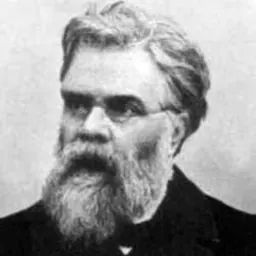
Lived 1879 – 1973 (aged 94). Guy Gillette was an American politician, prosecutor and lawyer.
Guy Mark Gillette (February 3, 1879 – March 3, 1973) was an American politician and lawyer who served as a Democratic U.S. representative (1933–1936) and senator (1936–1945; 1949–1955) from Iowa. Throughout his Senate service, Gillette was elected, re-elected, defeated, elected again, and defeated again.
Personal background Born in Cherokee, Iowa, he attended public school and graduated from Drake University Law School in Des Moines in 1900. He was admitted to the bar in 1900 and commenced practice in Cherokee. During the Spanish–American War, he served as a sergeant in the Fifty-second Iowa Regiment in the United States Army, but never saw combat. He volunteered to fight alongside the Boers in the Second Boer War (1898–1902), but was turned down.
Service in the U.S. House, then U.S. Senate (1933–1945) In 1932, in the Roosevelt landslide, he was elected as a Democrat to represent Iowa's 9th congressional district, in heavily Republican northwest Iowa. He was easily re-elected in 1934, and served nearly all of that term. He resigned upon his election to the United States Senate on November 3, 1936, to serve out the remainder of the term of Senator Richard Louis Murphy, who had died in an auto accident. Nearly two years remained in Murphy's term, which would end January 3, 1939. Although he generally supported the New Deal, he opposed the new wage and hours bill, a new farm bill, and aspects of the Social Security system. He nevertheless defeated Roosevelt's choice for the Democratic nomination, Congressman Otha D. Wearin, and was re-elected to his first full Senate term by 2,805 votes. During that term, his conflicts with the Roosevelt administration expanded, on topics as diverse as the terms of the Neutrality Act, Roosevelt's pursuit of third and fourth terms,
After the Japanese attack on Pearl Harbor (where, coincidentally, Gillette's brother Captain Claude Gillette managed the Navy yard), Gillette became "more of an internationalist".
Like several others who had opposed Roosevelt's efforts to aid the United Kingdom before Pearl Harbor but faced wartime elections, Gillette lost his seat in 1944, to Republican Governor Bourke Hickenlooper by 29,734 votes.
Between terms Within days of Gillette's first defeat, Roosevelt nominated him as the chairman of the three-member Surplus Property Board, prompting The Washington Post and a Life editorial to quip that the president was confusing the problem of surplus property with the problem of surplus politicians. He took an early dislike to the job, and complained that he was often outvoted by the two other members. After resigning from the Surplus Board in May 1945, he became president of the American League for a Free Palestine, serving until the committee's work ended with the establishment of the state of Israel in 1948.
1948 Senate Campaign In 1948, Gillette attempted a political comeback, campaigning for Iowa's other U. S. Senate seat held by former Republican Governor George Wilson, Gillette appealed to farmers, hammering home the prices of crops falling, at a campaign event with President Harry Truman who was seeking re-election himself, Truman said to the voters of Iowa “if they failed to return Guy Gillette to the U. S. Senate there was something wrong with them”.
Gillette would end up defeating Wilson by 162,448 votes, in the concurrent presidential race Truman carried Iowa en route to re-election nationwide. Gillette’s Seat was one of nine Republican senate seats that flipped to Democrats in 1948.
Return to the Senate (1949–1955) Gillette was sworn back into the Senate on January 3rd 1949, In 1951, his Subcommittee on Privileges and Elections conducted an investigation of Wisconsin Senator Joseph McCarthy's campaign practices. Gillette served until January 3, 1955, after losing his reelection bid to U.S. Representative Thomas E. Martin by 39,697 votes. His defeat was considered an upset because it conflicted with polls. It also meant that Iowa's congressional delegation would be entirely composed of Republicans, which would not happen again until 2023.
Post-Senate Following his second defeat, Gillette initially remained on Capitol Hill, serving as counsel with the Senate Post Office and Civil Service Committee (from 1955 to 1956) and the Senate Judiciary Committee (from 1956 to 1961).
Gillette and former U.S. Senator Henry F. Ashurst had cameo appearances as U.S. Senators in the film 1962 Advise & Consent.
He retired and resided in Cherokee until his death at age 94 on March 3, 1973.
Publications "The Forgotten Consumer." Challenge, vol. 1, no. 2 (Nov. 1952), pp. 29–33. . "The Senate in Foreign Relations." Annals of the American Academy of Political and Social Science, vol. 289 (Sep. 1953), pp. 49–57. . "Preparing For UN Charter Review." World Affairs, vol. 117, no. 3 (Fall 1954), pp. 67–69. . "United Nations Charter Review." Proceedings of the American Society of International Law at Its Annual Meeting (1921-1969), vol. 48 (Apr. 22–24, 1954), pp. 191–211. .
Don’t just read it —
keep it.
Full-length biographies made to live with: read them, listen on the way to work, watch them tonight.
- E-book
- Audio
- Video
Instant download · yours to keep · every purchase keeps this site free
Important facts
People in Guy Gillette's life
Named in this biography and alive at the same time




Related people
Same field, nearest in time





Contemporaries
People whose lives overlapped Guy Gillette's


Frequently asked questions
Who was Guy Gillette?
American politician (1879-1973)
When was Guy Gillette born?
Guy Gillette was born on 3 February 1879 in Cherokee.
When did Guy Gillette die?
Guy Gillette died on 3 March 1973 in Cherokee.
What was Guy Gillette's occupation?
Guy Gillette was a politician, prosecutor and lawyer.
What nationality was Guy Gillette?
Guy Gillette was American.
Sources & further reading
Cite this page
APA: Biography.guide. (2026). Guy Gillette. https://biography.guide/guy-gillette-politician/
MLA: "Guy Gillette." Biography.guide, https://biography.guide/guy-gillette-politician/.
Chicago: "Guy Gillette." Biography.guide. https://biography.guide/guy-gillette-politician/.
Data last updated: 2026-09-26 · Spot an error? Report a correction.
Page generated 2026-09-27 05:13 UTC