
Guy Gabaldon
United States Marine who won the Navy Cross
About Guy Gabaldon
Lived 1926 – 2006 (aged 80). Guy Gabaldon was an American soldier, military interpreter and businessperson.
Guy Louis Gabaldon (March 22, 1926 – August 31, 2006) was a Chicano in the United States Marine Corps who, at age 18, captured or persuaded to surrender over 1,300 Japanese soldiers and civilians during the battles for Saipan and Tinian islands in 1944 during World War II. Called "Gabby" by his friends, he became known as "The Pied Piper of Saipan" for his heroism on that island. Though Gabaldon was recommended for the Medal of Honor, he received the Silver Star, which was upgraded by the Marine Corps to the Navy Cross in 1960.
In 1960, a friend of Gabaldon's with Hollywood connections influenced the industry to make a movie about Gabaldon's version of events on Saipan called Hell to Eternity. In 1964, he unsuccessfully ran for U.S. Congressman in his Southern California district. In 1990, he authored a book entitled Saipan: Suicide Island.
Early years Gabaldon was born in Los Angeles, California. Gabaldon, who was of Mexican descent, was one of seven children. He was raised in East Los Angeles and, as a ten-year-old, he helped his family by shining shoes on Skid Row. Gabaldon became a member of a multi-ethnic gang known as the "Moe Gang". At age 12, he moved out of his home to live with the Nakano family, who were of Japanese heritage and whom he considered his extended family. He attended language school every day with their children and learned to speak Japanese. He also learned about their customs and culture.
World War II At the outbreak of World War II the Nakanos, his adopted family, were sent to a relocation camp named the Heart Mountain Relocation Center, in Wyoming. He traveled to Alaska to work in a cannery. On March 22, 1943, Gabaldon's 17th birthday, he joined the United States Marine Corps. He received his basic training at Camp Pendleton, completed the Enlisted Marine Japanese Language School at Camp Elliot in San Diego, and was assigned to Headquarters and Service Company, 2nd Marine Regiment, 2nd Marine Division, as a scout and observer.
The Pied Piper of Saipan The capture of Saipan was considered essential for the establishment of airfields which would accommodate the B-29 Superfortress bombers to be used in what was then the planned full-scale invasion of the Japanese mainland. On June 15, 1944, an armada of 535 ships, carrying 127,570 U.S. military personnel which included Marines from the 2nd and 4th Marine Divisions, began the invasion of Saipan. Japanese soldiers seldom surrendered during World War II and, as the American military invasion went badly for the Japanese, they were ordered by their superiors on Saipan to kill seven American Marines or soldiers for every soldier they lost, or commit suicide.
According to Gabaldon, he began taking and bringing in prisoners the night of the first day that he arrived on Saipan. According to Gabaldon:
Gabaldon was reprimanded by his superior officers, and threatened with a court-martial for leaving his post. However, according to him the next night he went out and did it again. He carefully approached a cave, shot the enemy guards outside, moved off to one side of the cave, and yelled in Japanese, "You're surrounded and have no choice but to surrender. Come out, and you will not be killed! I assure you will be well-treated. We do not want to kill you!"
Meehl also cites interviews with other Saipan veterans and references additional reports, including an allegation – relayed through Sheeks – that Gabaldon once struck an elderly Japanese civilian, breaking his jaw after the man failed to answer a question quickly enough.
These accounts, however, remain uncorroborated by primary source documentation or official records. Gabaldon's actions were officially recognized by the U.S. military, which awarded him the Navy Cross (upgraded from a previously awarded Silver Star), and his commanding officers originally recommended him for the Medal of Honor. Historians have noted that postwar recollections, particularly decades after the fact, may reflect personal bias or conflicting memories and should be evaluated critically when used to assess contemporaneously documented events.
Tinian Gabaldon continued to capture more Japanese people on Tinian. While back on Saipan fighting Japanese guerrillas still on the island, he was seriously wounded in an enemy machine gun ambush. Gabaldon claimed he was credited with the capture of approximately 1,500 Japanese soldiers and civilians on Saipan and Tinian and was recommended for the Medal of Honor by his commanding officer Captain John Schwabe, who noted that Gabaldon single-handedly captured more than ten times the number of prisoners taken by legendary Medal of Honor recipient, Sgt. Alvin C. York, in World War I. Despite this recommendation, Gabaldon was awarded a Silver Star Medal.
Post-war Gabaldon received an honorable discharge from the Marine Corps as a result of his combat wounds. In 1960, the Marine Corps elevated his Silver Star Medal to the Navy Cross, the second highest US military decoration for valor. When his first marriage to June Gabaldon ended in divorce, he met the woman who became his second wife, Ohana Suzuki, while working in Mexico. Later, Gabaldon appeared as himself on the September 1, 1960 episode of the CBS game show To Tell the Truth.
The fact that Gabaldon captured at least 1,500 Japanese prisoners was verified on the national program by Marines Corps intelligence officers Colonel Walter Layer, Colonel John Schwabe, Major James High, and several enlisted men from military intelligence.
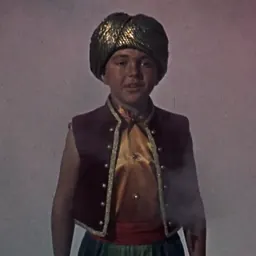
Hollywood producers became interested in Gabaldon's story and in 1960 released the film Hell to Eternity where his actions on Saipan were memorialized. He was portrayed by actors Jeffrey Hunter as an adult and by Richard Eyer as a boy. Gabaldon himself served as an adviser in the filming of the movie.
Later years
Guy Gabaldon speaking at Pentagon ceremony honoring Hispanic World War II veterans, September 2004.
In 1964, Gabaldon unsuccessfully ran for the United States Congress as a Republican in California.
In 1970, he moved to Saipan with his wife where he established a seafood business and ran a youth camp. He lived there for 20 years. He was an avid pilot and flew small planes all over the CNMI. His book has also been re-printed as America Betrayed.
In 1995, he returned to California.
In 2003, he moved to Old Town, Florida.
In September 2004, Gabaldon was honored by the Pentagon, in a ceremony which recognized the contributions of Hispanic American World War II veterans.
Various organizations have requested the Medal of Honor for Gabaldon, but their requests have been rejected. After lobbying by the Hispanic community, the case to upgrade his Navy Cross to the Medal of Honor is currently under review by the Department of Defense. Gabaldon is survived by his wife, Ohana; his sons Guy Jr., Ray, Tony, Yoshio, Jeffrey and Russell; his daughters Aiko, Hanako and Manya.
Awards and recognitions
During his lifetime, Gabaldon received many awards and recognitions, including resolutions honoring him from the City of Los Angeles, the City of Chicago, and the Commonwealth of Northern Marianas.
On November 12, 2005, he was the recipient of the Chesty Puller Award from the World War II Veterans Committee, a prominent organization which showcases the veterans of World War II and their history.
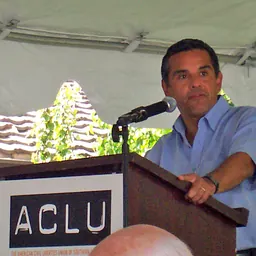
On July 7, 2006, he was honored by Mayor Antonio Villaraigosa of Los Angeles and the Los Angeles City Council. The Mayor and the city council sent a resolution to the White House requesting the Medal of Honor for Gabaldon. That same year the World War II Veteran's Committee in Washington, D.C., featured Gabaldon on the cover of their quarterly magazine. Also in July, Gabaldon was honored by the National Council of La Raza, a national organization and a leading Latino civil rights advocate.
In addition to the Hollywood movie Hell to Eternity, which recounted Gabaldon's heroism during World War II, Hollywood producer Steve Rubin made a 2008 documentary film about Gabaldon titled East L.A. Marine: The Untold True Story of Guy Gabaldon. Military artist Henry Godines also unveiled a commissioned portrait, titled The Pied Piper of Saipan, Guy Gabaldon.
Navy Cross citation
. Military awards and decorations Gabaldon's military awards include:
Navy CrossPurple Heart MedalCombat Action RibbonAmerican Campaign MedalAsiatic-Pacific Campaign Medalwith two bronze starsWorld War II Victory Medal
Don’t just read it —
keep it.
Full-length biographies made to live with: read them, listen on the way to work, watch them tonight.
- E-book
- Audio
- Video
Instant download · yours to keep · every purchase keeps this site free
Important facts
People in Guy Gabaldon's life
Named in this biography and alive at the same time




Related people
Same field, nearest in time





Contemporaries
People whose lives overlapped Guy Gabaldon's


Frequently asked questions
Who was Guy Gabaldon?
United States Marine who won the Navy Cross (1926–2006)
When was Guy Gabaldon born?
Guy Gabaldon was born on 22 March 1926 in Los Angeles.
When did Guy Gabaldon die?
Guy Gabaldon died on 31 August 2006 in Old Town.
What was Guy Gabaldon's occupation?
Guy Gabaldon was a soldier, military interpreter and businessperson.
What nationality was Guy Gabaldon?
Guy Gabaldon was American.
Sources & further reading
Cite this page
APA: Biography.guide. (2026). Guy Gabaldon. https://biography.guide/guy-gabaldon/
MLA: "Guy Gabaldon." Biography.guide, https://biography.guide/guy-gabaldon/.
Chicago: "Guy Gabaldon." Biography.guide. https://biography.guide/guy-gabaldon/.
Data last updated: 2026-09-20 · Spot an error? Report a correction.
Page generated 2026-09-27 05:21 UTC