
About Gustave Caillebotte
Lived 1848 – 1894 (aged 45). Gustave Caillebotte was a French painter, art collector, patron of the arts, philatelist, marine architect and sailor.
Gustave Caillebotte (; 19 August 1848 – 21 February 1894) was a French painter who was a member and patron of the Impressionists, although he painted in a more realistic manner than many others in the group. Caillebotte was known for his early interest in photography as an art form. Because of his family's wealth, he was a patron of many of his fellow Impressionists. Upon his death, his bequeathed collection of their works became the central collection of Impressionism for the French Republic, despite considerable controversy.
His most well known work is Paris Street; Rainy Day, known for qualities such as its mise-en-scène presentation. The Art Institute of Chicago acquired the painting in 1964 and his work drew more attention in the 1970s. Although Caillebotte has long been regarded for his philanthropy and support as a patron and promoter of Impressionism, he did not have an international retrospective of his work until 1994, 100 years after his death. In 2022, when France successfully attained possession of Boating Party, known for its close-up action perspective, through a National treasure of France declaration process, the country asserted the work's cultural significance and prominence with a celebrated display, followed by a national tour of the work, and then an exhibition of Caillebotte's work that toured internationally.
Early life
Gustave Caillebotte was born on 19 August 1848 to an upper-class Parisian family living in the rue du Faubourg-Saint-Denis. His father, Martial Caillebotte (1799–1874), inherited the family's military textile business and was also a judge at the . Caillebotte's father was twice widowed before marrying Caillebotte's mother, Céleste Daufresne (1819–1878), who had two more sons after Gustave: René (1851–1876) and Martial (1853–1910).
Caillebotte earned a law degree in 1868 and a license to practice law in 1870. He also was an engineer. Shortly after his education, he was drafted to fight in the Franco-Prussian War and served from July 1870 to March 1871 in the .
Artistic life Development Caillebotte began painting during his war service. After the war, Caillebotte began visiting the studio of the painter Léon Bonnat, where he started to study painting seriously. He then developed an accomplished style in a relatively short time and had his first studio in his parents' home. In 1873, Caillebotte entered the , but apparently did not spend much time there. In some of his early works he used mother and brothers as models. His artist's studio was built in the family home at his father's direction. Gustave and his brother subsequently sold the Yerres estate and moved into an apartment on the Boulevard Haussmann in Paris.
Around 1874, Caillebotte had met and befriended several artists working outside the , including Edgar Degas and Giuseppe de Nittis, and attended (but did not participate in) the First Impressionist Exhibition of 1874. The "Impressionists"—also called the "Independents", "Intransigents", and "Intentionalists"—had broken away from the academic painters showing in the annual Salons. Its subject, the depiction of labourers preparing a wooden floor (thought to have been that of the artist's own studio), was considered "vulgar" by some critics and is probably why the Salon of 1875 rejected it. At the time, the art establishment deemed only rustic peasants or farmers acceptable subjects from the working class. By the third Impressionist exhibition in 1877, Caillebotte had assumed the leadership role for the events by securing rental space, selecting artists and works, and hanging works. Managing the desires and expectations of other aspiring artists was not without cost, however, and his involvement eventually declined.
The tilted ground common to these paintings is characteristic of Caillebotte's work, which may have been strongly influenced by Japanese prints and the new technology of photography, although evidence of his use of photography is lacking. Cropping and "zooming-in", techniques that commonly are found in Caillebotte's oeuvre, may also be the result of his interest in photography, but may just as likely be derived from his intense interest in perspective effects. A great number of Caillebotte's works also employ a very high vantage point, including View of Rooftops (Snow) (, 1878), Boulevard Seen from Above (, 1880), and A Traffic Island (, 1880).
Themes
Caillebotte painted many domestic and familial scenes, interiors, and portraits. Many of his paintings depict members of his family: Young Man at His Window (, 1876) shows René in the home on rue de Miromesnil; The Orange Trees (, 1878), depicts Martial Jr. and his cousin Zoé in the garden of the family property at Yerres; and Portraits in the Country (, 1875) includes Caillebotte's mother along with his aunt, cousin, and a family friend. There are scenes of dining, card playing, piano playing, reading, and sewing, all executed in an intimate, unobtrusive manner that portrays the quiet ritual of upper-class indoor life.
His country scenes at Yerres focus on pleasure boating on the leisurely stream as well as fishing and swimming, and domestic scenes around his country home. He often used a soft impressionistic technique reminiscent of Renoir to convey the tranquil nature of the countryside, in sharp contrast to the flatter, smoother strokes of his urban paintings. In Oarsman in a Top Hat (also known as Boating Party, 1877), he effectively manages the perspective of a passenger in the back of a rowboat facing his rowing companion and the stream ahead in a manner much more realistic and involving than Manet's Boating (1874). Boating Party was submitted by Caillebotte to the Fourth Impressionist Exhibition in 1879. He submitted a total of 35 paintings and pastels to the 1879 exhibition. Boating Party was considered one of the best of the set that also included .
Gustave Caillebotte. Paris Street, Rainy Day (1877), Art Institute of Chicago
Caillebotte is best known for his paintings of urban Paris, such as The Europe Bridge (, 1876), and Paris Street; Rainy Day (, also known as , 1877). The latter is almost unique among his works for its particularly flat colors and photo-realistic effect, which give the painting its distinctive and modern look, almost akin to American Realists such as Edward Hopper. Many of his urban paintings were quite controversial due to their exaggerated, plunging perspective. In Man on a Balcony (1880), he invites the viewer to share the balcony with his subject and join in observing the scene of the city reaching into the distance, again by using unusual perspective. Showing little allegiance to any one style, many of Caillebotte's other urban paintings produced in the same period, such as The (1877), are considerably more impressionistic.
Caillebotte's still life paintings focus primarily on food, some at table ready to be eaten and some ready to be purchased, as in a series of paintings he made of meat at a butcher shop. He also produced some floral still-life paintings, particularly in the 1890s. Rounding out his subject matter, he painted a few nudes, including (1884) and Nude on a Couch (1882), which, although provocative in its realism, is ambivalent in its mood—neither overtly erotic nor suggestive of mythology themes common to many nude paintings of women during that era.
Later life
In 1881, Caillebotte acquired a property at , on the banks of the Seine near Argenteuil. His brother Martial married in 1887, Caillebotte's property had a shipyard for him to design his own yachts. The move also put him in proximity to regattas and he won several races with his boat, Roastbeef. Gustave Caillebotte, The Seine at Argenteuil, , oil on canvas. Clark Art Institute, gift of George Heard Hamilton and Polly W Hamilton. While Caillebotte was known for his urban and domestic scenes, he also painted many rural scenes of the area around his home in the years before his death. His work had shifted to en plein air works of landscape painting, especially river scenes.
For many years, and partly because he never had to sell his work to support himself, Caillebotte's reputation as a painter was overshadowed by his recognition as a supporter of the arts. Seventy years after his death, however, art historians began reevaluating his artistic contributions. His striking use of varying perspective sets him apart from his peers who may have otherwise surpassed him. His art was largely forgotten until the 1950s when his relatives began to sell the family collection. In 1964, the Art Institute of Chicago acquired Paris Street; Rainy Day, spurring American interest in him. By the 1970s, his works were being exhibited again and critically reassessed. Even as late as the 1970s Caillebotte's place in the history of art was tenuous. It marked the first comprehensive (117 works, including 89 paintings) international retrospective exhibition of his work. The National Gallery of Art (Washington, D.C.) and the Kimbell Art Museum (Fort Worth, Texas) organized a major retrospective titled "Gustave Caillebotte: The Painter's Eye" of Caillebotte's painting for exhibition in 2015–2016.
Patron and collector
Caillebotte's sizable allowance, along with the parental inheritance he received, allowed him to paint without the pressure to sell his work. It also allowed him to help fund Impressionist exhibitions and support his fellow artists and friends (Claude Monet, Auguste Renoir, and Camille Pissarro, among others) by purchasing their works and, He was precise in his sponsorship; notably absent are works by Georges Seurat and Paul Gauguin, or any of the Symbolists.
2024 Exhibition at Musée d'Orsay In 2022, France acquired Boating Party and unveiled it in 2023. In 2024, the French Ministry of Culture organized a national celebration of the acquisition to coincide with the 150th anniversary of impressionism and the 130th anniversary of Caillebotte's death. The celebration began with a special display of the work in the Musée d'Orsay's impressionism gallery, followed by a national tour of the work, and then its inclusion in a major Caillebotte exhibition at the alongside other Caillebotte masterpieces. displayed at Musée des beaux-arts de Marseille (15 December 2023 – 17 March 2024) and then exhibited at Fine Arts Museum of Nantes (March 23, 2024 to June 23, 2024). The Nantes exhibition coincided with both the Musée d'Orsay's 150th anniversary impressionism exhibition (26 March – 14 July 2024) and its simultaneous celebration of loaning 180 works to 30 different museums throughout France. This was the first time that a National Treasure had been put on a national tour like this. The exhibition's introductory texts highlight how Caillebotte portrayed men in domestic, often intimate settings typically reserved for women in the 19th century. His male subjects are shown with striking realism in everyday activities—bathing, rowing, lounging, and even defecating. A curator remarked on the radical nature of his work: "His subject matter is very radical during the time, because men were not supposed to stare at men, and he's staring at men". During his career, 100 of his paintings depicted only men, while just 32 depicted only women, an emphasis that was unique among his French contemporaries. Most of his male subjects are from high society. However, this bias of the Orsay exhibition has been disputed by some art critics in French newspapers, such as by in .
The tour was titled as "Gustave Caillebotte: Painting Men" at (8 October 2024 – 19 January 2025) and its subsequent appearance at J. Paul Getty Museum (25 February – 25 May 2025). The show traveled to the Art Institute of Chicago (29 June – 5 October 2025) as "Gustave Caillebotte: Painting His World". The only change in the exhibition was that Caillebotte's pastels were only included in Paris because of their fragility. The subsequent legs of the exhibition included Young Man Playing the Piano (1876), on loan from Tokyo's Artizon Museum.
Other interests In addition, Caillebotte used his wealth to fund hobbies for which he was quite passionate, including stamp collecting, orchid growing, yacht building, and even textile design. The women in his paintings Knitting (1877) and Portrait of (1877) may be working on patterns created by Caillebotte. After his death, he was inscribed in the Roll of Distinguished Philatelists and the collection he amassed together with his brother Martial is now in the British Library.
Caillebotte's collection
Convinced after the death in 1876 of his younger brother René that his own life would be short, Caillebotte wrote his will while still in his twenties. The French government would not agree to these terms. In February 1896, they finally negotiated terms with Renoir, who was the executor of the will, under which they took thirty-eight of the paintings to the Luxembourg Palace. The installation constituted the first presentation of the Impressionists in a public venue in France. Among the works included were Impression, Sunrise, The Poppy Field near Argenteuil and an element of the series by Monet, The Ballet Class by Degas, The Railway by Manet, and The Swing by Renoir and by Eva Gonzalès. The works were unveiled in the Caillebotte room at the Musée du Luxembourg in February 1897, bolstering the standing of Impressionism with the first presentation of the Impressionists in a public venue in France. simultaneously to the Caillebotte exhibition's run at the museum. In 2019 the Daurelle bequest of three paintings and two pastels was accepted by the Musee d'Orsay. The museum recently acquired by Caillebotte on the basis that this painting is of high artistic and historical value for the Impressionist gallery of the .
Acquisitions His Man on a Balcony, (, 1880), sold for more than US$14.3 million ($ million in ) in 2000.
In 2011, Museum of Fine Arts, Boston acquired for $17 million ($ million in ), marking the museum's second Caillebotte. In February 2011, a record for his work was established at $18 million ($ million in ). In 2018, Marie-Jeanne Daurelle, the great-granddaughter of Caillebotte's butler, Jean Daurelle, bequeathed 3 paintings (2 of Daurelle) and 2 pastels (depicting her grandfather, Camille, as a child) to the . She had not realized that the paintings were valuable until the 1994 retrospective of Caillebotte's work. The 2019 sale of Rising Road (, 1881) pushed the record for the highest price achieved for a Caillebotte work to $22 million ($ million in ) or €19.9 (€ million in ). or $20.8 ($ million in ), depending on the source.
In 2021, Young Man at His Window (, a National treasure of France) was sold by the estate of Edwin L. Cox at auction at Christie's New York to the collection of the J. Paul Getty Museum in Los Angeles for $53 million ($ million in ) or €48.9 million (€ million in ), marking the Getty's first Caillebotte work.
Boating Party (, also a National treasure of France) had been retained by Caillebotte's descendants until a donation by LVMH made it possible for the Musée d'Orsay to acquire it for $47million ($ million in ) or €43 million (€ million in ) in 2022. Musée d'Orsay claims to have the largest collection of impressionist works in the world.
References and sources
Don’t just read it —
keep it.
Full-length biographies made to live with: read them, listen on the way to work, watch them tonight.
- E-book
- Audio
- Video
Instant download · yours to keep · every purchase keeps this site free
Important facts
People in Gustave Caillebotte's life
Named in this biography and alive at the same time


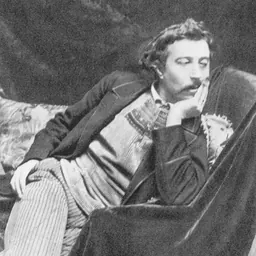
Related people
Same field, nearest in time
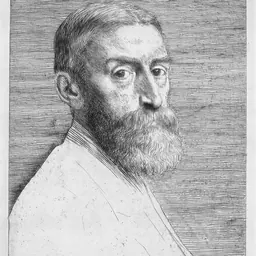
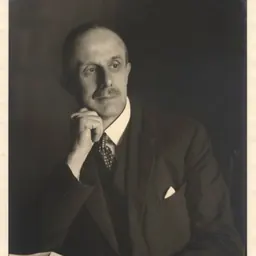
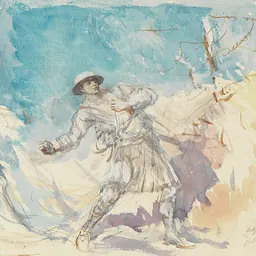
Contemporaries
People whose lives overlapped Gustave Caillebotte's



Frequently asked questions
Who was Gustave Caillebotte?
French painter (1848–1894)
When was Gustave Caillebotte born?
Gustave Caillebotte was born on 19 August 1848 in Paris.
When did Gustave Caillebotte die?
Gustave Caillebotte died on 21 February 1894 in Gennevilliers.
What was Gustave Caillebotte's occupation?
Gustave Caillebotte was a painter, art collector, patron of the arts, philatelist, marine architect and sailor.
What nationality was Gustave Caillebotte?
Gustave Caillebotte was French.
Sources & further reading
· Wikipedia: Gustave Caillebotte
· DBpedia: Gustave Caillebotte
Cite this page
APA: Biography.guide. (2026). Gustave Caillebotte. https://biography.guide/gustave-caillebotte/
MLA: "Gustave Caillebotte." Biography.guide, https://biography.guide/gustave-caillebotte/.
Chicago: "Gustave Caillebotte." Biography.guide. https://biography.guide/gustave-caillebotte/.
Data last updated: 2026-09-20 · Spot an error? Report a correction.
Page generated 2026-09-27 05:29 UTC