
About Gustav Zumsteg
Lived 1915 – 2005 (aged 89). Gustav Zumsteg was a Swiss art collector, merchant, bellevueplatz and private collection.
Gustav Zumsteg (; né Durst; 11 October 1915 – 17 June 2005) was a Swiss businessman, silk merchant and art collector. He was primarily known for his involvement in the silk industry as well as being the owner of the Kronenhalle in Zurich, Switzerland.
Early life and education Zumsteg was born Gustav Durst on 11 October 1915 in Zurich, Switzerland, the second of two illegitimate children of Hulda Durst (1890–1984) and an unknown father who died when was only eight weeks old. He also had an older sister, Hedi.
His mother being financially destitute out placed her children into the care of an elderly widow in Aussersihl, a predominantly working class area of the city. During his childhood there he learned French since his foster mother was originally from Jura. In 1930, aged 15, he moved back to his mother and her new husband Gottlieb Zumsteg, who later adopted him and he ever since bore his name, despite not having a good relationship with his stepfather.
In 1931, aged 16, he joined as an apprentice at the silk trading house Ludwig Abraham & Co, for which firm he later would go to Paris and eventually raise to become a partner in the firm.
Professional career Silk trading house Ludwig Abraham & Co In 1931 he joined as an apprentice at the silk trading house Ludwig Abraham & Co - a business founded in 1863 under the name Königsberger, Rüdenberg & Co. in Krefeld, Germany, and that moved to Zürich where Jakob Abraham became a partner in 1878. In 1957 he met Yves Saint Laurent, whose collections were henceforth influenced by Zumsteg's designs and Abraham's fabrics. — not just with Cristóbal Balenciaga but also Christian Dior, Hubert de Givenchy, Coco Chanel, and Emanuel Ungaro.
However, the company did not manufacture the silk fabrics itself. The production was outsourced to manufactories in France and Italy who implemented the work of Paris and Lyon based design teams led by Zumsteg.
From 1970s on, the market for Haute Couture has gradually vanished due to the global end-of-an-era changes with cheaper silk prints from Asia and the rising mass market with easier to care for fabrics that did not need tailoring.
By the 1990s, the silk company was operating at a loss, even after Zumsteg's injections from his personal fortune.
As an art collector until his death in 2005, he ensured that guests could dine in his Zürich restaurant surrounded by the works of world-famous artists -among others Joan Miró, Marc Chagall, Pierre Bonnard, Georges Braque, Alberto Giacometti and Jean Tinguely.
His private collection was auctioned in Zurich in 2006.
Personal life Zumsteg never married and had no children.
Don’t just read it —
keep it.
Full-length biographies made to live with: read them, listen on the way to work, watch them tonight.
- E-book
- Audio
- Video
Instant download · yours to keep · every purchase keeps this site free
Important facts
People in Gustav Zumsteg's life
Named in this biography and alive at the same time




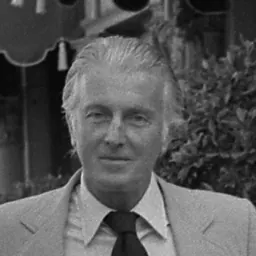

Related people
Same field, nearest in time
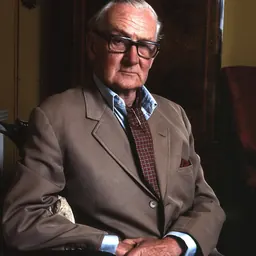



Contemporaries
People whose lives overlapped Gustav Zumsteg's

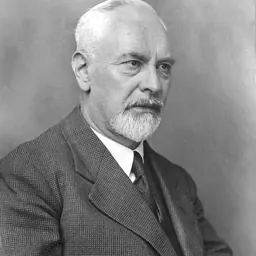



Frequently asked questions
Who was Gustav Zumsteg?
Swiss art collector (1915–2005)
When was Gustav Zumsteg born?
Gustav Zumsteg was born on 11 October 1915 in Zurich.
When did Gustav Zumsteg die?
Gustav Zumsteg died on 17 June 2005 in Zurich.
What was Gustav Zumsteg's occupation?
Gustav Zumsteg was an art collector, merchant, bellevueplatz and private collection.
What nationality was Gustav Zumsteg?
Gustav Zumsteg was Swiss.
Sources & further reading
Cite this page
APA: Biography.guide. (2026). Gustav Zumsteg. https://biography.guide/gustav-zumsteg/
MLA: "Gustav Zumsteg." Biography.guide, https://biography.guide/gustav-zumsteg/.
Chicago: "Gustav Zumsteg." Biography.guide. https://biography.guide/gustav-zumsteg/.
Data last updated: 2026-09-22 · Spot an error? Report a correction.
Page generated 2026-09-27 05:19 UTC