
About Gustav von Schmoller
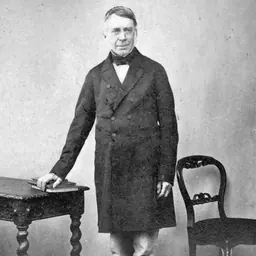
Lived 1838 – 1917 (aged 79). Gustav von Schmoller was a German economist, politician, university teacher, political economist and social scientist.
Gustav Friedrich (after 1908: von) Schmoller (; 24 June 1838 – 27 June 1917) was the leader of the "younger" German historical school of economics.
He was a leading Sozialpolitiker (more derisively, Kathedersozialist, "Socialist of the Chair"), and a founder and long-time chairman of the Verein für Socialpolitik, the German Economic Association, which continues to exist.
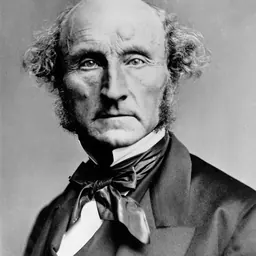
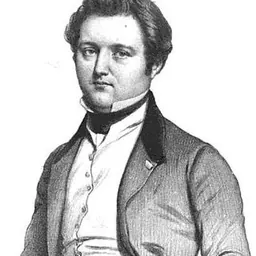
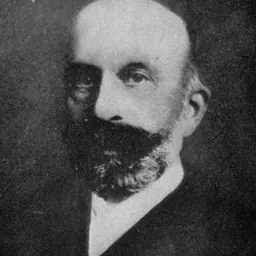
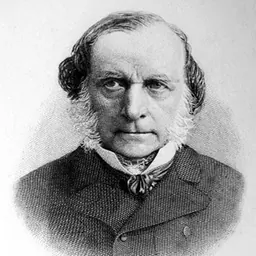
The appellation "Kathedersozialist" was given to Schmoller and other members of the Verein by their enemies. Schmoller disavowed the "socialist" label, instead tracing his thought to the heterodox liberalism represented by Jérôme-Adolphe Blanqui, Jean Charles Léonard de Sismondi, John Stuart Mill, Johann Heinrich von Thünen, Bruno Hildebrand, Thomas Edward Cliffe Leslie, Lorenz von Stein, and Émile de Laveleye and radicals such as Frederic Harrison and Edward Spencer Beesly.
Life Schmoller was born in Heilbronn. His father was a Württemberg civil servant. Young Schmoller studied (a combination of economics, law, history, and civil administration) at the University of Tübingen (1857–1861). In 1861, he obtained an appointment at the . During his academic career, he held appointments as a professor at the universities of Halle (1864–72), Strasbourg (1872–1882), and Berlin (1882–1913). After 1899, he represented the University of Berlin in the Prussian House of Lords.
Schmoller's influence on academic policy, economic, social and fiscal reform, and economics as an academic discipline for the time between 1875 and 1910 can hardly be overstated. He was an outspoken proponent of the assertion of German naval power and the expansion of the German colonial empire.
Work
As an outspoken leader of the "younger" historical school, Schmoller opposed what he saw as the axiomatic-deductive approach of classical economics and, later, the Austrian school—indeed, Schmoller coined the term to suggest provincialism in an unfavorable review of the 1883 book Investigations into the Method of the Social Sciences with Special Reference to Economics (Untersuchungen über die Methode der Socialwissenschaften und der politischen Oekonomie insbesondere) by Carl Menger, which attacked the methods of the historical school. This led to the controversy known as the Methodenstreit. Schmoller's primarily inductive approach, requesting careful study, comparative in time and space, He was a critic of liberal individualism. As such, Schmoller's influence extended throughout Europe, to the Progressive movement in the United States, and to social reformers in Meiji Japan. His most prominent non-German students and followers included William Ashley, W. E. B. Du Bois, Richard T. Ely, Albion Woodbury Small, and Edwin R. A. Seligman.
Since the 1980s, Schmoller's work has been re-evaluated and found relevant to some branches of heterodox economics, as well as development economics, behavioral economics, evolutionary economics, and new institutional economics. He has long had an influence within the subfield of economic history and the discipline of sociology.
After 1881, Schmoller was editor of the Jahrbuch für Gesetzebung, Verwaltung, und Volkswirthschaft im deutschen Reich. From 1878 to 1903, he edited a series of monographs entitled Staats- und sozialwissenschaftliche Forschungen. He was also an editor and major contributor to Acta Borussica, an extensive collection of Prussian historical sources undertaken by the Berlin Academy of Science upon Schmoller's and Sybel's instigation.
One of the reasons why Schmoller is not more widely known today is that most of his books and articles were not translated,
The decision was made by the Verein für Socialpolitik on the basis of an expert opinion by Erik Grimmer-Solem (Wesleyan University, Middletown, USA).
Works His works, the majority of which deal with economic history and policy, include: Der französiche Handelsvertrag und seine Gegner (The French trade treaty and its opponents, 1862) Zur Geschichte der deutschen Kleingewerbe im 19. Jahrhundert (History of German Small Businesses in the 19th Century, 1870) Strassburg zur Zeit der Zunftkämpfe (Strassburg During the Guild Fights, 1875) Zur Litteraturgeschichte der Staats- und Sozialwissenschaften (1888) Umrisse und Untersuchungen zur Verfassungs-, Verwaltungs-, und Wirtschaftsgeschichte (1898) Grundriss der allgemeinen Volkswirthschaftslehre (Layout of General Economics, 1900–1904) Ueber einige Grundfragen der Sozialpolitik (About a few Questions of Social Politics, 1904)
Don’t just read it —
keep it.
Full-length biographies made to live with: read them, listen on the way to work, watch them tonight.
- E-book
- Audio
- Video
Instant download · yours to keep · every purchase keeps this site free
Important facts
People in Gustav von Schmoller's life
Named in this biography and alive at the same time




Related people
Same field, nearest in time



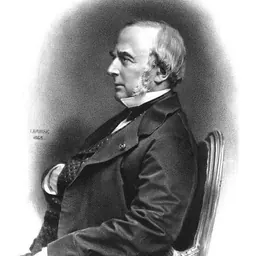
Contemporaries
People whose lives overlapped Gustav von Schmoller's
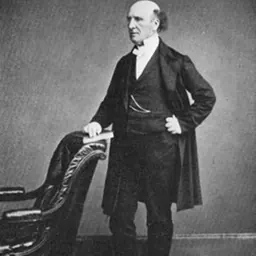
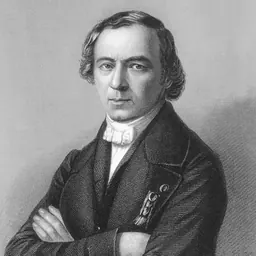

Frequently asked questions
Who was Gustav von Schmoller?
German economist (1838–1917)
When was Gustav von Schmoller born?
Gustav von Schmoller was born on 24 June 1838 in Heilbronn.
When did Gustav von Schmoller die?
Gustav von Schmoller died on 27 June 1917 in Bad Harzburg.
What was Gustav von Schmoller's occupation?
Gustav von Schmoller was an economist, politician, university teacher, political economist and social scientist.
What nationality was Gustav von Schmoller?
Gustav von Schmoller was German.
Sources & further reading
· Wikipedia: Gustav von Schmoller
· DBpedia: Gustav von Schmoller
Cite this page
APA: Biography.guide. (2026). Gustav von Schmoller. https://biography.guide/gustav-von-schmoller/
MLA: "Gustav von Schmoller." Biography.guide, https://biography.guide/gustav-von-schmoller/.
Chicago: "Gustav von Schmoller." Biography.guide. https://biography.guide/gustav-von-schmoller/.
Data last updated: 2026-09-20 · Spot an error? Report a correction.
Page generated 2026-09-27 05:22 UTC