
About Gustav Kafka
Lived 1883 – 1953 (aged 69). Gustav Kafka was an Austrian psychologist, philosopher and university teacher.
Gustav Kafka (23 July 1883, Vienna – 12 February 1953, Veitshöchheim bei Würzburg) was an Austrian philosopher, psychologist. One of Kafka's most outstanding contributions to the realms of psychology have been his critique of fundamentals and methods, such as his criticism of behaviorism, and other articles in which he revealed new points of view based on concrete investigation.
His son (4 February 1907, München 17 January 1974, Graz) was a sociologist and jurist.
Early life and education Kafka attended school in Vienna where he was born, and later joined the school that was organised by Schotten monks. He became conversant in both English and French from learning at home as a child, then entered the University of Vienna in 1902, where he studied law for one semester before shifting studies to philosophy and psychology. After a semester at G. E. Miller's laboratory in Göttingen, where he became acquainted with Geza Revesz and David Katz, Kafka enrolled at Leipzig where in 1904 he received the doctor's degree from Wundt for a thesis entitled Ueber das Ansteigen der Toner- regung. In 1905, he went to Munich to continue his studies under Theodor Lipps. Later he worked there under Erich Becher and was appointed professor at Munich in 1915.
Kafka participated in the First World War as an Austrian reserve soldier. Towards the end of that war, he and his friend Geza Revesz, then at the University of Budapest, were commissioned to set up a psychotechnical service for the Austro-Hungarian Army. In 1923, Kafka succeeded Karl Bühler as professor of psychology, philosophy, and pedagogy at the Technische Hochschule in Dresden, but in 1935 political difficulties and ill health combined to force him to resign prematurely. Just before its close, the Second World War added to his misfortunes by the destruction of his home and all his property in an air raid. The collapse of the war led not to his academic reinstatement but at first to hunger and dire distress. In 1947, however, he received an appointment as professor of philosophy and psychology at the University of Würzburg, where he continued to work until his second and final retirement in the summer of 1952. In his seventieth year, on 12 February 1953, he died in his newly acquired home in Veitshochheim near Würzburg.
Literature works Einführung in die Tierpsychologie Aristoteles, 1922 Geschichtsphilosophie der Philosophiegeschichte, 1933 Naturgesetz, Freiheit und Wunder, 1940 Was sind Rassen, 1949 Freiheit und Anarchie, 1949
Don’t just read it —
keep it.
Full-length biographies made to live with: read them, listen on the way to work, watch them tonight.
- E-book
- Audio
- Video
Instant download · yours to keep · every purchase keeps this site free
Important facts
People in Gustav Kafka's life
Named in this biography and alive at the same time
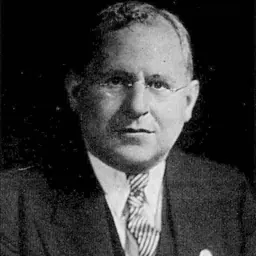

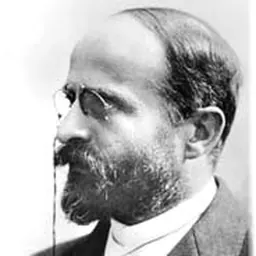
Related people
Same field, nearest in time



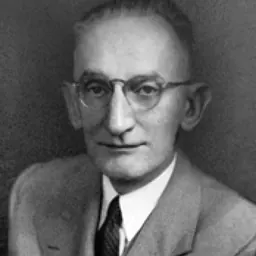
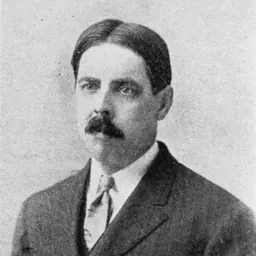
Contemporaries
People whose lives overlapped Gustav Kafka's


Frequently asked questions
Who was Gustav Kafka?
Austrian academic (1883–1953)
When was Gustav Kafka born?
Gustav Kafka was born on 23 July 1883 in Vienna.
When did Gustav Kafka die?
Gustav Kafka died on 12 February 1953 in Veitshöchheim.
What was Gustav Kafka's occupation?
Gustav Kafka was a psychologist, philosopher and university teacher.
What nationality was Gustav Kafka?
Gustav Kafka was Austrian.
Sources & further reading
Cite this page
APA: Biography.guide. (2026). Gustav Kafka. https://biography.guide/gustav-kafka/
MLA: "Gustav Kafka." Biography.guide, https://biography.guide/gustav-kafka/.
Chicago: "Gustav Kafka." Biography.guide. https://biography.guide/gustav-kafka/.
Data last updated: 2026-09-20 · Spot an error? Report a correction.
Page generated 2026-09-27 05:31 UTC