
About Gustav Adolf Deissmann
Lived 1866 – 1937 (aged 70). Gustav Adolf Deissmann was a theologian and university teacher.
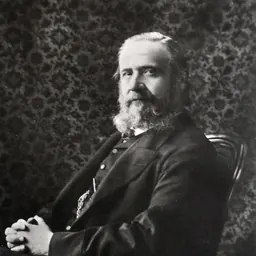
Gustav Adolf Deissmann (7 November 1866 – 5 April 1937) was a German Protestant theologian, best known for his leading work on the Greek language used in the New Testament, which he showed was the koine, or commonly used tongue of the Hellenistic world of that time.
Life
Deissmann was professor of theology at the Ruprecht Karl University of Heidelberg (1897–1908), and then at the Friedrich Wilhelms University of Berlin (1908–1935). He was twice nominated for the Nobel Peace Prize, and held eight honorary doctorates from 6 different countries.
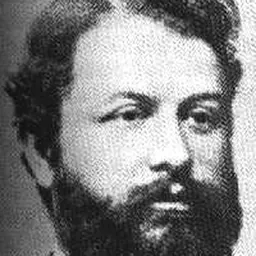
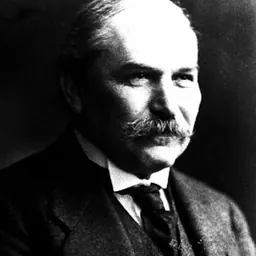
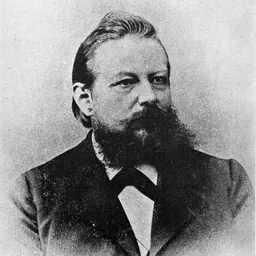
In 1904 he founded, together with Albrecht Dieterich, the Eranos circle in Heidelberg. Members included Ernst Troeltsch, Max Weber, Eberhard Gothein, Georg Jellinek, Karl Rathgen, and Wilhelm Windelband.
In Berlin, Deissmann's academic focus began to shift from Greek philology to the ecumenical movement, church reform and, significantly, international Völkerverständigung (i.e. peace-promoting mutual understanding between nations and cultures). From 1914 until 1922 he produced a regular semi-political international communiqué, the Evangelischer Wochenbrief (1914–1921), with its English equivalent Protestant Weekly Letters (1914–1917). Its target audience was primarily influential German and American Christians, and it provided a forum for the advancement of peace and understanding among nations.
In 1925 Deissmann became aware of the disintegration of ancient Ephesus, a historically important archaeological site, partly excavated before World War I under the auspices of the Austrian Archaeological Institute. Deissmann campaigned single-handedly for several years, both on a national and international level, to raise awareness of the plight of Ephesus, and managed to organise funding for the archaeological work to recommence in 1926, and continued annually until 1929.
Deissmann died on 5 April 1937, in Wünsdorf near Berlin, where he is buried in the local cemetery.
Selected works by Deissmann
Don’t just read it —
keep it.
Full-length biographies made to live with: read them, listen on the way to work, watch them tonight.
- E-book
- Audio
- Video
Instant download · yours to keep · every purchase keeps this site free
Important facts
People in Gustav Adolf Deissmann's life
Named in this biography and alive at the same time




Related people
Same field, nearest in time
Contemporaries
People whose lives overlapped Gustav Adolf Deissmann's



Frequently asked questions
Who was Gustav Adolf Deissmann?
German theologian (1866–1937)
When was Gustav Adolf Deissmann born?
Gustav Adolf Deissmann was born on 7 November 1866 in Langenscheid.
When did Gustav Adolf Deissmann die?
Gustav Adolf Deissmann died on 5 April 1937 in Wünsdorf.
What was Gustav Adolf Deissmann's occupation?
Gustav Adolf Deissmann was a theologian and university teacher.
What nationality was Gustav Adolf Deissmann?
Gustav Adolf Deissmann's recorded nationality: German Reich.
Sources & further reading
· Wikipedia: Gustav Adolf Deissmann
· DBpedia: Gustav Adolf Deissmann
Cite this page
APA: Biography.guide. (2026). Gustav Adolf Deissmann. https://biography.guide/gustav-adolf-deissmann/
MLA: "Gustav Adolf Deissmann." Biography.guide, https://biography.guide/gustav-adolf-deissmann/.
Chicago: "Gustav Adolf Deissmann." Biography.guide. https://biography.guide/gustav-adolf-deissmann/.
Data last updated: 2026-09-26 · Spot an error? Report a correction.
Page generated 2026-09-27 05:15 UTC