
About Guillaume Coustou the Elder
Lived 1677 – 1746 (aged 68). Guillaume Coustou the Elder was a French sculptor and painter.
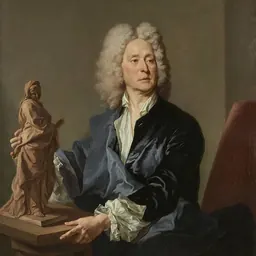
Guillaume Coustou the Elder (; 29 November 1677, Lyon – 22 February 1746, Paris) was a French sculptor of the Baroque and Louis XIV style. He was a royal sculptor for Louis XIV and Louis XV and became Director of the Royal Academy of Painting and Sculpture in 1735. He is best known for his monumental statues of horses made for the Château de Marly, whose replicas now stand in the Place de la Concorde in Paris.
Life Coustou was a member of a family of famous sculptors; his uncle, Antoine Coysevox, was a royal sculptor; his elder brother, Nicolas Coustou was a sculptor, and his son Guillaume Coustou the Younger also become a noted royal sculptor. Like his older brother, he won the (Prix de Rome) of the Royal Academy which entitled him to study for four years at the French Academy in Rome. However, he refused to accept the discipline of the academy, gave up his studies, set out to make his own career as an artist. He worked for a time in the atelier of the painter Pierre Legros, and eventually returned to Paris.
Upon his return to Paris, he assisted his uncle Coysevox in making two monumental equestrian sculptures, Fame and Mercury, for the Château de Marly, the new residence of Louis XIV near the Palace of Versailles, where he went to escape the crowds and ceremony of the palace. He later (1740–1745), made his own horses, the Marly Horses, his most famous works, to replace them. The horses reinvent the theme of the colossal Roman marbles of the Horse Tamers in the Piazza Quirinale, Rome. They were commissioned by Louis XV in 1739 and installed in 1745 at the Abreuvoir ("Horse Trough") at Marly. The horses were considered masterpieces of the grace and expressiveness of the French Late Baroque or Rococo style. This oligarchy would persist until the election of Coustou as sole director on 5 February 1735.
Coustou also created two colossal monuments, The Ocean and the Mediterranean among other sculptures for the park at Marly; the bronze Rhone, which formed part of the statue of Louis XIV at Lyons, and the sculptures at the entrance of the Hôtel des Invalides. Of these latter, the bas-relief representing Louis XIV mounted and accompanied by Justice and Prudence was destroyed during the Revolution, but was restored in 1815 by Pierre Cartellier from Coustou's model; the bronze figures of Mars and Minerva (1733–34), on either side of the doorway, were not interfered with.
In 1714 for Marly he collaborated in two marble sculptures representing Apollo Chasing Daphne (both at the Louvre), in which Nicolas Coustou sculpted the Apollo and Guillaume the Daphne. About the same time he was commissioned to produce another running figure in marble, a Hippomenes designed to complement an Atalanta copied from the Antique by Pierre Lepautre: each was placed at the center of one of the carp pools at Marly.
In 1725, the Louis Antoine de Pardaillan de Gondrin, Duke of Antin, general director of the Bâtiments du Roi, commissioned a pair of life-size marbles of Louis XV as Jupiter and Marie Leszczyńska as Juno for the park of his Château de Petit-Bourg, which adjoined the park of Versailles, to which it was added after the Duke's death.
A number of his sculptures were for the Tuileries Gardens, most notably a bronze Diane à la biche ("Diana and a Deer"), and Hippoméne (1714), which was originally in the goldfish pond at Marly, then moved to the Tuileries until 1940, when it was brought into the Louvre.
Coustou's marble Bust of Samuel Bernard is at the Metropolitan Museum of Art, Guillaume often worked with his brother Nicolas Coustou, particularly in the decoration of royal domestic architecture at Versailles.
Sculpture
Don’t just read it —
keep it.
Full-length biographies made to live with: read them, listen on the way to work, watch them tonight.
- E-book
- Audio
- Video
Instant download · yours to keep · every purchase keeps this site free
Important facts
more
pere G. CoustouPeople in Guillaume Coustou the Elder's life
Named in this biography and alive at the same time
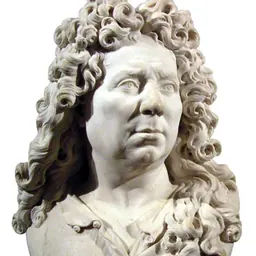
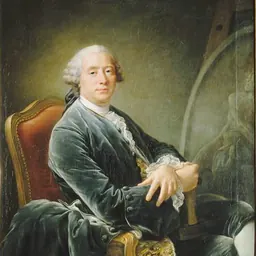
Related people
Same field, nearest in time
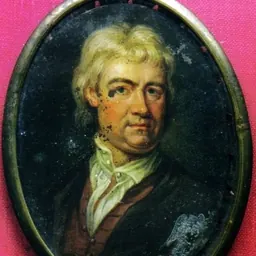
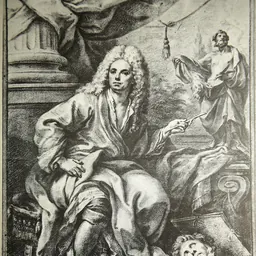

Contemporaries
People whose lives overlapped Guillaume Coustou the Elder's




Frequently asked questions
Who was Guillaume Coustou the Elder?
sculptor from France (1677-1746)
When was Guillaume Coustou the Elder born?
Guillaume Coustou the Elder was born on 29 November 1677 in Lyonnais.
When did Guillaume Coustou the Elder die?
Guillaume Coustou the Elder died on 22 February 1746 in Paris.
What was Guillaume Coustou the Elder's occupation?
Guillaume Coustou the Elder was a sculptor and painter.
What nationality was Guillaume Coustou the Elder?
Guillaume Coustou the Elder was French.
Sources & further reading
· Wikipedia: Guillaume Coustou the Elder
· DBpedia: Guillaume Coustou the Elder
Cite this page
APA: Biography.guide. (2026). Guillaume Coustou the Elder. https://biography.guide/guillaume-coustou-the-elder/
MLA: "Guillaume Coustou the Elder." Biography.guide, https://biography.guide/guillaume-coustou-the-elder/.
Chicago: "Guillaume Coustou the Elder." Biography.guide. https://biography.guide/guillaume-coustou-the-elder/.
Data last updated: 2026-09-26 · Spot an error? Report a correction.
Page generated 2026-09-27 05:14 UTC