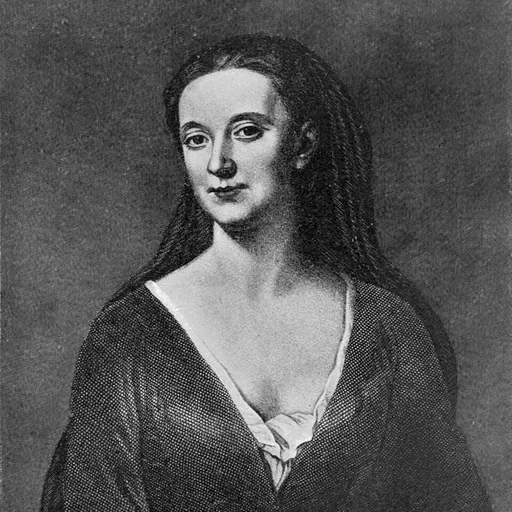
About Grizel Baillie
Lived 1665 – 1746 (aged 80). Grizel Baillie was a Scottish poet, songwriter, writer and chronicler.
Lady Grizel Baillie (née Hume, 25 December 1665 – 6 December 1746) was a Scottish gentlewoman and songwriter. Her accounting ledgers, in which she kept details about her household for more than 50 years, provide information about social life in Scotland in the eighteenth century.
Biography
Born at Redbraes Castle, Berwickshire, Grizel Hume was the eldest daughter of Grisell Ker and Sir Patrick Hume (later Earl of Marchmont). When she was twelve years old, she carried letters from her father to a Scottish conspirator in the Rye House Plot, Robert Baillie of Jerviswood, who was then in prison. Hume's sympathy for Baillie made him a suspected man and the king's troops occupied Redbraes Castle. He remained in hiding for some time in the crypt of Polwarth Church, where his daughter smuggled food to him; but on hearing of the execution of Baillie (1684), he fled to the United Provinces, where his family joined him soon after. They returned to Scotland after the Glorious Revolution.
In 1692, Lady Grizel married George Baillie, son of Robert. and insisted to her parents on marrying Baillie over a more advantageous match. The couple had two daughters: Grizel (1692–1759), who married British Army officer Sir Alexander Murray of Stanhope in 1710; and Rachel (1696–1773), who married Charles Lord Binning in 1717 (and whose son Thomas became the seventh Earl of Haddington).
Works
Songs Her elder daughter, Lady Grizel Murray of Stanhope, had in her possession a manuscript in prose and verse of her mother's songs. Some of them had been printed in Allan Ramsay's, Tea-Table Miscellany. The most famous of Lady Grizel's Scots songs, "And werena my heart light I wad dee", originally appeared in William Thomson's Orpheus Caledonius, or a Collection of the Best Scotch Songs (1725). Historians have cited these accounts to demonstrate cost of goods and to provide evidence for the caloric intake of servants during this period.
Legacy A great deal is known about George and Grizel Baillie's marriage and family thanks to the biography written by their daughter, Grizel Baillie, Lady Murray. Although not intended for publication, the biography appeared in print in 1809 in Observations on the Historical Work of the Right Honorable Charles James Fox under the title "Lady Murray's Narrative". George Baillie's Correspondence (1702-1708) was edited by Lord Minto for the Bannatyne Club in 1842. Joanna Baillie, in a poem first published in 1821 in Metrical Legends of Exalted Characters.
Don’t just read it —
keep it.
Full-length biographies made to live with: read them, listen on the way to work, watch them tonight.
- E-book
- Audio
- Video
Instant download · yours to keep · every purchase keeps this site free
Important facts
more
Baillie, Lady Grisel Baillie, Grisell Baillie, Lady Grizel BailliePeople in Grizel Baillie's life
Named in this biography and alive at the same time




Related people
Same field, nearest in time


Contemporaries
People whose lives overlapped Grizel Baillie's


Frequently asked questions
Who was Grizel Baillie?
noblewoman; Scottish Songwriter (1665-1746)
When was Grizel Baillie born?
Grizel Baillie was born on 25 December 1665 in Berwickshire.
When did Grizel Baillie die?
Grizel Baillie died on 6 December 1746 in London.
What was Grizel Baillie's occupation?
Grizel Baillie was a poet, songwriter, writer and chronicler.
What nationality was Grizel Baillie?
Grizel Baillie was Scottish.
Sources & further reading
· DBpedia: Lady Grizel Baillie
Cite this page
APA: Biography.guide. (2026). Grizel Baillie. https://biography.guide/grizel-baillie/
MLA: "Grizel Baillie." Biography.guide, https://biography.guide/grizel-baillie/.
Chicago: "Grizel Baillie." Biography.guide. https://biography.guide/grizel-baillie/.
Data last updated: 2026-09-22 · Spot an error? Report a correction.
Portrait: Wikimedia Commons · author & licence
Page generated 2026-09-27 05:03 UTC