
About Grigor Parlichev
Lived 1830 – 1893 (aged 63). Grigor Parlichev was a Turkish poet, translator, writer, teacher and copyist.
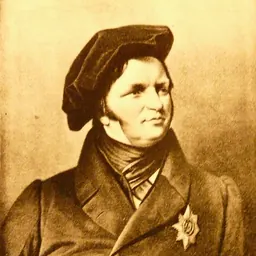
Grigor Stavrev Parlichev (; ; 18 January 1830 – 25 January 1893), also known as Grigorios Stavridis , was a Bulgarian writer, teacher and translator. He received acclaim as a "second Homer" in Greece for his poem O Armatolos. Afterwards, he became a Bulgarian national activist. Parlichev was subject to criticism by contemporary Bulgarian figures for what they regarded as poor knowledge of Bulgarian. His other notable works include the poems Skenderbeg, 1762 leto, and his autobiographical work Autobiography. In North Macedonia and Bulgaria, he is regarded as a pioneer of national awakening, but his national identity has been also disputed between both countries.
Life Teachers and students from the Bulgarian Men's High School of Thessaloniki, 1888/1889. Parlichev is the third man with the white beard, sitting from left to right in the first row. Grigor Parlichev was born on 18 January 1830 in Ohrid, Ottoman Empire (present-day North Macedonia), the fourth child of Maria Gyokova and Stavre Parlichev, a craftsman. He was six months old when his father died. His paternal grandfather, a farmer, took over the care of the family. He was taught to read Greek by his grandfather. Parlichev studied in a Greek school in Ohrid. He was taught by Dimitar Miladinov. In the 1830s, he learned from Orthodox liturgical texts in Ohrid. There, he experienced homesickness. He went to Athens to study medicine in 1849 but lacking money to pay for his studies, he returned to Ohrid the following year. In the 1850s, he worked as a teacher in Dolna Belica, Bitola, Prilep and Ohrid. In 1858 Parlichev returned to Athens to study medicine in the second year, but later transferred to the Faculty of Linguistics. Acclaimed as "second Homer" and given a bursary to study abroad, he gave part of it to a poor student and spent the rest of it. Fellow contestant Theodoros Orphanidis, who did not accept the result, accused him of being a Bulgarian and associated him with Bulgarian propaganda,
Upon his return, he became familiar with the Bulgarian language and the Cyrillic script. Parlichev was arrested and spent several months in an Ottoman jail in Debar after a complaint was sent by the Greek bishop of Ohrid Meletius due to his activities. The Parlichev family suffered from financial problems in Thessaloniki. According to historian Raymond Detrez, who received his PhD thesis on Parlichev, Parlichev often behaved like a tyrant towards his family and often resorted to fighting. In the 1860s, after identifying as Greek, he began identifying as Bulgarian. As a Bulgarian national activist, he used German historian Jakob Fallmerayer's discontinuity thesis against the Greeks. In his autobiography, he wrote that the Bulgarians had been scorned and abused enough by other peoples and advised them to become aware of themselves, instead of despising themselves, to become confident of their abilities and rely on their hard work to achieve progress. In 1889, under a translation, he signed himself as "Gr. S. Părličev, killed by the Bulgarians" (Гр. С. Пърличевъ, убитий българами). His native Ohrid dialect was different from the eastern Bulgarian dialects. Parlichev also wanted to include more Russian elements into Bulgarian. Contemporary Bulgarian writers, such as Hristo Botev and Lyuben Karavelov, mocked his translation. Botev mocked it in the satirical poem Why I'm not?, while Karavelov referred to Parlichev as "an empty pumpkin".
Legacy The cover of Parlichev's autobiography, published by the Bulgarian Ministry of Education in the magazine Folklore and Ethnography Collection, a year after his death in 1893.
His autobiography was published posthumously in Sofia in a Bulgarian periodical called Folklore and Ethnography Collection, produced by the Bulgarian Ministry of Education, in 1894. The Parlichev Ridge in Antarctica is named after him. A digital monument honoring him was set up in the center of Ohrid in 2022.
Don’t just read it —
keep it.
Full-length biographies made to live with: read them, listen on the way to work, watch them tonight.
- E-book
- Audio
- Video
Instant download · yours to keep · every purchase keeps this site free
Important facts
Family & relationships
People in Grigor Parlichev's life
Named in this biography and alive at the same time

Related people
Same field, nearest in time

Contemporaries
People whose lives overlapped Grigor Parlichev's





Frequently asked questions
Who was Grigor Parlichev?
Bulgarian writer (1830-1893)
When was Grigor Parlichev born?
Grigor Parlichev was born on 18 January 1830 in Ohrid.
When did Grigor Parlichev die?
Grigor Parlichev died on 25 January 1893 in Ohrid.
What was Grigor Parlichev's occupation?
Grigor Parlichev was a poet, translator, writer, teacher and copyist.
What nationality was Grigor Parlichev?
Grigor Parlichev was Turkish.
Sources & further reading
Cite this page
APA: Biography.guide. (2026). Grigor Parlichev. https://biography.guide/grigor-parlichev/
MLA: "Grigor Parlichev." Biography.guide, https://biography.guide/grigor-parlichev/.
Chicago: "Grigor Parlichev." Biography.guide. https://biography.guide/grigor-parlichev/.
Data last updated: 2026-09-20 · Spot an error? Report a correction.
Page generated 2026-09-27 05:31 UTC