
Grigor McClelland
British businessman, academic and social activist
About Grigor McClelland
Lived 1922 – 2013 (aged 90–91). Grigor McClelland was a British teacher and businessperson.
William Grigor McClelland CBE (2 January 1922 – 6 November 2013) was a British businessman, academic and social activist.
Born into a family of grocers, he managed his family firm of Laws Stores from 1948 to 1962, and again between 1978 and 1984. He became the first senior research fellow in Management Studies at the University of Oxford with Balliol College in 1962. During his time there he founded both the Journal of Management Studies and the Society for the Advancement of Management Studies. In 1965, he became the first director of the newly formed Manchester Business School, and wrote various papers on management techniques and ideas.
As the chair of the Washington Development Corporation, he played a strong role in attracting Nissan to build its first European factory in the UK. He also worked as a government advisor including serving on both the National Economic Development Council and the Industrial Reorganisation Corporation. His strong beliefs as a Quaker saw him elected to the chair of the Joseph Rowntree Charitable Trust as well as setting up the charities, the Millfield House Foundation and the Tyne & Wear Foundation. In 2011, Peter Moizer in his Financial Times article, Dean's column: a moral force stated, He is a remarkable man who, guided by a moral compass that has never wavered, has changed the landscape of British business education in the past 50 years. His life and accomplishments are such that they need no exaggeration. Arthur had founded his own grocery business, City Stores, in 1907; and in the year of McClelland's birth, he had purchased the nine stores of WM Laws, combining the two firms to create Laws Stores. He first went to Newcastle Preparatory School in Jesmond, before going to Leighton Park School in Reading, Berkshire, a boarding school that had been based on Quaker values since 1890. which has been referenced by many authors since. On his return to Britain, McClelland started his delayed scholarship at Balliol College, and achieved a First Class Masters within two years instead of the normal three.
Business career - Laws stores In 1948, after completing his degree at Oxford, he joined the family business of Laws Stores in the position of managing director, with his father, Arthur, becoming the company chairman. McClelland tested the Resale price maintenance in 1953, when Laws Stores reduced all Fruit squash drinks by 6 pence, but the manufacturer stopped supplying Laws after the local grocers association complained. By 1957, the company had grown to 65 stores, with 385 employees and a turnover of £1.25 million a year. In the same year, McClelland returned to Oxford carry out further study into retailing, splitting his time with Laws. While at Laws he recognised that there was a need for management training, and in 1959 became an original member of the Foundation for Management Education. but as McClelland stated later in his essay Economies of Scale in British food retail, the company was struggling and needed to be sold before it became unsellable. Andrew Likierman, a former dean at the London Business School and former student of McClelland at Balliol College said in 2011,
McClelland decided to change that, when in 1963 he started the process of setting up both the Journal of Management Studies and the Society for the Advancement of Management Studies to oversee the journal. He believed that if management studies had a journal like other established subjects it would be seen as acceptable. These became the first two University Grants Committee-funded business schools. In his application for the job role, McClelland wrote,
After visiting a US Business school and discussing ideas with Herbert A. Simon and Igor Ansoff, McClelland introduced what he called the Manchester Experiment, which morphed into the Manchester Method. Unlike the other new business school in London, a practical approach to management education was introduced where learners would entail learning-by-doing, using detailed case studies of real businesses and live company projects. In 1967, McClelland took on the role of Professor and Dean at Victoria University's Faculty of Business Administration, in addition to his role as director at the business school. McClelland would state in 1968 that
Under McClelland's leadership the school opened the specialist Banking research centre in 1971, McClelland completed his own MBA in 1971.
After returning to the north east in 1977, McClelland became a visiting chair at Durham University, working with the Business School, as well as with the departments of Engineering and Geography. He wrote papers and articles that appeared in various journals and magazines on retail, management and quaker subjects.
In 1976, McClelland delivered his seminar And a New Earth at the Swarthmore Lecture.
Selected Bibliography 1958 – Sales per person and size in retailing: some fallacies (doi 10.2307/2097632) 1959 – Pricing for Profit in Retailing (doi 10.2307/2097812) 1960 – The least-cost level of stocks and the rate of interest (doi 10.2307/2097362) 1960 – Stocks in Distribution (doi 10.2307/2097408) 1962 – Economics of the Supermarket (doi 10.2307/2228621) 1962 – The role of the super-market in the distribution of agricultural products (doi 10.1111/j.1477-9552.1962.tb01712.x) 1963 – Studies in Retailing (ISBN 978-0631078609) 1963 – The Organization of Distribution (doi 10.2307/2097380) 1966 – Costs and Competition in Retailing (ISBN 978-0333077979) 1967 – Career Patterns and Organizational Needs (doi 10.1111/j.1467-6486.1967.tb00572.x) 1969 – Management Education: Management Making Brainpower Effective (doi 10.1111/j.1467-6486.1969.tb00587.x) 1971 – Myth Squared (doi 10.1177/135050767100200202) 1973 – Management in a service environment (doi 10.1108/eb050396) 1974 – Integration of Research and Teaching in Management Education ( 1975 – Mathematics in management—How it looks to the manager (doi. 10.1016/0305-0483(75)90114-0) 1990 – Defence Expenditure and the economics of safety: A comment (doi 10.1080/10430719008404679) 1997 – Embers of War: Letters from a Relief Worker in the British Zone of Germany, 1945–46 (ISBN 978-1860643125) 2015 – Sydney Bailey's Work in Quaker Perspective (ISBN 978-1315668239)
Public service McClelland served on many national and local government advisory bodies, as well as those of independent institutions, including:
Social Science Research Council – 1971–74 – McClelland was the chair of the Management and Industrial relations committee. National Economic Development Council – 1969–71 The Consumer Council - 1963-66 Council of the Supermarket Association National Board for Prices and Incomes Oxford Research Group – 2001–05 Director As chairman, McClelland was empowered to decide on Washington Development Corporation involvement in any regional projects. McClelland in this role pushed for the development of Nissan's first European factory at Washington, and was part of the supervisory committee set up to negotiate the investment. Prior to World War II, McClelland had argued in a school speaking competition entitled When we have won the war that Germany should not be punished with another Versailles style treatment. He would later go on Quaker and International Fellowship of Reconciliation organised delegation trips, first to the USSR in 1952 and then China in 1952 and 1955, followed by the US in 1957, afterwards having to overcome smears of being a communist sympathiser. In his eighties, McClelland promoted to the Newcastle Local Friends meeting a new project. The Newcastle Conflict Resolution Network idea was adopted and receives funding from the Joseph Rowntree Charitable Trust. In the 1960s, he donated 10% of Laws Stores shares to the trust. In 1973, McClelland was appointed a founding trustee for the Anglo-German Foundation for the Society of Industrial Society, a charity founded to improve relations between Britain and Germany. McClelland recalled that he
In 1991, the Charles Stewart Mott Foundation and Charities Aid Foundation created a £2 million challenge fund, which the foundation was encouraged to bid for. The foundation tendered for a £1 million grant, but had to raise a further £2 million from others to be successful. McClelland used his contacts to pull together the elite of the North East, and the money was raised to receive their grant bid. It was reported he had previously turned down an award while Margaret Thatcher was Prime Minister. As part of the 50th anniversary of the Manchester Business School in 2015, the Grigor McClelland lecture series was launched to explore the interaction between business, education and social responsibility. It was named in McClelland's honour as this was an area that he had pioneered in.
McClelland's papers are held by the University of Manchester Library.
Personal life McClelland met his first wife, Diana Avery Close, while they were volunteering as an aid worker in Germany after World War II and were married in 1946. They had four children, Andrew, Rosemary, Jen and Stephen. In 2000, Diana died of cancer, and three years later McClelland married another Quaker in Caroline Spence. In 2013, McClelland died at the age of 91.
Don’t just read it —
keep it.
Full-length biographies made to live with: read them, listen on the way to work, watch them tonight.
- E-book
- Audio
- Video
Instant download · yours to keep · every purchase keeps this site free
Important facts
People in Grigor McClelland's life
Named in this biography and alive at the same time
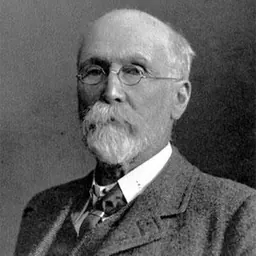




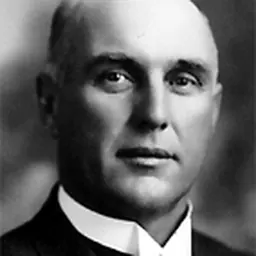

Related people
Same field, nearest in time

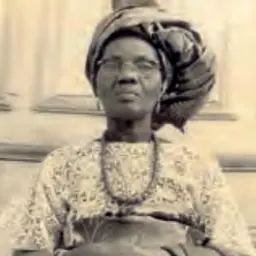


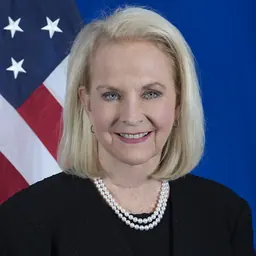
Contemporaries
People whose lives overlapped Grigor McClelland's


Frequently asked questions
Who was Grigor McClelland?
British businessman, academic and social activist
When was Grigor McClelland born?
Grigor McClelland was born in 1922.
When did Grigor McClelland die?
Grigor McClelland died in 2013.
What was Grigor McClelland's occupation?
Grigor McClelland was a teacher and businessperson.
What nationality was Grigor McClelland?
Grigor McClelland was British.
Sources & further reading
· Wikipedia: Grigor McClelland
Cite this page
APA: Biography.guide. (2026). Grigor McClelland. https://biography.guide/grigor-mcclelland/
MLA: "Grigor McClelland." Biography.guide, https://biography.guide/grigor-mcclelland/.
Chicago: "Grigor McClelland." Biography.guide. https://biography.guide/grigor-mcclelland/.
Data last updated: 2026-09-20 · Spot an error? Report a correction.
Page generated 2026-09-27 05:24 UTC