
About Grete Hermann
Lived 1901 – 1984 (aged 82). Grete Hermann was a British and German mathematician, philosopher, physicist, university teacher and docent.
Academia and research
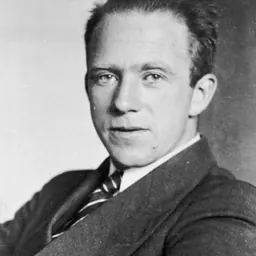
Theoretical physics In 1934, Hermann went to Leipzig "for the express purpose of reconciling a neo-Kantian conception of causality with the new quantum mechanics". In Leipzig, many exchanges of thoughts took place among Hermann, Carl Friedrich von Weizsäcker, and Werner Heisenberg. In these discussions, she argued that Kantian causality should remain secure, and questioned whether quantum uncertainty reflected subjective ignorance or a principled limit requiring a revision of the Kantian framework. The contents of her work in this time, including a focus on a distinction of predictability and causality, are known from three of her own publications, and from later description of their discussions by von Weizsäcker, and the discussion of Hermann's work in chapter ten of Heisenberg's Physics and Beyond. In this work, she concludes:
In June 1936, Hermann was awarded the Richard Avenarius prize together with Eduard May and Th. Vogel.
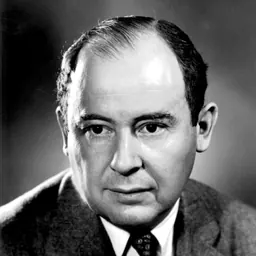
Hidden variables Based on her views on quantum causality, Hermann concluded that there was no way to explain quantum mechanics in terms of a hidden variable theory. However, she published a critique of John von Neumann's 1932 proof from his book Mathematical Foundations of Quantum Mechanics, that was widely claimed to show that such a theory was impossible. Hermann's work on this subject went unnoticed by the physics community until it was independently discovered and published by John Stewart Bell in 1966, and her earlier discovery was pointed out by Max Jammer in 1974. Some have posited that had her critique not remained nearly unknown for decades, her ideas would have put in question the unequivocal acceptance of the Copenhagen interpretation of quantum mechanics, by providing a credible basis for the further development of nonlocal hidden variable theories, which would have changed the historical development of quantum mechanics. During her tenure until 1966, and into her retirement, she supported its transformation into a full university. BPU integrated into the University of Bremen between 1971 and 1973. In 1945, she published (English: Politics and Ethics; published in 1947), a criticism of political apathy and the complicity of bystanders in The Holocaust. In it she concludes:
In 1957, she co-founded the philosophical journal Ratio. She remained a member of the editorial board until her death. After she retired from pedagogical work, she focused entirely on re-shaping Nelsonian thought with her ethics until nearly her death. In a letter in July 1983 she wrote: ), a critical response to Nelson's work, she concludes that moral judgement is emergent from cooperation of reason and sensibility. Her thesis argued that aside from "mindless panic", there are no behaviors which arise solely from internal mental activity or external influences through the senses. This was directly in opposition to Nelson's belief that reason by itself could generate action, which was central to the absolutist foundation of Nelsonian ethical reason being uninfluenced by external stimuli. Hermann argued that repeated ethical behavior would not absolutely lead to predictable future actions in accordance with moral duty, and reliance on that belief led to complacency that resulted in allowing moral injustices to occur, or immoral actions. She wrote that moral behavior necessarily requires constant labor involving evaluation of the external environment and inner thoughts. In this work, Hermann refined her earlier works, in which she argued that spatial awareness was equally as important to understanding how people are motivated by personal interests because that motivation extends to the social world. Specht was the director of , a progressive school with adult political training, where Hermann took over some of Nelson's philosophy classes after he died.
During World War II After Nelson's death, she and Specht published Nelson's work System der philosophischen Ethik und Pädagogik in 1932. her brother Carl, and his wife Eva became critical of religion as Adolf Hitler began campaigning, joining the pacifist movement, and, in 1933, at the onset of the Nazi persecution of Jews, Carl and Eva joined the Quakers to help Jews escape. In March, as Hitler came into power, Walkemühle was occupied by Nazi Germany, and the school was closed and cleared by Nazi forces. Hermann and Specht arranged for the important documents from the school to be preserved by Willi Warnke, who was intercepted by the Nazis and the documents confiscated. Carl and Eva were both arrested and jailed by the Nazi police for harboring a Jewish family in 1943. first on Funen with Specht, then in 1936 at Copenhagen in a school established by Gustav Heckmann, with whom she lived. In 1937, she and Specht fled to Britain as the Nazi occupation of Denmark began. and chair of the (PPA), an organisation founded by Nelson in 1922, oriented towards education, social justice, responsible political action and its philosophical basis. While there, she retired from her teaching post to focus entirely on critical philosophical thought and oversaw the posthumous publication of Nelson's works until 1978.
Hermann died in April 1984 in Bremen.
Select publications
Don’t just read it —
keep it.
Full-length biographies made to live with: read them, listen on the way to work, watch them tonight.
- E-book
- Audio
- Video
Instant download · yours to keep · every purchase keeps this site free
Important facts
People in Grete Hermann's life
Named in this biography and alive at the same time




Related people
Same field, nearest in time


Contemporaries
People whose lives overlapped Grete Hermann's


Frequently asked questions
Who was Grete Hermann?
German mathematician (1901–1984)
When was Grete Hermann born?
Grete Hermann was born on 2 March 1901 in Lehe.
When did Grete Hermann die?
Grete Hermann died on 15 February 1984 in Bremen.
What was Grete Hermann's occupation?
Grete Hermann was a mathematician, philosopher, physicist, university teacher and docent.
What nationality was Grete Hermann?
Grete Hermann was British and German.
Sources & further reading
Cite this page
APA: Biography.guide. (2026). Grete Hermann. https://biography.guide/grete-hermann/
MLA: "Grete Hermann." Biography.guide, https://biography.guide/grete-hermann/.
Chicago: "Grete Hermann." Biography.guide. https://biography.guide/grete-hermann/.
Data last updated: 2026-09-22 · Spot an error? Report a correction.
Page generated 2026-09-27 05:27 UTC