
About Grete de Francesco
Lived 1893 – 1945 (aged 51). Grete de Francesco was an Austrian non-fiction writer.
Grete De Francesco (born Margarethe Weissenstein; 5 November 1893, Vienna, Austria-Hungary – February/March 1945, probably in the Ravensbrück concentration camp) was a German-speaking writer.
Her book Die Macht des Charlatans from 1937 is internationally regarded as a scientific standard and reference work on the topic of charlatanism. It was translated to English (The Power of the Charlatan) in 1939. In the 1930s, De Francesco wrote many cultural studies essays on border areas of medicine for the in-house journal of the Basel-based Ciba Group.
Life
Margarethe Weissenstein was the oldest of three daughters of the Jewish couple Else and Emanuel Weissenstein. Her father was general director of the Vereinigte Jutefabriken in Vienna and Budapest. She studied at the Ludwig-Maximilians-Universität München, married Giulio De Francesco, an engineer from the South Tyrolean Rovereto, lived with him in Milan, then since the mid-twenties in Berlin, where she became the first female graduate at the Deutsche Hochschule für Politik with her diploma thesis "The Face of Italian Fascism" (1931). She wrote features for the Frankfurter Zeitung and was in contact with Walter Benjamin, Ernst Bloch, Siegfried Kracauer, Karl Mannheim and Albert Salomon. In 1932, she was a member of the editorial board for a short time, afterwards she wrote as a freelancer, partly also under the pseudonym Anton Pacher and continued to provide contributions to the paper. From 1933, she lived as a permanent border crosser between Vienna, Prague, Paris, Basel, Zurich and Milan, which had been under German occupation since September 1943. She was spied on and sought refuge in Upper Italian mountain villages, and she hid for several months in a madhouse for women, but then returned to her Milan apartment, where she was arrested by the SS in October 1944. Through the Bolzano transit camp she was deported to the Ravensbrück concentration camp in December 1944, where she was probably killed in February 1945.
Until 2023, there was no public portrait photo of De Francesco. In March 2023, the Italian Centro di Documentazione Ebraica Contemporanea published photos from a personal correspondence by De Francesco.
A stolperstein was placed via Renato Fucini 5 in Milan on March 7, 2024.
Publications (selection)
Die Macht des Charlatans. 69 Abb., 258 S., Bibliographie, Register. Schwabe Verlag, Basel 1937. English translation: The Power of the Charlatan. Translated by Miriam Beard. VII+288 p. Yale University Press, New Haven 1939. Reprint Januar 2021, 69 Abb., 456 S., with a biographical essay by Volker Breidecker. AB – Die Andere Bibliothek, Berlin, ISBN 978-3-8477-0434-8. Contributions for house magazines of Ciba, Basel, especially for the Ciba magazine. The publisher was the scientific department of the Society for Chemical Industry in Basel. The magazine, illustrated with historical pictures, appeared in 132 issues from 1933 to 1952 and had set itself the program to “treat in small excerpts such border areas in which medicine touches with ethnology, history, cultural and art history or other disciplines.” Contributions and English, French and Dutch translations of their essays in Ciba-Rundschau, CIBA Review and Ciba symposia, plus further individual publications.
Don’t just read it —
keep it.
Full-length biographies made to live with: read them, listen on the way to work, watch them tonight.
- E-book
- Audio
- Video
Instant download · yours to keep · every purchase keeps this site free
Important facts
People in Grete de Francesco's life
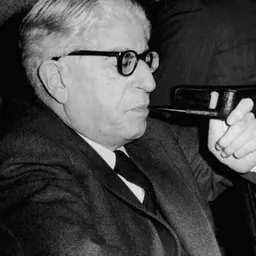
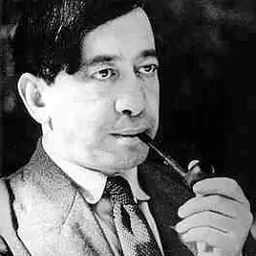
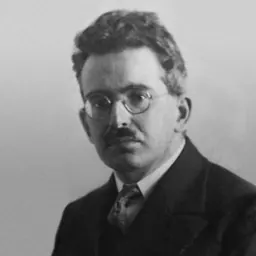
Named in this biography and alive at the same time

Related people
Same field, nearest in time




Contemporaries
People whose lives overlapped Grete de Francesco's




Frequently asked questions
Who was Grete de Francesco?
Austro-Hungarian author
When was Grete de Francesco born?
Grete de Francesco was born on 5 November 1893 in Vienna.
When did Grete de Francesco die?
Grete de Francesco died on 1 February 1945 in Ravensbrück concentration camp.
What was Grete de Francesco's occupation?
Grete de Francesco was a non-fiction writer.
What nationality was Grete de Francesco?
Grete de Francesco was Austrian.
Sources & further reading
· Wikipedia: Grete de Francesco
Cite this page
APA: Biography.guide. (2026). Grete de Francesco. https://biography.guide/grete-de-francesco/
MLA: "Grete de Francesco." Biography.guide, https://biography.guide/grete-de-francesco/.
Chicago: "Grete de Francesco." Biography.guide. https://biography.guide/grete-de-francesco/.
Data last updated: 2026-09-20 · Spot an error? Report a correction.
Page generated 2026-09-27 05:09 UTC