
About Grenville Clark
Lived 1882 – 1967 (aged 84). Grenville Clark was an American lawyer and jurist, known for Plattsburgh, New York.
Grenville Clark (November 5, 1882 – January 13, 1967) was a 20th-century American Wall Street lawyer, co-founder of Root Clark & Bird (later Dewey Ballantine, then Dewey & LeBoeuf), member of the Harvard Corporation, co-author of the book World Peace Through World Law, and nominee for the Nobel Peace Prize.
The National Historic Register (US DOI, National Park Services) has called Clark an "international lawyer and legal architect of world organizations," who was "active in world peace efforts and an advisor in governmental affairs." Further, he was a "drafter of the United Nations Charter, author of A Plan for Peace and co-author of the acclaimed World Peace Through World Law. He was an advisor to four United States Presidents, founder of the Military Training Camp Association (1917) and leader of the Plattsburg movement, and author of the Selective Service Act of 1940. Clark organized the two Dublin Peace Conferences, held at the Morse Farm in 1945 and 1965, out of which grew the United World Federalists."
Background
Grenville Clark was born on November 5, 1882, in New York City. His parents were Louis Crawford Clark and Marian de Forest Cannon. His father attended Harvard University and worked all his life at his father's banking firm (Clark, Dodge & Company) on Wall Street. His mother was the granddaughter of banker Colonel LeGrand Bouton Cannon (1815–1906); the family lived in her grandfather's mansion in Manhattan. He had three brothers and a sister.
During World War I, Clark helped establish the Citizens' Military Training Camp at Plattsburgh, New York and other forms of military preparedness.
In 1940, as a member of the Military Training Camps Association, a World War I veterans' group, Clark authored the Burke-Wadsworth Bill. During World War II, Clark again helped with military preparedness, including the drafting of the Selective Training and Service Act of 1940. From 1940 to 1945, he served as confidential counsel to Secretary of War Henry L. Stimson.
World peace
On October 16, 1945, before the UN Charter entered into force, Clark, retired U.S. Supreme Court Justice Owen J. Roberts, former New Hampshire Governor Robert P. Bass, and more than forty others held the "Dublin Conference" in Dublin, New Hampshire. There they passed a "Dublin Declaration", which, judging the UN Charter inadequate to preserve peace, proposed transformation of the U.N. General Assembly into a world legislature. It stated, "Such a government should be based upon a constitution under which all peoples and nations will participate upon a basis of balanced representation which will take account of natural and industrial resources and other factors as well as population. It cannot be based on treaties...in which the states... act and vote as states". It called for "limited but definite and adequate power for the prevention of war."
In 1965, Clark held a second "Dublin Conference", which made a second declaration. About that time, he founded the "Grenville Clark Institute for World Law." In 1967, its committee members comprised: Thomas H. Mahony, Douglas Arant, Mrs. Mildred R. Blake, Mrs. William W. Bray, Henry B. Cabot, Grenville Clark Jr., Randolph P. Compton, Rev. Robert Drinan SJ, H. Ferry, Hudson Hoagland, Harry B. Hollins, Walter J. Leonard, Mrs. Edward W. McVitty, J. A. Migel, Gerard Piel, Stanley K. Platt, Gabriel Reiner, Robert H. Reno, William G. Saltonstall, Louis B. Sohn, C. Maxwell Stanley, James P. Warburg, and Abraham Wilson. Its executive committee comprised: Hudson Hoagland, George C. Holt, Thomas H. Mahony, Robert H. Reno. Its executive director was George C. Holt. The group's base was in Woodstock, Connecticut.
Clark and other participants in the Dublin Conference became active in the United World Federalists (UWF) and the global World Federalist Movement. UWF enjoyed some success in the postwar period, as 23 state legislatures passed bills supporting the organization’s goals, but McCarthyism prompted many prominent members to resign lest Senator Joseph McCarthy ruin their careers. In the United States, internationalism came to be associated with communism.
After formation of the United Nations, Clark supported the World Federalist Movement. Clark and Harvard Law School professor Louis B. Sohn drafted amendments to the United Nations Charter. Their amendments sought to transform the United Nations into a true world federal government. They limited its primary powers to suppression of war, a radical redirection that would have required global disarmament and formation of a world police force. They published their writings in World Peace Through World Law, published in 1958. In 1949, Clark made a donation (a "very moderate check I sent toward legal expenses") to the Hiss defense fund, for which Hiss thanked him, followed by a letter from Clark to Hiss in which he stated that he had "no personal acquaintance with you."
Clark died on January 13, 1967, at his home in Dublin, New Hampshire. Jubilee Law Lectures, 1889-1939 with Roscoe Pound, Daniel J. Lyne, Hector David Castro, and John J. Burns (1939) A Memorandum: With Regard to a New Effort to Organize Peace and Containing a Proposal for a "Federation of Free Peoples" (1939) Citizens Committee for a National War Service Act: Effort for a national service law in World War II, 1942-1945; report to the National Council of the Citizens Committee for a National War Service Act, by Grenville Clark, chairman, and Arthur L. Williston, secretary (1947) Freedom at Harvard, 1949 (1949) Plan for Peace (1950) Peace through disarmament and charter revision (1953) "A Digest of Peace through Disarmament and Charter Revision" (1953) World Peace Through World Law: Two Alternative Plans with Louis B. Sohn (1958) (1960) (1966) The Need for Total Disarmament Under Enforceable World Law (1964) A Proposed Treaty Establishing a World Disarmament and World Development Organization (1965) Roundtable III: Summary of Convocation (1965) [sound recording]
Legacy
In 1937, Edgar Snow dedicated his book Red Star Over China to Clark, writing: "To Grenville Clark who was taller than his time 'Laid sweet in his grave, the hope of humanity not yet subjugate in him.' – Emerson."
The 1958 book World Peace through World Law remains Clark's lasting legacy.
In 1969, Clark donated the Clark Botanic Garden to the Brooklyn Botanic Garden.
In 1985, the US Postal Service honored Clark posthumously with a 39¢ Great Americans series (1980–2000) postage stamp.
Don’t just read it —
keep it.
Full-length biographies made to live with: read them, listen on the way to work, watch them tonight.
- E-book
- Audio
- Video
Instant download · yours to keep · every purchase keeps this site free
Important facts
People in Grenville Clark's life
Named in this biography and alive at the same time




Related people
Same field, nearest in time
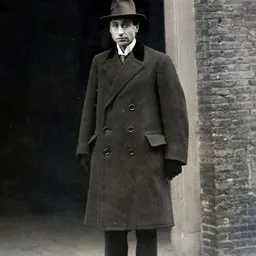
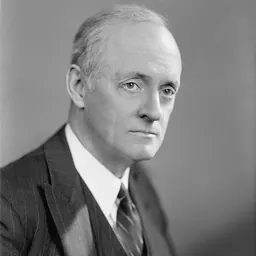

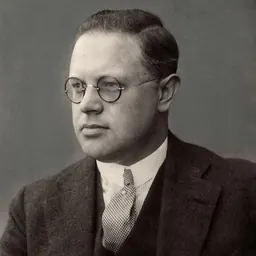
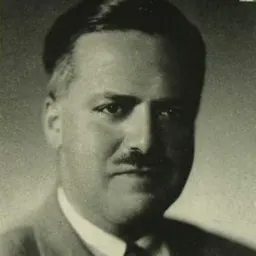
Contemporaries
People whose lives overlapped Grenville Clark's




Frequently asked questions
Who was Grenville Clark?
American lawyer (1882-1967)
When was Grenville Clark born?
Grenville Clark was born on 5 November 1882 in New York City.
When did Grenville Clark die?
Grenville Clark died on 13 January 1967 in Dublin.
What was Grenville Clark's occupation?
Grenville Clark was a lawyer and jurist.
What was Grenville Clark known for?
Grenville Clark was known for Plattsburgh, New York.
What nationality was Grenville Clark?
Grenville Clark was American.
Sources & further reading
Cite this page
APA: Biography.guide. (2026). Grenville Clark. https://biography.guide/grenville-clark/
MLA: "Grenville Clark." Biography.guide, https://biography.guide/grenville-clark/.
Chicago: "Grenville Clark." Biography.guide. https://biography.guide/grenville-clark/.
Data last updated: 2026-09-20 · Spot an error? Report a correction.
Page generated 2026-09-27 05:25 UTC