
About Gregory IX
Lived 1170 – 1241 (aged 70–71). Gregory IX was an Italian writer and catholic priest.
Pope Gregory IX (; born Ugolino di Conti; 1145 – 22 August 1241) and 1170. He is said to have been "in his nineties, if not nearly one hundred years old" at his death. He received his education at the Universities of Paris and Bologna.
He was created Cardinal-Deacon of the church of Sant'Eustachio by his cousin Innocent III in December 1198. In 1206, he was promoted to the rank of Cardinal Bishop of Ostia e Velletri. He became Dean of the Sacred College of Cardinals in 1218 or 1219. Upon the special request of Saint Francis, in 1220, Pope Honorius III appointed him Cardinal Protector of the order of the Franciscans.
As Cardinal Bishop of Ostia, he cultivated a wide range of acquaintances, among them the Queen of England, Isabella of Angoulême.
Papacy Gregory IX was elevated to the papacy in the papal election of 1227. That same year, in one of his earliest acts as pope, he expanded the Inquisition powers already assigned to Konrad von Marburg to encompass the investigation of heresy throughout the whole of Germany.
Gregory's bull Parens scientiarum of 1231, after the University of Paris strike of 1229, resolved differences between the unruly university scholars of Paris and the local authorities. His solution was in the manner of a true follower of Innocent III: he issued what in retrospect has been viewed as the magna carta of the university, assuming direct control by extending papal patronage: his bull allowed future suspension of lectures over a flexible range of provocations, from "monstrous injury or offense" to squabbles over "the right to assess the rents of lodgings".
In October 1232, after an investigation by legates, Gregory proclaimed a crusade against the Stedinger to be preached in northern Germany. In June 1233, he granted a plenary indulgence to those who took part.
In 1233, Gregory IX established the Papal Inquisition to regularize the prosecution of heresy. According to Thomas Madden, a defender of the Inquisition, the Papal Inquisition was intended to bring order to the haphazard episcopal inquisitions which had been established by Lucius III in 1184. Gregory's aim allegedly was to bring order and legality to the process of dealing with heresy, since there had been tendencies by mobs of townspeople to burn alleged heretics without much of a trial. In 1231 Pope Gregory IX appointed a number of Papal Inquisitors (Inquisitores haereticae pravitatis), mostly Dominicans and Franciscans, for the various regions of France, Italy and parts of Germany. Contrary to popular belief, says Madden, the aim was to introduce due process and objective investigation into the beliefs of those accused to the often erratic and unjust persecution of heresy on the part of local ecclesiastical and secular jurisdictions. However, to Walter Ullmann, "there is hardly one item in the whole Inquisitorial procedure that could be squared with the demands of justice; on the contrary, every one of its items is the denial of justice or a hideous caricature of it [...] its principles are the very denial of the demands made by the most primitive concepts of natural justice [...] This kind of proceeding has no longer any semblance to a judicial trial but is rather its systematic and methodical perversion."
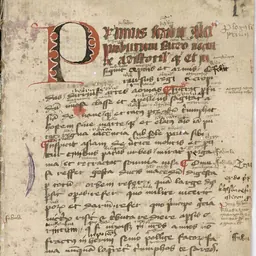
Page from a late 13 c. copy of the Decretals of Gregory IX, now in the Biblioteca Medicea Laurenziana, Florence Gregory was a remarkably skillful and learned lawyer. He caused to be prepared Nova Compilatio decretalium, which was promulgated in numerous copies in 1234 (first printed at Mainz in 1473). This New Compilation of Decretals was the culmination of a long process of systematising the mass of pronouncements that had accumulated since the Early Middle Ages, a process that had been under way since the first half of the 12th century and had come to fruition in the Decretum, compiled and edited by the papally commissioned legist Gratian and published in 1140. The supplement completed the work, which provided the foundation for papal legal theory.
In the 1234 Decretals, he invested the doctrine of perpetua servitus iudaeorum – perpetual servitude of the Jews – with the force of canonical law. According to this, the followers of the Talmud would have to remain in a condition of political servitude until Judgment Day. The doctrine then found its way into the doctrine of servitus camerae imperialis, or servitude immediately subject to the Emperor's authority, promulgated by Frederick II. The Jews were thus suppressed from having direct influence over the political process and the life of Christian states into the 19th century and the rise of liberalism. In 1234, Gregory issued the papal bull Rachel suum videns calling for a new crusade to the Holy Land, leading to the Crusade of 1239.
In 1239, under the influence of Nicholas Donin, a Jewish convert to Christianity, Gregory ordered that all copies of the Jewish Talmud be confiscated. Following a public disputation between Christians and Jewish theologians, this culminated in a mass burning of some 12,000 handwritten Talmudic manuscripts on 12 June 1242, in Paris.
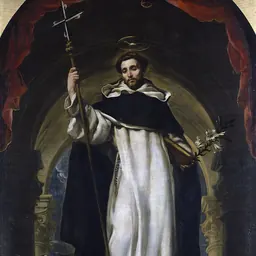
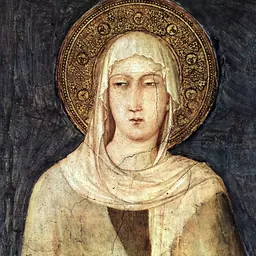
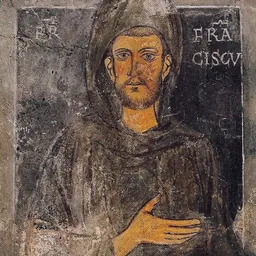
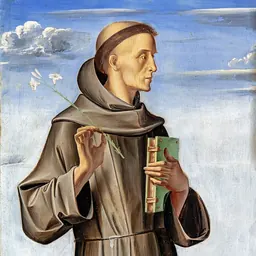
Gregory was a supporter of the mendicant orders which he saw as an excellent means for counteracting by voluntary poverty the love of luxury and splendour which was possessing many ecclesiastics. He was a friend of Saint Dominic as well as Clare of Assisi. On 17 January 1235, he approved the Order of Our Lady of Mercy for the redemption of captives. He appointed ten cardinals and canonized Saints Elisabeth of Hungary, Dominic, Anthony of Padua, and Francis of Assisi, of whom he had been a personal friend and early patron. He transformed a chapel to Our Lady in the church of Santa Maria del Popolo in Rome.
Gregory IX endorsed the Northern Crusades and attempts to bring Orthodox Russians, particularly in the Pskov Republic and the Novgorod Republic, under the Papacy's fold. In 1229, he declared that Finlandia (Finland) had passed under his protection. In 1232, Gregory IX asked the Livonian Brothers of the Sword to send troops to protect Finland, whose semi-pagan people were fighting against the Novgorod Republic in the Finnish-Novgorodian wars; however, there is no known information if any ever arrived to assist. Gregory received news in 1237 that the Tavastians rejected Christianity and he called on all Christians to join him in a crusade.
The pope struggled with a revolt in Rome in 1234.
Struggle with Frederick II Fanciful 16th c. fresco depicting Gregory excommunicating Frederick II in the Sala Regia, by Giorgio Vasari. Since few details were provided to the artist, the excommunication scene is given generically. Frederick is shown pointing to a book with the word "Concilium" shown, possibly a reference to the general council that the emperor attempted to call to depose Gregory. At the coronation of Frederick II in Rome, 22 November 1220, the emperor made a vow to embark for the Holy Land in August 1221. Gregory IX began his pontificate by suspending the Holy Roman Emperor Frederick II, for dilatoriness in carrying out the promised Sixth Crusade. Frederick II appealed to the sovereigns of Europe complaining of his treatment. The suspension was followed by excommunication and threats of deposition, as deeper rifts appeared. Frederick II went to the Holy Land and in fact managed to take possession of Jerusalem. Gregory IX distrusted the emperor, since Rainald, the imperial Governor of Spoleto, had invaded the Pontifical States during the emperor's absence.
The struggle only ended with Gregory IX's death on 22 August 1241. The pope died before events could reach their climax; it was his successor, Innocent IV, who in 1245 declared a crusade that would finish the Hohenstaufen threat.
Don’t just read it —
keep it.
Full-length biographies made to live with: read them, listen on the way to work, watch them tonight.
- E-book
- Audio
- Video
Instant download · yours to keep · every purchase keeps this site free
Important facts
more
Ugolino of Segni, Pope Gregory IX, Gregor IX, Ugolino, Bishop of Ostia, Di Segni Ugolino, Ugolino dei conti di Segni, Ugolino DiSegni, Hugolin di Segna, Ugolino von Segni, Ugo of Segni, Hugo ze Segni, Ugolino d' Ostia, Bishop of Ostia Ugolino, Hugolin de' Conti de Segni, Hugues di Segna, Ugolino de' Conti di Segni, Bishop of Ostia and Velletri, Ugolino de Segni, HugolPeople in Gregory IX's life
Named in this biography and alive at the same time

Related people
Same field, nearest in time



Contemporaries
People whose lives overlapped Gregory IX's





Frequently asked questions
Who was Gregory IX?
pope of the Catholic Church from 1227 to 1241
When was Gregory IX born?
Gregory IX was born in 1170 in Anagni.
When did Gregory IX die?
Gregory IX died on 22 August 1241 in Rome.
What was Gregory IX's occupation?
Gregory IX was a writer and catholic priest.
What nationality was Gregory IX?
Gregory IX was Italian.
Sources & further reading
Cite this page
APA: Biography.guide. (2026). Gregory IX. https://biography.guide/gregory-ix/
MLA: "Gregory IX." Biography.guide, https://biography.guide/gregory-ix/.
Chicago: "Gregory IX." Biography.guide. https://biography.guide/gregory-ix/.
Data last updated: 2026-09-20 · Spot an error? Report a correction.
Page generated 2026-09-27 05:20 UTC