
About Amalric of Bena
Lived 1150 – 1206 (aged 55–56). Amalric of Bena was a French theologian, university teacher, philosopher and theology.
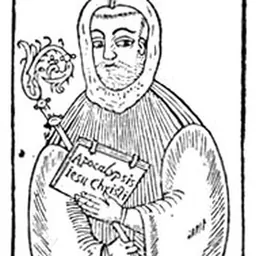
Amalric of Bena (; ; died ) was a French theologian, philosopher and sect leader, after whom the Amalricians are named. Reformers such as Martin Luther considered him to be a proto-Protestant.
Biography Amalric was born in the latter part of the 12th century at Bennes, a village between Ollé and Chauffours in the diocese of Chartres.
Amalric taught philosophy and theology at the University of Paris and enjoyed a great reputation as a subtle dialectician; his lectures developing the philosophy of Aristotle attracted a large audience. In 1204 his doctrines were condemned by the university and, on a personal appeal to Pope Innocent III, the sentence was ratified, Amalric being ordered to return to Paris and recant his errors.
His death was caused, it is said, by grief at the humiliation to which he had been subjected. In 1209, ten of his followers were burnt before the gates of Paris and Amalric's own body was exhumed and burnt and the ashes given to the winds. The doctrines of his followers, known as the Amalricians, were formally condemned by the fourth Lateran Council in 1215.
Propositions Amalric appears to have derived his philosophical system from a selective reading of Eriugena, whose expressions he developed in a one-sided and strongly pantheistic form.
Only three propositions can be attributed to him with certainty: that God is all (omnia sunt deus) and thus all things are one because whatever is, is God (omnia unum, quia quidquid est, est Deus); that every Christian is bound to believe that he is a member of the body of Christ, and that this belief is necessary for salvation; that he who remains in love of God can commit no sin.
Because of the first proposition, God himself is thought to be invisible and only recognizable in his creation.
Amalricians taught: Hell is ignorance, therefore Hell is within all men, "like a bad tooth in a mouth"; God is identical with all that is, even evil belongs to God and proves God's omnipotence; A man who knows that God works through everything cannot sin, because every human act is then the act of God; A man who recognizes the truth that God works through everything is already in Heaven and this is the only resurrection. There is no other life; man's fulfillment is in this life alone.
Due to persecutions, this sect does not appear to have long survived the death of its founder. Not long after the burning of ten of their members (1210), the sect itself lost its importance, while some of the surviving Amalricians became Brethren of the Free Spirit.
According to Hosea Ballou, then Pierre Batiffol and George T. Knight (1914) Amalric believed that all people would eventually be saved and this was one of the counts upon which he was declared a heretic by Pope Innocent III.
Don’t just read it —
keep it.
Full-length biographies made to live with: read them, listen on the way to work, watch them tonight.
- E-book
- Audio
- Video
Instant download · yours to keep · every purchase keeps this site free
Important facts
Related people
Same field, nearest in time





Contemporaries
People whose lives overlapped Amalric of Bena's






Frequently asked questions
Who was Amalric of Bena?
French theologian
When was Amalric of Bena born?
Amalric of Bena was born in 1150 in Chartres.
When did Amalric of Bena die?
Amalric of Bena died in 1206 in Paris.
What was Amalric of Bena's occupation?
Amalric of Bena was a theologian, university teacher, philosopher and theology.
What nationality was Amalric of Bena?
Amalric of Bena was French.
Sources & further reading
Cite this page
APA: Biography.guide. (2026). Amalric of Bena. https://biography.guide/amalric-of-bena/
MLA: "Amalric of Bena." Biography.guide, https://biography.guide/amalric-of-bena/.
Chicago: "Amalric of Bena." Biography.guide. https://biography.guide/amalric-of-bena/.
Data last updated: 2026-09-22 · Spot an error? Report a correction.
Portrait: Wikimedia Commons · author & licence
Page generated 2026-09-27 05:01 UTC