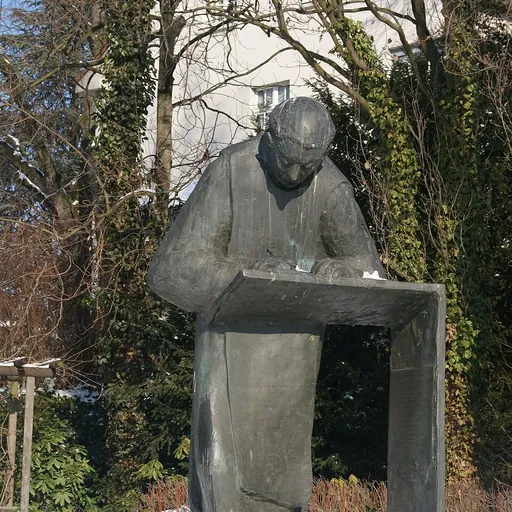
About Caesar of Heisterbach
Lived 1180 – 1240 (aged 59–60). Caesar of Heisterbach was a theologian, chronicler, hagiographer, cleric, master of novices and monk.
Caesarius of Heisterbach ( – ), sometimes erroneously called, in English, Caesar of Heisterbach, was the prior of a Cistercian monastery, Heisterbach Abbey, which was located in the Siebengebirge, near the small town of Oberdollendorf, Germany.
Life Born about 1170 at or near Cologne, he was educated at the Cathedral School, where he studied the theology of St. Ambrose, St. Augustine, St. Jerome, and St. Gregory the Great; the philosophy of Boethius, and the literary masterpieces of Virgil, Ovid, Seneca, and Claudian. He was a gifted and diligent scholar and upon the completion of his studies was thoroughly conversant with the writings of the Fathers of the Church and master of a refined and fluent Latin style.
Acting on the advice of Gevard, Abbot of Heisterbach, Caesarius entered that monastery in 1199 and after some time was appointed master of novices. It was his duty to imbue the candidates with the spirit of austere asceticism which then animated the Cistercian Order, and to instruct them in the necessary knowledge of theology. which translates as: "Slay them all, God will recognize his own." This statement is often cited as "Kill them all and let God sort them out." The historicity of the statement has been questioned, but Arnaud's alleged order as reported by Caesarius was likely seen at the time as reflecting highly on Arnaud. Both Arnaud and Caesarius were Cistercians, with Arnaud the head of the Cistercian Order at the time of Caesarius' writing, and Caesarius required an imprimatur. The incident was further included as an exemplum in Caesarius's Book of Miracles because (to Cistercians at least) it reflected well on Arnaud. The tales are told in the form of dialogues between a monk and a novice. The work was often referred to by preachers seeking material for sermons in the Late Middle Ages. It was extremely popular and was widely distributed, and its popularity was rivaled only, perhaps, by the Golden Legend of Jacobus de Voragine. A vision reported in the book provided the source for the iconography of the Virgin of Mercy.
The first writings of Caesarius were sermons, which he wrote for his own use. But it was not long before his fellow monks approached him with requests for elaboration and explanation. His ninth book was written because his fellow monks asked him for a simple and clearly understandable explanation of the Maria sequence "Ave preclara maris stella". His other writings were responses to requests.
Caesarius often complained that his works were taken out of his hand, unfinished and uncorrected. They were extremely well-known and popular, and some sixty known transcriptions of the Dialogus miraculorum preceded the publication of a critical edition.
In his sermons Caesarius treats passages from the Bible, often examining psalms or parts of them. He also relates the movements of heavenly bodies to the destinies of men. His homilies, on the other hand, deal with the evangelical texts of the Sundays and festivals throughout the entire Church year, and are to be regarded as theological tracts and meditations rather than sermons and speeches. They are directed not to laymen, but to monks and novices of the Cistercian Order. The interpretations often deal with the lives of monks.
The writings of Caesarius are of considerable importance for the study of medieval homiletics.
Don’t just read it —
keep it.
Full-length biographies made to live with: read them, listen on the way to work, watch them tonight.
- E-book
- Audio
- Video
Instant download · yours to keep · every purchase keeps this site free
Important facts
People in Caesar of Heisterbach's life
Named in this biography and alive at the same time
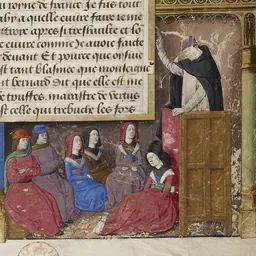
Related people
Same field, nearest in time

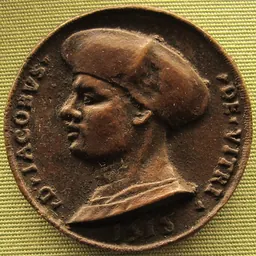


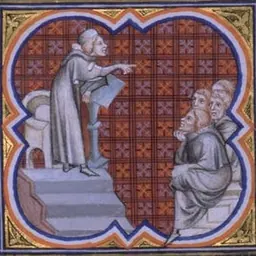
Contemporaries
People whose lives overlapped Caesar of Heisterbach's



Frequently asked questions
Who was Caesar of Heisterbach?
German Cistercian, author
When was Caesar of Heisterbach born?
Caesar of Heisterbach was born in 1180 in Cologne.
When did Caesar of Heisterbach die?
Caesar of Heisterbach died in 1240 in Heisterbach Abbey.
What was Caesar of Heisterbach's occupation?
Caesar of Heisterbach was a theologian, chronicler, hagiographer, cleric, master of novices and monk.
Sources & further reading
· Wikipedia: Caesar of Heisterbach
· DBpedia: Caesarius of Heisterbach
Cite this page
APA: Biography.guide. (2026). Caesar of Heisterbach. https://biography.guide/caesar-of-heisterbach/
MLA: "Caesar of Heisterbach." Biography.guide, https://biography.guide/caesar-of-heisterbach/.
Chicago: "Caesar of Heisterbach." Biography.guide. https://biography.guide/caesar-of-heisterbach/.
Data last updated: 2026-09-22 · Spot an error? Report a correction.
Portrait: Wikimedia Commons · author & licence
Page generated 2026-09-27 05:03 UTC