
About Gregorio Guglielmi
Lived 1714 – 1773 (aged 58). Gregorio Guglielmi was a painter.
Gregorio Guglielmi (13 December 1714, Rome - 2 February 1773, Saint Petersburg) was an Italian-born fresco painter who worked primarily in Germany.
Biography
His artistic education concluded with lessons from Francesco Trevisani, but he was already turning toward the Academic style of Sebastiano Conca, with whom he may also have studied. There are some indications that he studied in Paris during the 1740s and became acquainted with Claude Joseph Vernet. Early on, he obtained the patronage of Cardinal Alessandro Albani and may have also been supported by Cardinal Neri Maria Corsini.
In 1752, he was invited to Naples by the architect, Ferdinando Fuga, but court intrigues prevented him from obtaining any major commissions. However, Queen Maria Amalia introduced him to her father, Elector Frederick Augustus II, who arranged for him to work in Dresden.
His Academic inclinations were enhanced in Germany; where he met Pietro Metastasio. In 1755, he created frescoes, inspired by Metastasio, at what is now the Austrian Academy of Sciences, and in Schönbrunn Palace, upon commission by the Sardinian ambassador, Luigi Gerolamo Malabaila (1704-1773). The latter were heavily damaged in World War II. In 1764, at the invitation of the Swedish painter, , he was working in Berlin. A major project, proposed by King Stanisław August Poniatowski for Ujazdów Castle never came to fruition.
The following year, he made a temporary return to Italy to paint an altarpiece at the and murals at the Royal Palace in Turin, followed by frescoes at the Cappella Colleoni in Bergamo. He then went back to Germany, creating frescoes for the main hallway at the Schaezlerpalais in Augsburg.
As early as 1767, he had submitted drawings to the Russian court in Saint Petersburg. In 1770, he was finally called there by Catherine the Great, assisted by the De Derichs, who had already established themselves at the court. But, except for some portraits, his work there never progressed beyond the initial sketches. In fact, it was said (by the sculptor, Étienne Maurice Falconet), that he died of a "putrid fever" after Catherine severely criticized a portrait of her. For some commentators, the fact that he and De Derichs died on the same day, followed by De Derichs' wife the day after, suggests that they were poisoned. No motive has been proposed, although Falconet's comment may indicate that he was not well-liked.
Don’t just read it —
keep it.
Full-length biographies made to live with: read them, listen on the way to work, watch them tonight.
- E-book
- Audio
- Video
Instant download · yours to keep · every purchase keeps this site free
Important facts
People in Gregorio Guglielmi's life
Named in this biography and alive at the same time

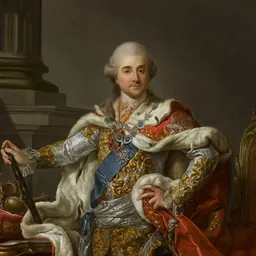



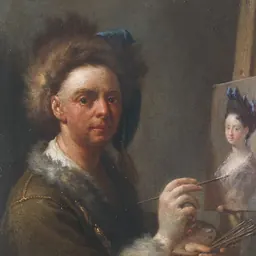

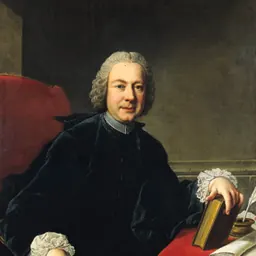
Related people
Same field, nearest in time
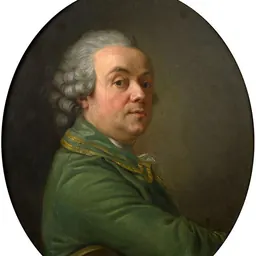
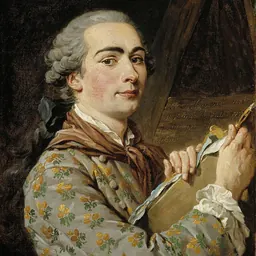
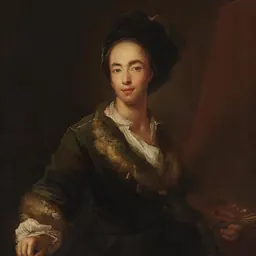
Contemporaries
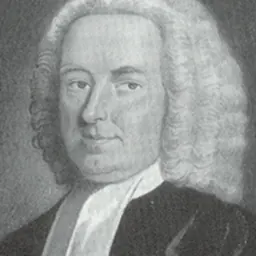
People whose lives overlapped Gregorio Guglielmi's




Frequently asked questions
Who was Gregorio Guglielmi?
Italian Rococo painter (1714-1773)
When was Gregorio Guglielmi born?
Gregorio Guglielmi was born on 13 December 1714 in Rome.
When did Gregorio Guglielmi die?
Gregorio Guglielmi died on 2 February 1773 in Saint Petersburg.
What was Gregorio Guglielmi's occupation?
Gregorio Guglielmi was a painter.
Sources & further reading
· Wikipedia: Gregorio Guglielmi
Cite this page
APA: Biography.guide. (2026). Gregorio Guglielmi. https://biography.guide/gregorio-guglielmi/
MLA: "Gregorio Guglielmi." Biography.guide, https://biography.guide/gregorio-guglielmi/.
Chicago: "Gregorio Guglielmi." Biography.guide. https://biography.guide/gregorio-guglielmi/.
Data last updated: 2026-09-22 · Spot an error? Report a correction.
Portrait: Wikimedia Commons · author & licence
Page generated 2026-09-27 05:04 UTC