
Gregor Strasser
German politician, rival of Adolf Hitler inside the Nazi Party
About Gregor Strasser
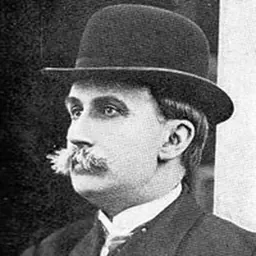
Lived 1892 – 1934 (aged 42). Gregor Strasser was a German politician, pharmacist, publisher, member of parliament and legislator.
Gregor Strasser (, 31 May 1892 – 30 June 1934) was a German politician and early leader of the Nazi Party. Along with his younger brother Otto, he was a leading member of the party's northern group, which brought them into conflict with the dominant faction led by Adolf Hitler. Gregor's willingness to engage in political negotiations with Chancellor Kurt von Schleicher in 1932 ultimately led to his resignation and murder in the Night of the Long Knives in 1934. The brothers' strand of the Nazi ideology is later known as Strasserism, a political concept largely popularized by Otto after he left the party in 1930.
Born in Bavaria, Strasser served in an Imperial German Army artillery regiment during World War I, rising to the rank of first lieutenant and winning the Iron Cross of both classes for bravery. After the war, he and his brother became members of Franz Ritter von Epp's Freikorps. He joined the Nazi Party (NSDAP) in 1920 and quickly became an influential and important figure in the fledgling party. In 1923, Strasser took part in the abortive Beer Hall Putsch in Munich and was imprisoned. After securing an early release following his election to the Reichstag, he joined a revived NSDAP in 1925 and once again established himself as a powerful and dominant member. A highly skilled organiser and effective public speaker, Strasser oversaw a major increase in the party's membership and reputation in northern Germany, transforming the NSDAP from a marginal southern party to a nationwide political force. By mid-1932, Strasser was in charge of the party's national organizational work.
The Strasser brothers jointly drafted the "Strasser Program" for 1925–1926, which included some radical proposals, mainly developed by Otto, such as reorganizing large agricultural estates into "hereditary fiefs" (Erblehen). This program had led Hitler to repudiate Gregor at the 1926 Bamberg Conference. The two later reconciled, with Strasser acknowledging that Hitler had assumed the role of ideological leader for the movement while he himself continued as organizer. In 1932, he introduced the party's "Emergency Economic Program" (Wirtschaftliches Sofortprogramm), a program advocating for state-funded work creation. In December 1932, his relationship with Hitler became permanently fractured when Chancellor Kurt von Schleicher offered him the post of Vice-Chancellor. Accused of attempting to split the party, he subsequently resigned from all party offices. Strasser then renounced his Reichstag seat and retired from active politics to serve as a director at the Schering-Kahlbaum pharmaceutical company. On 30 June 1934, in a purge that became known as the Night of the Long Knives, Strasser was arrested by the Gestapo and subsequently executed.
Historian Hans Mommsen has commented that Otto Strasser was "in most respects" the intellectual superior of his brother Gregor. Peter Stachura views Gregor as a realpolitisch opportunist, and that his reputation as a principled "revolutionary" is a myth exaggerated and often fabricated by his brother Otto. Strasser established the Party in northern and western Germany as a strong political association, one which attained a larger membership than Hitler's southern party section. The party's own foreign organization was also formed on Strasser's initiative. He also founded the National Socialist Working Association on 10 September 1925. This was a short-lived group of about a dozen northern and western German Gauleiter.
Strasser's brand of antisemitic "socialism" is discernible from a speech he made to the Reichstag in November 1925:We National Socialists want the economic revolution involving the nationalization of the economy...We want in place of an exploitative capitalist economic system a real socialism, maintained not by a soulless Jewish-materialist outlook but by the believing, sacrificial, and unselfish old German community sentiment, community purpose, and economic feeling. We want the social revolution in order to bring about the national revolution.Despite disagreements with Hitler, the Strassers did not represent a radical wing opposed to the party mainstream. Gottfried Feder was more radical and held great favour at the time.
Strasser's "socialism" also strongly rejected egalitarianism. In his June 1926 "Thoughts about the Tasks of the Future", he wrote:We have to reject with fanatical zeal the frequent lie that people are basically equal and equal in regard to their influence in the state and their share of power! People are unequal, they are unequal from birth, become more unequal in life and are therefore to be valued unequally in their positions in society and in the state! In order to elaborate a more detailed party program to assert its own direction within the party, the Strassers drafted the so-called "Strasser Program" of 1925–1926. While Gregor served as the political face of this program, its economic and ideological formulations were heavily influenced, if not primarily drafted, by his brother Otto. The program advocated for radical economic policies, including supporting the expropriation of the estates of the former aristocracy, the nationalization of key industries with a profit-sharing model (where workers would receive 10% of shares), the breakup of large agricultural estates into redistributed "hereditary fiefs" (Erblehen), and the establishment of a corporatist chamber system to replace the parliamentary republic. According to Reinhard Kühnl's analysis of the original text, this structure was designed to neutralize the political power of the labor movement; by replacing the principle of one-man-one-vote with representation through estates, its primary aim was to prevent the working class, which had the numerical advantage, from ever achieving political dominance. It also contained a detailed section on the "Jewish Question," which demanded the expulsion of Jewish immigrants and the stripping of citizenship from all German Jews, who were to be legally reclassified as resident foreigners ("Palestinians").
Together with his brother Otto, Strasser founded the Berlin Kampf-Verlag ("Combat Publishing") in March 1926, which went on to publish the weekly newspaper the Berliner Arbeiterzeitung ("Berlin Workers Newspaper"). Strasser appointed the young university-educated political agitator from the Rhineland, Joseph Goebbels as the managing editor of the Kampfverlag, a man who was drawn to the NSDAP political message and to Strasser himself.
To deal with these proposed changes head-on, Hitler called for a meeting in the northern Bavarian city of Bamberg on 14 February 1926. Goebbels and Strasser traveled there hoping to convince Hitler of the new message. During the speech at the Bamberg Conference, Hitler lambasted the extreme ideas in the new draft, ideas which he conflated more with Bolshevism, a development which profoundly shocked and disappointed Strasser and Goebbels. Strasser's follow-on speech was bumbled and ineffectual, the result of Hitler's powerful oration; Joseph Goebbels noted with surprise in his diary that Strasser defended his own radical program draft "falteringly, trembling, clumsily" (stockend, zitternd, ungeschickt), behaving as if he could not fully identify with the words he was speaking. During the course of the reorganizations, Strasser refashioned the NSDAP district boundaries to more closely align with those of the Reichstag and increased the authority of Gauleiters. Strasser reorganized both the party's regional structure and its vertical management hierarchy. The party became a more centralized organization with extensive propaganda mechanisms. In the 1928 general election on 20 May, Strasser was elected from electoral constituency 26 (Franconia) as one of the first 12 Nazi deputies to the Reichstag. While the NSDAP only received 2.6 percent of the national vote that year, it became the second largest party in the Reichstag by September 1930, securing 18.3 percent of the vote. Strasser's organizational strengthening contributed to this success and the Nazis became the largest party in July 1932 with 37.3%.
Rupture with Otto The ideological differences between the Strasser brothers culminated in a permanent rupture in July 1930, an event that completely severed Gregor's ties with any open ideological opposition to Hitler. Gregor had already withdrawn from the affairs of their publishing house, the Kampf-Verlag, by 1928 at the latest. For years, Otto had published his most inflammatory political articles under Gregor's name, which utilized Gregor's reputation and parliamentary immunity to shield Otto from state prosecution. Consequently, Gregor was subjected to a series of defamation lawsuits that pursued him until a general political amnesty in late 1932. This forced Gregor to resort to legal maneuvers such as frequently changing his registered residence, obtaining fraudulent medical certificates of unfitness to travel, and even notarizing the transfer of his household assets to his wife's name to protect them from seizure. During a 1928 Reichstag debate over lifting his immunity for one such libel case, an opposing deputy suggested that Strasser lent his name to newspapers whose content he himself didn't write. This assessment was corroborated by Otto Strasser, who admitted in a 1974 interview that Friedländer-Prechtl's thought had "decisively influenced Gregor." Many of the core public works policies outlined in this plagiarized program were later implemented by the Hitler regime following Strasser's murder in 1934.
In August 1932, Hitler was offered the job of Vice-Chancellor of Germany by then Chancellor Franz von Papen at the behest of President Paul von Hindenburg, but he refused. Strasser urged him to enter a coalition government, but Hitler saw the offer as placing him in a position of "playing second fiddle". While many in his inner circle, like Goebbels, saw his resistance as heroic, Strasser was frustrated and believed Hitler was wrong to hold out for the Chancellorship.
Using his influence on the organization of the party, Gregor Strasser began making contacts with industrial circles, consistent with his new "Economic Construction Program" in October 1932, which toned down the anticapitalist rhetoric of his earlier "Emergency Program." He now called for tax cuts for the wealthy instead of hikes and advocated for price liberalization over controls. In a 1932 interview with American journalist H.R. Knickerbocker, he stated his new course:"We recognize private property. We recognize private initiative. We recognize our debts and our obligation to pay them. We are against the nationalization of industry. We are against the nationalization of trade. We are against a planned economy in the Soviet sense." Correspondingly, Strasser gained favor with moderate industrialists who viewed him as the only "sensible" Nazi capable of neutralizing the movement's radical elements. A notable example was August Heinrichsbauer, a lobbyist for the Ruhr mining industry, who organized secret subsidies estimated at 10,000 marks to Strasser every month. Strasser also received funds from liberal industrialists such as Paul Silverberg and Otto Wolff, the latter acting at the behest of General Kurt von Schleicher. These figures backed Strasser not merely to support the NSDAP in its anti-communist cause, but to strengthen its "moderate" wing against Hitler, hoping to integrate Strasser into a coalition government and "tame" the party from within. At a meeting of Nazi Reichstag members Hitler confronted the 30-40 that supported Strasser, forcing them to publicly support the former and denounce the latter. In a speech to party deputies on 5 December, Hitler rejected Strasser's "road of compromise," declaring that victory belonged only to those with the fanaticism to fight to the bitter end: "Only one thing is decisive: Who in this struggle is capable of the last effort, who can put the last battalion in the field."
Strasser resigned from his party offices on 8 December 1932, just seven weeks before the NSDAP obtained political power. In a final address to senior Nazi leaders, he criticized Hitler's refusal to serve as Vice-Chancellor under Franz von Papen months earlier, arguing it was a catastrophic strategic error. Ultimately, however, his resignation appeared driven less by political principle than by a deep sense of personal humiliation. Complaining of being sidelined by Hitler's inner circle and treated with less respect than rivals like Göring or Goebbels, historians note that his final exit was not a calculated political maneuver, but an emotional collapse driven by a profound sense of betrayal in his personal relationships. After resigning from all party positions, he left for Italy to "recuperate" and abandoned the political machinery he had built.
Don’t just read it —
keep it.
Full-length biographies made to live with: read them, listen on the way to work, watch them tonight.
- E-book
- Audio
- Video
Instant download · yours to keep · every purchase keeps this site free
Important facts
People in Gregor Strasser's life
Named in this biography and alive at the same time



Related people
Same field, nearest in time





Contemporaries
People whose lives overlapped Gregor Strasser's

Frequently asked questions
Who was Gregor Strasser?
German politician, rival of Adolf Hitler inside the Nazi Party (1892-1934)
When was Gregor Strasser born?
Gregor Strasser was born on 31 May 1892 in Geisenfeld, German Empire, Kingdom of Bavaria.
When did Gregor Strasser die?
Gregor Strasser died on 30 June 1934 in Berlin.
What was Gregor Strasser's occupation?
Gregor Strasser was a politician, pharmacist, publisher, member of parliament and legislator.
What nationality was Gregor Strasser?
Gregor Strasser was German.
Sources & further reading
Cite this page
APA: Biography.guide. (2026). Gregor Strasser. https://biography.guide/gregor-strasser/
MLA: "Gregor Strasser." Biography.guide, https://biography.guide/gregor-strasser/.
Chicago: "Gregor Strasser." Biography.guide. https://biography.guide/gregor-strasser/.
Data last updated: 2026-09-20 · Spot an error? Report a correction.
Page generated 2026-09-27 05:22 UTC