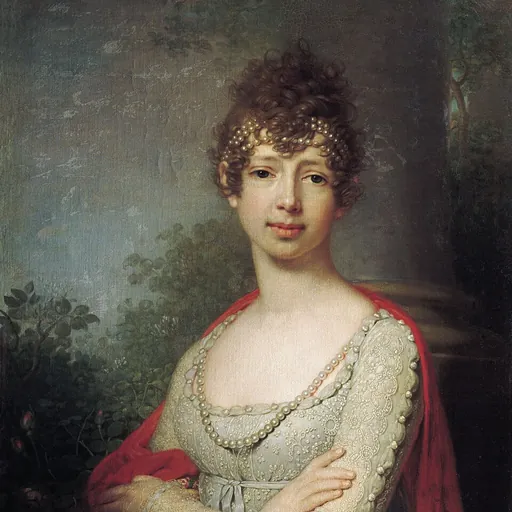
About Grand Duchess Maria Pavlovna of Russia
Lived 1786 – 1859 (aged 73). Grand Duchess Maria Pavlovna of Russia was a Russian socialite and consort.
Maria Pavlovna (; – ) was a grand duchess of Russia as the daughter of Paul I, Emperor of all the Russias and Empress Maria Feodorovna and later became the Grand Duchess of Saxe-Weimar-Eisenach by her marriage to Charles Frederick of Saxe-Weimar-Eisenach (1783–1853).
Early life
Grand Duchess Maria Pavlovna Romanova of Russia was born on 16 February 1786 in Saint Petersburg as the fifth child and third daughter of Tsesarevich Paul Petrovich of Russia and his second wife, Tsesarevna Maria Feodorovna (1754–1801), born Duchess Sophie Dorothea of Württemberg (1759–1828). She was named after her mother.
Maria Pavlovna spent her childhood in the Pavlovsk Palace and the Great Gatchina Palace. As a child, she was not considered pretty as her face had been disfigured as a result of being variolated. She was a talented pianist, for which her paternal grandmother, Catherine the Great (1729–1796) admired her, even though she thought that Maria Pavlovna would have been better off had she been born a boy. Her music instructor was Giuseppe Sarti, an Italian composer and the kapellmeister of the Russian court. From 1798, she was taught music by Ludwig-Wilhelm Tepper de Ferguson.
Life in Weimar On 3 August 1804, Maria Pavlovna married Charles Frederick, Hereditary Grand Duke of Saxe-Weimar-Eisenach (1783–1853). The couple stayed in Saint Petersburg for nine months before departing for Weimar. There, Maria Pavlovna was greeted with festivities as described by Christoph Martin Wieland: "The most festive part of all the magnificence of balls, fireworks, promenades, comedies, illuminations was the widespread and genuine joy at the arrival of our new princess".
As grand duchess, she took care of the poor of the country. She last visited Russia at the occasion of the coronation of her nephew, Alexander II of Russia in 1855.
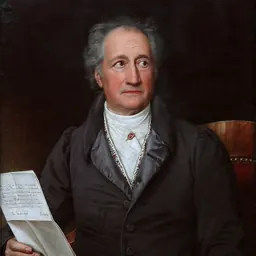
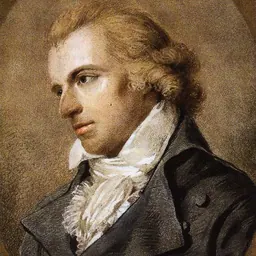
Patronage of arts and sciences Maria Pavlovna on a medal by Angela Facius from 1854, made for the golden jubilee of her arrival in Weimar. Maria Pavlovna was interested in both art and science. She maintained a lifelong correspondence with Vasily Zhukovsky, and Friedrich Schiller dedicated one of his last poems to her. Schiller praised her "talents in music and painting and genuine love of reading", while Johann Wolfgang von Goethe hailed her as one of the worthiest women of his time.
According to Mary Leveson-Gower, the duchess by the 1820s had grown "very deaf, but had delightful manners".
Most famously, she held "literary evenings" ("Literarische Abende") where scholars both from and outside of the neighbouring University of Jena were invited to give lectures on various topics. The grand duchess herself attended ten courses at the university, some delivered by Alexander von Humboldt (1769–1859). Several collections of the institution benefitted of her patronage, among them the Grandducal Oriental Coin Cabinet founded in 1840 by the orientalist Johann Gustav Stickel (1805–1896). She also played an instrumental role in establishing the Falk Institute in Weimar.
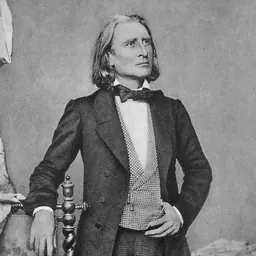
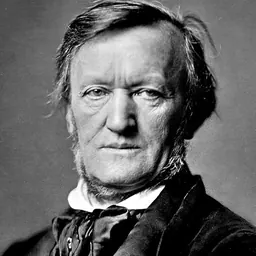
In her later years, Maria Pavlovna invited Franz Liszt to her court and appointed him "Kapellmeister extraordinaire" in 1842. In 1850, Richard Wagner's opera Lohengrin premiered in Weimar, but her growing deafness prevented the grand duchess from enjoying it.
Issue Maria Pavlovna had four children by her husband, Charles Frederick of Saxe-Weimar-Eisenach (1783–1853), three of whom survived to adulthood: Paul Alexander Karl Constantin Frederick August of Saxe-Weimar-Eisenach (25 September 1805 – 10 April 1806), died in infancy Maria Louisa Alexandrina of Saxe-Weimar-Eisenach (3 February 1808 – 18 January 1877), who married Prince Charles of Prussia (1801 –1883) and had issue. Augusta Louisa Catherine of Saxe-Weimar-Eisenach (30 September 1811 – 7 January 1890), who became German Empress after marrying William I, German Emperor (1797–1888) and had issue. Charles Alexander Augustus John, Grand Duke of Saxe-Weimar-Eisenach (24 June 1818 – 5 January 1901), who inherited his father's throne, married Princess Sophie of the Netherlands (1824–1897) and had issue.
Letters Maria Pavlovna's letters to her maternal grandfather, Frederick II Eugene, Duke of Württemberg written between 1795 and 1797 are preserved in the State Archive of Stuttgart. Her letters from between 1800 and 1859 are preserved in the "Maria Paulowna letters" collection of the Hoover Institution Library and Archives of Stanford University.
Ancestry
Don’t just read it —
keep it.
Full-length biographies made to live with: read them, listen on the way to work, watch them tonight.
- E-book
- Audio
- Video
Instant download · yours to keep · every purchase keeps this site free
Important facts
more
Maria Paulowna, Maria Pavlovna Romanova, Großherzogin Maria Sachsen-Weimar, Grand Duke of Sachsen-Weimar-Eisenach Maria of Russia, consortPeople in Grand Duchess Maria Pavlovna of Russia's life
Named in this biography and alive at the same time

Related people
Same field, nearest in time

Contemporaries
People whose lives overlapped Grand Duchess Maria Pavlovna of Russia's
Frequently asked questions
Who was Grand Duchess Maria Pavlovna of Russia?
Russian Grand Duchess
When was Grand Duchess Maria Pavlovna of Russia born?
Grand Duchess Maria Pavlovna of Russia was born on 4 February 1786 in Saint Petersburg.
When did Grand Duchess Maria Pavlovna of Russia die?
Grand Duchess Maria Pavlovna of Russia died on 11 June 1859 in Schloss Belvedere.
What was Grand Duchess Maria Pavlovna of Russia's occupation?
Grand Duchess Maria Pavlovna of Russia was a socialite and consort.
What nationality was Grand Duchess Maria Pavlovna of Russia?
Grand Duchess Maria Pavlovna of Russia was Russian.
Sources & further reading
· Wikipedia: Grand Duchess Maria Pavlovna of Russia
· DBpedia: Maria Pavlovna, Grand Duchess of Saxe-Weimar-Eisenach
Cite this page
APA: Biography.guide. (2026). Grand Duchess Maria Pavlovna of Russia. https://biography.guide/grand-duchess-maria-pavlovna-of-russia-socialite/
MLA: "Grand Duchess Maria Pavlovna of Russia." Biography.guide, https://biography.guide/grand-duchess-maria-pavlovna-of-russia-socialite/.
Chicago: "Grand Duchess Maria Pavlovna of Russia." Biography.guide. https://biography.guide/grand-duchess-maria-pavlovna-of-russia-socialite/.
Data last updated: 2026-09-29 · Spot an error? Report a correction.
Portrait: Wikimedia Commons · author & licence
Page generated 2026-10-05 04:14 UTC