
About Grace Williams
Lived 1906 – 1977 (aged 70). Grace Williams was a British composer.
Grace Mary Williams (19 February 1906 – 10 February 1977) was a Welsh composer, generally regarded as Wales's most notable female composer, and the first British woman to score a feature film.
Early life Williams was born in Barry, Glamorgan, the daughter of William Matthews Williams and Rose Emily Richards Williams. Both of her parents were teachers; her father was also a noted musician. She learned piano and violin as a girl, playing piano trios with her father and her brother Glyn, and accompanying her father's choir. At the County School she began to develop her interest in composition under the guidance of the music teacher Miss Rhyda Jones, and in 1923 she won the Morfydd Owen scholarship to the University College of South Wales and Monmouthshire (now Cardiff University), where she studied under Professor David Evans. In 1926 she began studying at the Royal College of Music, London, where she was taught by Gordon Jacob and Ralph Vaughan Williams. Other notable female composers studying with Vaughan Williams at the RCM were Elizabeth Maconchy, Dorothy Gow and Imogen Holst, the daughter of Gustav Holst. In 1930 she was awarded a travelling scholarship, and chose to study with Egon Wellesz in Vienna, where she remained till 1931. In 1960–61 she wrote her only opera, The Parlour, which was not performed until 1966.
Works
Williams' most enduringly popular work is Penillion, written for the National Youth Orchestra of Wales in 1955. She revisited some of the same ideas in her Trumpet Concerto of 1963. Despite the tradition of choral music in Wales, Williams' portfolio of compositions were largely orchestral or instrumental pieces.
Her last completed works (1975) were settings of Kipling and Beddoes for the unusual combination of SATB, harp and two horns. The last music she wrote is actually in her Second Symphony, originally composed in 1956, and substantially revised in 1975. Several choral works, including The Dancers (1951) and the unaccompanied Ave Maris Stella, were recorded for a Chandos Records collection in 1998, conducted by Richard Hickox. Ballads for Orchestra (1969) was recorded by the BBC Symphony Orchestra under the direction of Baldur Brönnimann and was included in Volume 15, No 3 of BBC Music Magazine in 2006. The Symphony No 1 (1943) was performed by the BBC National Orchestra of Wales conducted by Owain Arwel Hughes in a 3 March 2008 broadcast.
An album of Williams' chamber music played by the violinist Madeleine Mitchell and the London Chamber Ensemble, including the Violin Sonata (1930), Sextet (1931) and Suite for nine instruments (1934), was released in 2019. In January 2024 the BBC Philharmonic Orchestra under conductor John Andrews made the first studio recordings of Legend of Rhiannon (1939), Ballads for Orchestra and Castel Caenarfon (1969), for release later in 2024 on Resonus Classics. Also in 2024 an album of 29 of her songs was released in premiere recordings, including Stand forth, Seithenin, Fairground and her setting of Lights Out by Edward Thomas. Siân Philipps and Per Rundber released a new recording of the Violin Sonata in July 2024.
The first commercial recording of the Missa Cambrensis, one of her last works, was issued in 2025 by Lyrita. Over an hour long, it is scored for SATB soloists and choir, a narrator, a children’s choir and large orchestra. The performance is by the BBC National Orchestra and Chorus of Wales, conductor Adrian Partington. In 2025 the first recording of her opera The Parlour was released by Lyrita - an archive recording of the live performance from the Odeon Theatre, Llandudno in August 1966.
Legacy BBC Radio 3 devoted their "Composer of the Week" segment to her during the second week of August 2006, the year of the centenary of her birth. This resulted in several new performances of long-unperformed works, including her Violin Concerto (1950) and her Sinfonia Concertante for piano and orchestra (1941).
March 2016 saw both the premiere modern performances of her large-scale Missa Cambrensis for soloists, chorus and orchestra (1971) and of her symphonic suite Four Illustrations for the Legend of Rhiannon (1939–40).
Personal life During and after World War II, Williams experienced depression and other stress-related health problems. Grace Williams died at the age of 70 in February 1977, in Barry. Hen Walia, Overture for orchestra (1930) Sonata for violin and piano (1930; rev. 1938) Sextet for oboe, trumpet, violin, viola, cello and piano (c. 1931) Sonatina for flute and piano (1931) Suite for orchestra (1932) Concert Overture (c. 1932) Movement for Trumpet and chamber orchestra (1932) Suite for nine instruments (flute, clarinet, trumpet, piano, two violins, viola, cello and double bass) (c. 1934) Theseus and Ariadne, ballet (1935) Elegy for String orchestra (1936; rev. 1940) Four Illustrations for the Legend of Rhiannon, for orchestra (1939) Sea Sketches, for String orchestra (1944) Piano Concerto (unfinished; one movement only) (1949) The Dark Island, Suite for string orchestra (1949) Violin Concerto (1950) Variations on a Swedish Tune The Shoemaker for Piano and Orchestra (1950) The Dancers, Choral Suite (1951) Hiraeth, for harp (1951) Three Nocturnes, for two pianos (1953) Seven Scenes for Young Listeners, for orchestra (1954) Penillion, for orchestra (1955) Symphony No. 2 (1956; rev. 1975) All Seasons shall be Sweet (1959) The Parlour, opera (after Guy de Maupassant ) (1961) Processional for orchestra (1962; rev. 1968) Trumpet Concerto (1963) Carillons, for oboe and orchestra (1965; rev. 1973) Severn Bridge Variations (collective work) : Variation V (1966) Ballads for Orchestra (1968) Ave Maris Stella, for SATB chorus a cappella (1973) Fairest of Stars, for soprano and orchestra (1973)
Don’t just read it —
keep it.
Full-length biographies made to live with: read them, listen on the way to work, watch them tonight.
- E-book
- Audio
- Video
Instant download · yours to keep · every purchase keeps this site free
Important facts
People in Grace Williams's life
Named in this biography and alive at the same time

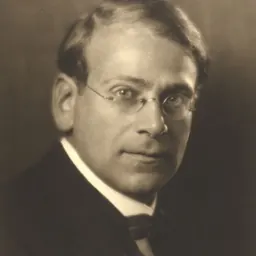



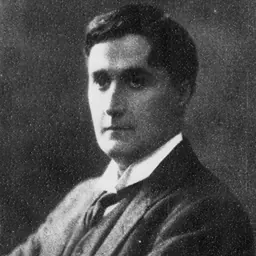


Related people
Same field, nearest in time

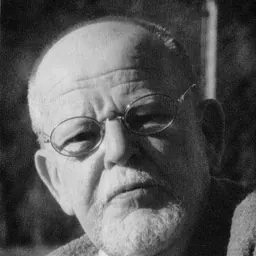

Contemporaries
People whose lives overlapped Grace Williams's


Frequently asked questions
Who was Grace Williams?
Welsh composer (1906-1977)
When was Grace Williams born?
Grace Williams was born on 19 February 1906 in Barry.
When did Grace Williams die?
Grace Williams died on 10 February 1977 in Barry.
What was Grace Williams's occupation?
Grace Williams was a composer.
What nationality was Grace Williams?
Grace Williams was British.
Sources & further reading
Cite this page
APA: Biography.guide. (2026). Grace Williams. https://biography.guide/grace-williams/
MLA: "Grace Williams." Biography.guide, https://biography.guide/grace-williams/.
Chicago: "Grace Williams." Biography.guide. https://biography.guide/grace-williams/.
Data last updated: 2026-09-20 · Spot an error? Report a correction.
Page generated 2026-09-27 05:10 UTC