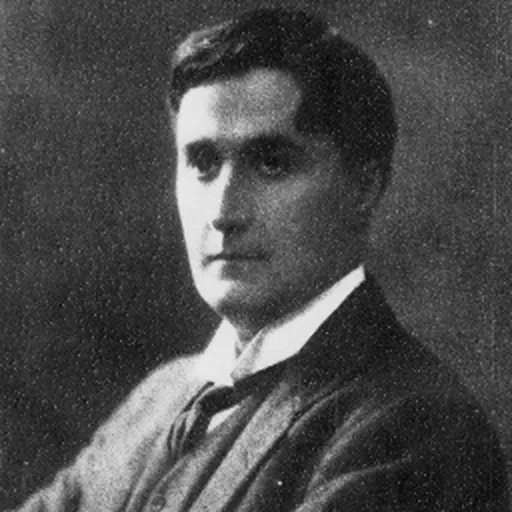
About Ralph Vaughan Williams
Lived 1872 – 1958 (aged 85). Ralph Vaughan Williams was a British conductor, classical composer, choreographer, organist, pedagogue and musicologist.
Ralph Vaughan Williams ( ; 12 October 1872– 26 August 1958) was an English composer. His works include operas, ballets, chamber music, secular and religious vocal pieces and orchestral compositions including nine symphonies, written over sixty years. Strongly influenced by Tudor music and English folk-song, his output marked a decisive break in British music from its German-dominated style of the 19th century.
Vaughan Williams was born to a well-to-do family with strong moral views and a progressive social outlook. Throughout his life he sought to be of service to his fellow citizens, and believed in making music as available as possible to everybody. He wrote many works for amateur and student performance. He was musically a late developer, not finding his true voice until his late thirties; his studies in 1907–1908 with the French composer Maurice Ravel helped him clarify the textures of his music and free it from Teutonic influences.
Vaughan Williams is among the best-known British symphonists, noted for his very wide range of moods, from stormy and impassioned to tranquil, from mysterious to exuberant. Among the most familiar of his other concert works are Fantasia on a Theme by Thomas Tallis (1910) and The Lark Ascending (1914). His vocal works include hymns, folk-song arrangements and large-scale choral pieces. He wrote eight works for stage performance between 1919 and 1951. Although none of his operas became popular repertoire pieces, his ballet Job: A Masque for Dancing (1930) was successful and has been frequently staged.
Two episodes made notably deep impressions in Vaughan Williams's personal life. The First World War, in which he served in the army, had a lasting emotional impact. Twenty years later, though in his sixties and devotedly married, he was reinvigorated by a love affair with a much younger woman, who later became his second wife. He went on composing through his 70s and 80s, producing his last symphony months before his death at the age of 85. His works have continued to be a staple of the British concert repertoire, and all his major compositions and many of the minor ones have been recorded.
Life and career
Early years Vaughan Williams was born at Down Ampney, Gloucestershire, the third child and younger son of the Reverend Arthur Vaughan Williams, the vicar, and his wife, Margaret, née Wedgwood. His paternal forebears were of mixed English and Welsh descent; many of them went into the law or the Church. The judges Sir Edward and Sir Roland Vaughan Williams were respectively Arthur's father and brother. |group= n
Arthur Vaughan Williams died suddenly in February 1875, and his widow took the children to live in her family home, Leith Hill Place, Wotton, Surrey. Such views were consistent with the progressive-minded tradition of both sides of the family. When the young Vaughan Williams asked his mother about Darwin's controversial book On the Origin of Species, she answered, "The Bible says that God made the world in six days. Great Uncle Charles thinks it took longer: but we need not worry about it, for it is equally wonderful either way".
In 1878, at the age of five, Vaughan Williams began receiving piano lessons from his aunt, Sophy Wedgwood. He displayed signs of musical talent early on, composing his first piece of music, a four-bar piano piece called "The Robin's Nest", in the same year. He did not greatly like the piano, and was pleased to begin violin lessons the following year. In 1880, when he was eight, he took a correspondence course in music from Edinburgh University and passed the associated examinations. From there he moved on to the public school Charterhouse in January 1887. His academic and sporting achievements there were satisfactory, and the school encouraged his musical development. In 1888 he organised a concert in the school hall, which included a performance of his G major Piano Trio (now lost) with the composer as violinist. In this, as in many other things in his life, he was, according to his biographer Michael Kennedy, "that extremely English product the natural nonconformist with a conservative regard for the best tradition".
Royal College of Music and Trinity College, Cambridge
In July 1890 Vaughan Williams left Charterhouse and in September he was enrolled as a student at the Royal College of Music (RCM), London. After a compulsory course in harmony with Francis Edward Gladstone, professor of organ, counterpoint and harmony, he studied organ with Walter Parratt and composition with Hubert Parry. He idolised Parry, and recalled in his Musical Autobiography (1950):
Vaughan Williams's family would have preferred him to remain at Charterhouse for two more years and then go on to Cambridge University. They were not convinced that he was talented enough to pursue a musical career, but feeling it would be wrong to prevent him from trying, they had allowed him to go to the RCM. Nevertheless, a university education was expected of him, and in 1892 he temporarily left the RCM and entered Trinity College, Cambridge, where he spent three years, studying music and history. He felt intellectually overshadowed by some of his companions, but he learned much from them and formed lifelong friendships with several. Among the women with whom he mixed socially at Cambridge was Adeline Fisher, the daughter of Herbert Fisher, an old friend of the Vaughan Williams family. She and Vaughan Williams grew close, and in June 1897, after he had left Cambridge, they became engaged to be married.
During his time at Cambridge Vaughan Williams continued his weekly lessons with Parry, and studied composition with Charles Wood and organ with Alan Gray. He graduated as Bachelor of Music in 1894 and Bachelor of Arts the following year. Beneath Stanford's severity lay a recognition of Vaughan Williams's talent and a desire to help the young man correct his opaque orchestration and extreme predilection for modal music.
In his second spell at the RCM (1895–1896) Vaughan Williams got to know a fellow student, Gustav Holst, who became a lifelong friend. Stanford emphasised the need for his students to be self-critical, but Vaughan Williams and Holst became, and remained, one another's most valued critics; each would play his latest composition to the other while still working on it. Vaughan Williams later observed, "What one really learns from an Academy or College is not so much from one's official teachers as from one's fellow-students ... [we discussed] every subject under the sun from the lowest note of the double bassoon to the philosophy of Jude the Obscure". In 1949 he wrote of their relationship, "Holst declared that his music was influenced by that of his friend: the converse is certainly true."
Early career
Vaughan Williams had a modest private income, which in his early career he supplemented with a variety of musical activities. Although the organ was not his preferred instrument,
As the decade progressed, Vaughan Williams found musical inspiration lacking, and experienced his first fallow period since his wartime musical silence. After his anti-war cantata Dona nobis pacem in 1936 he did not complete another work of substantial length until late in 1941, when the first version of the Fifth Symphony was completed. She was a poet, and had approached the composer with a proposed scenario for a ballet. Despite their both being married, and a four-decade age-gap, they fell in love almost from their first meeting; they maintained a secret love affair for more than a decade.
1939–1952 During the Second World War Vaughan Williams was active in civilian war work, chairing the Home Office Committee for the Release of Interned Alien Musicians, helping Myra Hess with the organisation of the daily National Gallery concerts, serving on a committee for refugees from Nazi oppression, and on the Council for the Encouragement of Music and the Arts (CEMA), the forerunner of the Arts Council, and even driving a lorry about to collect scrap metal.
In 1942 Michael Wood died suddenly of heart failure. At Adeline's behest the widowed Ursula was invited to stay with the Vaughan Williamses in Dorking, and thereafter was a regular visitor there, sometimes staying for weeks at a time. The critic Michael White suggests that Adeline "appears, in the most amicable way, to have adopted Ursula as her successor". Ursula recorded that during air raids all three slept in the same room in adjacent beds, holding hands for comfort. The music Vaughan Williams wrote for the BBC to celebrate the end of the war, Thanksgiving for Victory, was marked by what the critic Edward Lockspeiser called the composer's characteristic avoidance of "any suggestion of rhetorical pompousness". Any suspicion that the septuagenarian composer had settled into benign tranquillity was dispelled by his Sixth Symphony (1948), described by the critic Gwyn Parry-Jones as "one of the most disturbing musical statements of the 20th century", opening with a "primal scream, plunging the listener immediately into a world of aggression and impending chaos." Coming as it did near the start of the Cold War, many critics thought its pianissimo last movement a depiction of a nuclear-scorched wasteland. The composer was dismissive of programmatic theories: "It never seems to occur to people that a man might just want to write a piece of music."
In 1951 Adeline died, aged eighty. In the same year Vaughan Williams's last opera, The Pilgrim's Progress, was staged at Covent Garden as part of the Festival of Britain. He had been working intermittently on a musical treatment of John Bunyan's allegory for forty-five years, and the 1951 "morality" was the final result. The reviews were respectful, but the work did not catch the opera-going public's imagination, and the Royal Opera House's production was "insultingly half-hearted" according to Frogley.
Second marriage and last years In February 1953 Vaughan Williams and Ursula were married. From his mature years, there survive for standard chamber groupings two string quartets (1908–1909, revised 1921; and 1943–1944), a "phantasy" string quintet (1912), and a sonata for violin and piano (1954). The first quartet was written soon after Vaughan Williams's studies in Paris with Ravel, whose influence is strongly evident. (Vaughan Williams was amused by the comment of a friend who correctly detected the French influence, but thought "I must have been having tea with Debussy." It is from the same period as the Sixth Symphony, and has something of that work's severity and anguish.) The quintet (1912) was written two years after the success of the Tallis Fantasia, with which it has elements in common, both in terms of instrumental layout and the mood of rapt contemplation. The violin sonata has made little impact.
Vocal music Ursula Vaughan Williams wrote of her husband's love of literature, and listed some of his favourite writers and writings:
In addition to his love of poetry, Vaughan Williams's vocal music is inspired by his lifelong belief that the voice "can be made the medium of the best and deepest human emotion."
Songs Between the mid-1890s and the late 1950s Vaughan Williams set more than eighty poems for voice and piano accompaniment. The earliest to survive is "A Cradle Song", to Coleridge's words, from about 1894. To Vaughan Williams the human voice was "the oldest and greatest of musical instruments". He described his early songs as "more or less simple and popular in character", and the musicologist Sophie Fuller describes this simplicity and popularity as consistent throughout his career. Many composers of the late 19th and early 20th centuries wrote sentimental works for female voice; by contrast, songs by Vaughan Williams, such as "The Vagabond" from Songs of Travel, to words by Robert Louis Stevenson, are "a particularly masculine breath of fresh air" (Fuller), "virile open-air verses" (Kennedy). Some of Vaughan Williams's later songs are less well known; Fuller singles out the cycle Three Poems by Walt Whitman, a largely dark work, as too often overlooked by singers and critics. For some of his songs the composer expands the accompaniment to include two or more string instruments in addition to the piano; they include On Wenlock Edge, and the Chaucer cycle Merciless Beauty (1921), judged by an anonymous contemporary critic as "surely among the best of modern English songs". Grove lists a dozen more, composed between 1905 and 1935. Other church works include a Magnificat and Nunc Dimittis (1925), the Mass in G minor (1920–1921), a Te Deum (1928)
Vaughan Williams's choral works for concert performance include settings of both secular and religious words. The former include Toward the Unknown Region to words by Whitman (composed 1904–1906), Five Tudor Portraits, words by John Skelton (1935), and the Shakespearean Serenade to Music (in its alternative version for chorus and orchestra, 1938). Choral pieces with religious words include the oratorio Sancta Civitas (1923–1925) and the Christmas cantata Hodie (1954). In 1953 the composer said that of his choral works Sancta Civitas was his favourite. The Dona Nobis Pacem, an impassioned anti-war cantata (1936) is a combination of both, with words from Whitman and others juxtaposed with extracts from the Latin mass, anticipating a similar mixture of sacred and secular text in Britten's War Requiem twenty-five years later.
Stage works Vaughan Williams was wary of conventional labels; his best known ballet is described on the title page as "a masque for dancing" and only one of his operatic works is categorised by the composer simply as an opera. For some of his theatre pieces that could be classed as operas or ballets, he preferred the terms "masque", "romantic extravaganza", "play set to music", or "morality".
In a 2013 survey of Vaughan Williams's stage works, Eric Saylor writes, "With the possible exception of Tchaikovsky, no composer's operatic career was less emblematic of his success elsewhere." Although Vaughan Williams was a regular opera-goer, enthusiastic and knowledgeable about works by operatic masters from Mozart to Wagner and Verdi, his success in the operatic field was at best patchy. There is widespread agreement among commentators that this was partly due to the composer's poor choice of librettists for some, though not all, of his operas. Another problem was his keenness to encourage amateurs and student groups, which sometimes led to the staging of his operas with less than professional standards.
Hugh the Drover, or Love in the Stocks (completed 1919, premiere 1924) has a libretto, by the writer and theatre critic Harold Child, which was described by The Stage as "replete with folksy, Cotswold village archetypes". In the view of the critic Richard Traubner the piece is a cross between traditional ballad opera and the works of Puccini and Ravel, "with rhapsodic results." The score uses genuine and pastiche folk-songs but ends with a passionate love duet that Traubner considers has few equals in English opera. Its first performance was by students at the Royal College of Music, and the work is rarely staged by major professional companies.
On Christmas Night (1926), a masque by Adolph Bolm and Vaughan Williams, combines singing, dancing and mime. The story is loosely based on Dickens's A Christmas Carol. The piece was first given in Chicago by Bolm's company; the London premiere was in 1935. Saylor describes the work as a "dramatic hodgepodge" which has not attracted the interest of later performers.
The only work that the composer designated as an opera is the comedy Sir John in Love (1924–1928). It is based on Shakespeare's The Merry Wives of Windsor. Folk-song is used, though more discreetly than in Hugh the Drover, and the score is described by Saylor as "ravishingly tuneful". Although versions of the play had already been set by Nicolai, Verdi, and Holst, Vaughan Williams's is distinctive for its greater emphasis on the love music rather than on the robust comedy. In 1931, with the Leith Hill Festival in mind, the composer recast some of the music as a five-section cantata, In Windsor Forest, giving the public "the plums and no cake", as he put it.
The Poisoned Kiss (1927–1929, premiered in 1936) is a light comedy. Vaughan Williams knew the Savoy operas well, and his music for this piece was and is widely regarded as in the Sullivan vein. The words, by an inexperienced librettist, were judged to fall far short of Gilbert's standards. Saylor sums up the critical consensus that the work is something between "a frothy romantic comedy [and] a satirical fairy-tale", and not quite successful in either category.
Job: A Masque for Dancing (1930) was the first large-scale ballet by a modern British composer. Vaughan Williams's liking for long tableaux, however disadvantageous in his operas, worked to successful effect in this ballet. The work is inspired by William Blake's Illustrations of the Book of Job (1826). The score is divided into nine sections and an epilogue, presenting dance interpretations of some of Blake's engravings. The work, choreographed by Ninette de Valois, made a powerful impression at its early stagings, and has been revived by the Royal Ballet several times. Kennedy ranks the score as "one of Vaughan Williams's mightiest achievements", and notes that it is familiar in concert programmes, having "the stature and cohesion of a symphony."
In Kennedy's view the one-act Riders to the Sea (1925–1931, premiered 1937) is artistically Vaughan Williams's most successful opera; Saylor names Sir John in Love for that distinction, but rates Riders to the Sea as one of the composer's finest works in any genre. It is an almost verbatim setting of J. M. Synge's 1902 play of the same name, depicting family tragedy in an Irish fishing village. Kennedy describes the score as "organized almost symphonically" with much of the thematic material developed from the brief prelude. The orchestration is subtle, and foreshadows the ghostly finale of the Sixth Symphony; there are also pre-echoes of the Sinfonia antartica in the lamenting voices of the women and in the sound of the sea.
The Bridal Day (1938–1939) is a masque, to a scenario by Ursula, combining voice, mime and dance, first performed in 1953 on BBC television. Vaughan Williams later recast it a cantata, Epithalamion (1957).
The Pilgrim's Progress (1951), the composer's last opera, was the culmination of more than forty years' intermittent work on the theme of Bunyan's religious allegory. Vaughan Williams had written incidental music for an amateur dramatisation in 1906, and had returned to the theme in 1921 with the one-act The Shepherds of the Delectable Mountains (finally incorporated, with amendments, into the 1951 opera). The work has been criticised for a preponderance of slow music and stretches lacking in dramatic action, but some commentators believe the work to be one of Vaughan Williams's supreme achievements.
Recordings Vaughan Williams conducted a handful of recordings for gramophone and radio. His studio recordings are the overture to The Wasps and the ballet Old King Cole (both made in 1925), and the Fourth Symphony (1937). the Serenade to Music, and the Fifth Symphony, In the early days of LP in the 1950s Vaughan Williams was better represented in the record catalogues than most British composers. The Record Guide (1955) contained nine pages of listings of his music on disc, compared with five for Walton, and four apiece for Elgar and Britten.
All the composer's major works and many of the minor ones have been recorded. Although rarely staged, the operas have fared well on disc. The earliest recording of a Vaughan Williams opera was Hugh the Drover, in an abridged version conducted by Sargent in 1924. Since the 1960s there have been stereophonic recordings of Hugh the Drover, Sir John in Love, Riders to the Sea, The Poisoned Kiss, and The Pilgrim's Progress. Most of the orchestral recordings have been by British orchestras and conductors, but notable non-British conductors who have made recordings of Vaughan Williams's works include Herbert von Karajan, Leonard Bernstein, Dimitri Mitropoulos, Charles Munch, Leopold Stokowski, and, most frequently, André Previn, who conducted the London Symphony Orchestra in the first complete stereo cycle of the symphonies, recorded between 1967 and 1972. Among the British conductors most closely associated with Vaughan Williams's music on disc and in concert in the generations after Boult, Sargent and Barbirolli are Vernon Handley, Richard Hickox, Sir Mark Elder and Sir Andrew Davis. Record companies with extensive lists of Vaughan Williams recordings include EMI, Decca, Chandos, Hyperion and Naxos.
Honours and legacy Vaughan Williams refused a knighthood at least once, and declined the post of Master of the King's Music after Elgar's death. The one state honour he accepted was the Order of Merit in 1935, which confers no prenominal title: he preferred to remain "Dr Vaughan Williams". His academic and musical honours included an honorary doctorate of music from the University of Oxford (1919); the Cobbett medal for services to chamber music (1930); the gold medal of the Royal Philharmonic Society (1930); the Collard life fellowship of the Worshipful Company of Musicians (1934, in succession to Elgar); an honorary fellowship of Trinity College, Cambridge (1935); the Shakespeare prize of the University of Hamburg (1937); the Albert medal of the Royal Society of Arts (1955); and the Howland memorial prize of Yale University (1954).
After Vaughan Williams's death, The Times summed up his legacy in a leading article:
In 1994 a group of enthusiasts founded the Ralph Vaughan Williams Society, with the composer's widow as its president and Roy Douglas and Michael Kennedy as vice presidents. The society, a registered charity, has sponsored and encouraged performances of the composer's works including complete symphony cycles and a Vaughan Williams opera festival. The society has promoted premieres of neglected works, and has its own record label, Albion Records.
Composers of the generation after Vaughan Williams reacted against his style, which became unfashionable in influential musical circles in the 1960s; diatonic and melodic music such as his was neglected in favour of atonal and other modernist compositions. In the 21st century this neglect has been reversed. In the fiftieth anniversary year of his death two contrasting documentary films were released: Tony Palmer's O Thou Transcendent: The Life of Vaughan Williams and John Bridcut's The Passions of Vaughan Williams. British audiences were prompted to reappraise the composer. The popularity of his most accessible works, particularly the Tallis Fantasia and The Lark Ascending, increased, but a wide public also became aware of what a reviewer of Bridcut's film called "a genius driven by emotion". Among the 21st-century musicians who have acknowledged Vaughan Williams's influence on their development are John Adams, PJ Harvey, Sir Peter Maxwell Davies, Anthony Payne, Wayne Shorter, Neil Tennant and Mark-Anthony Turnage.
Cultural legacy The Royal College of Music commissioned an official portrait of the composer from Sir Gerald Kelly (1952) which hangs in the college. The Manchester Art Gallery has a bronze sculpture of Vaughan Williams by Epstein (1952) and the National Portrait Gallery (NPG) has drawings by Joyce Finzi (1947) and Juliet Pannett (1957 and 1958); versions of a bronze head of the composer by David McFall (1956) are in the NPG and at the entrance to the Music reading room of the British Library. There is a statue of Vaughan Williams in Dorking, and a bust by Marcus Cornish in Chelsea Embankment Gardens, near his old house in Cheyne Walk.
Notes, references and sources
Don’t just read it —
keep it.
Full-length biographies made to live with: read them, listen on the way to work, watch them tonight.
- E-book
- Audio
- Video
Instant download · yours to keep · every purchase keeps this site free
Important facts
People in Ralph Vaughan Williams's life
Named in this biography and alive at the same time


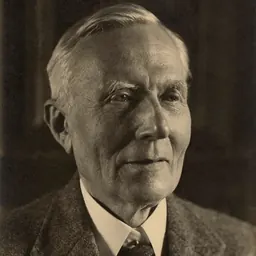
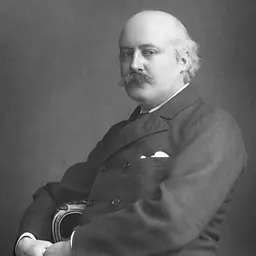
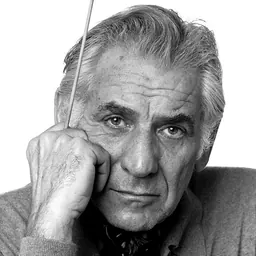
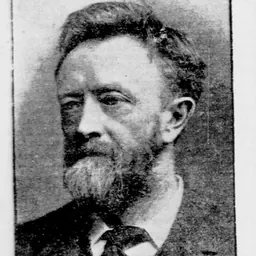
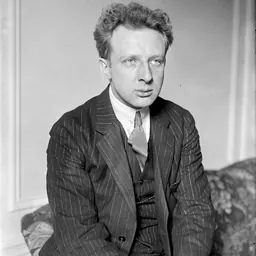
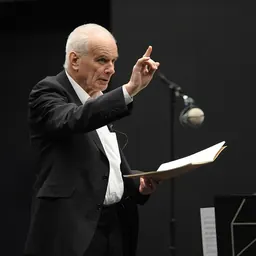
Related people
Same field, nearest in time


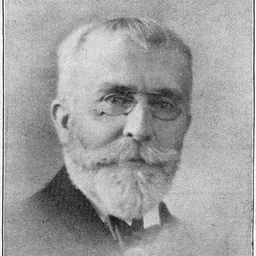

Contemporaries
People whose lives overlapped Ralph Vaughan Williams's


Frequently asked questions
Who was Ralph Vaughan Williams?
English composer (1872-1958)
When was Ralph Vaughan Williams born?
Ralph Vaughan Williams was born on 12 October 1872 in Down Ampney.
When did Ralph Vaughan Williams die?
Ralph Vaughan Williams died on 26 August 1958 in London.
What was Ralph Vaughan Williams's occupation?
Ralph Vaughan Williams was a conductor, classical composer, choreographer, organist, pedagogue and musicologist.
What nationality was Ralph Vaughan Williams?
Ralph Vaughan Williams was British.
Sources & further reading
· Wikipedia: Ralph Vaughan Williams
· DBpedia: Ralph Vaughan Williams
Cite this page
APA: Biography.guide. (2026). Ralph Vaughan Williams. https://biography.guide/ralph-vaughan-williams/
MLA: "Ralph Vaughan Williams." Biography.guide, https://biography.guide/ralph-vaughan-williams/.
Chicago: "Ralph Vaughan Williams." Biography.guide. https://biography.guide/ralph-vaughan-williams/.
Data last updated: 2026-09-22 · Spot an error? Report a correction.
Portrait: Wikimedia Commons · author & licence
Page generated 2026-09-27 05:04 UTC