
About Gotthold Eisenstein
Lived 1823 – 1852 (aged 29). Gotthold Eisenstein was a German mathematician, scientist and university teacher.
Ferdinand Gotthold Max Eisenstein (16 April 1823 – 11 October 1852) was a German mathematician who made significant contributions to number theory and analysis. Born in Berlin, Prussia, to Jewish parents who converted to Protestantism before his birth, Eisenstein displayed exceptional mathematical talent from a young age.
Early life and education Despite suffering from health problems, including meningitis, Eisenstein excelled academically. At 14, he attended Friedrich Werder Gymnasium. By age 15, he had mastered the mathematics curriculum. His teachers recognized his mathematical abilities, one quoted as saying:
He then turned to the works of Leonhard Euler and Joseph-Louis Lagrange to study differential calculus.
While still a student, Eisenstein began attending lectures by Peter Gustav Lejeune Dirichlet and others at the University of Berlin. In 1843, he met William Rowan Hamilton in Dublin, who introduced him to Niels Henrik Abel's proof of the impossibility of solving fifth-degree polynomials, sparking his interest in mathematical research.
Contributions to mathematics (1843-1848) Upon returning to Berlin in 1843, Eisenstein passed his graduation exams and enrolled in the University. Within a year, he presented his first work on cubic forms in two variables to the Berlin Academy. He also gained the patronage of Alexander von Humboldt, who secured grants to support Eisenstein's financial needs.
During this period, Eisenstein published numerous papers in Crelle's Journal, including two proofs of the law of quartic reciprocity and analogous laws for cubic and quartic reciprocity. He also visited Carl Friedrich Gauss in Göttingen and received an honorary doctorate from the University of Breslau. In 1847, Eisenstein habilitated at the University of Berlin and began teaching there.
Challenges and continued research Despite his revolutionary activities in Berlin, which led to a brief imprisonment in 1848, Eisenstein continued his mathematical research. He made significant contributions to quadratic partitions of prime numbers and the reciprocity laws. His work was recognized by his election to the Academy of Göttingen and Berlin in 1851 and 1852, respectively.
Illness and death Eisenstein succumbed to tuberculosis at the age of 29. Alexander von Humboldt, a lifelong supporter, accompanied his remains to the cemetery.
Publications
Weil's review
Eponym concepts Eisenstein's criterion Eisenstein ideal Eisenstein integer Eisenstein prime Eisenstein reciprocity Eisenstein sum Eisenstein series Eisenstein's theorem Eisenstein triple Eisenstein–Kronecker number Real analytic Eisenstein series
Don’t just read it —
keep it.
Full-length biographies made to live with: read them, listen on the way to work, watch them tonight.
- E-book
- Audio
- Video
Instant download · yours to keep · every purchase keeps this site free
Important facts
People in Gotthold Eisenstein's life
Named in this biography and alive at the same time


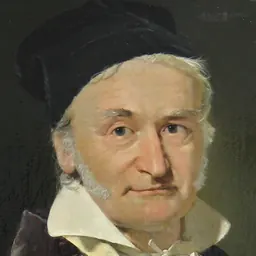
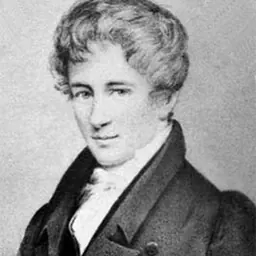
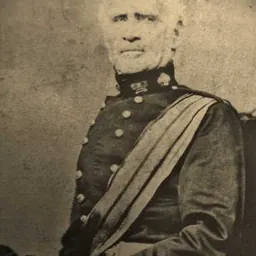
Related people
Same field, nearest in time
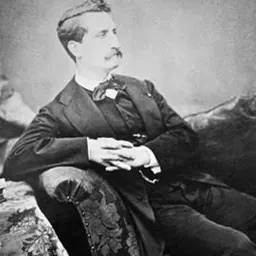

Contemporaries
People whose lives overlapped Gotthold Eisenstein's



Frequently asked questions
Who was Gotthold Eisenstein?
German mathematician (1823–1852)
When was Gotthold Eisenstein born?
Gotthold Eisenstein was born on 16 April 1823 in Berlin.
When did Gotthold Eisenstein die?
Gotthold Eisenstein died on 11 October 1852 in Berlin.
What was Gotthold Eisenstein's occupation?
Gotthold Eisenstein was a mathematician, scientist and university teacher.
What nationality was Gotthold Eisenstein?
Gotthold Eisenstein was German.
Sources & further reading
· Wikipedia: Gotthold Eisenstein
· DBpedia: Gotthold Eisenstein
Cite this page
APA: Biography.guide. (2026). Gotthold Eisenstein. https://biography.guide/gotthold-eisenstein/
MLA: "Gotthold Eisenstein." Biography.guide, https://biography.guide/gotthold-eisenstein/.
Chicago: "Gotthold Eisenstein." Biography.guide. https://biography.guide/gotthold-eisenstein/.
Data last updated: 2026-09-20 · Spot an error? Report a correction.
Page generated 2026-09-27 05:21 UTC