
About Gordon Pask
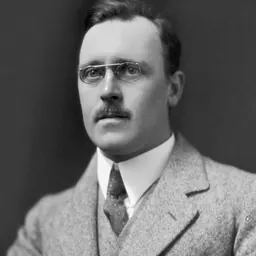
Lived 1928 – 1996 (aged 67). Gordon Pask was a British psychologist, cyberneticist, university teacher, naturalist and artist, known for Conversation theory and Interactions of actors theory.
Andrew Gordon Speedie Pask (28 June 1928 – 29 March 1996) was a British cybernetician, inventor and polymath who made multiple contributions to cybernetics, educational psychology, educational technology, applied epistemology, chemical computing, architecture, and systems art. During his life, he gained three doctorate degrees. He was an avid writer, with more than two hundred and fifty publications which included a variety of journal articles, books, periodicals, patents, and technical reports (many of which can be found at the main Pask archive at the University of Vienna).
He is known for the development of conversation theory, which is a pedagogical, cybernetic and dialectical account for how two conversational participants who attempt to converse with each other in such a way to achieve a shared understanding amongst themselves as to the significance of a given topic.
Biography
Early life and education: 1928–1958 Pask was born in Derby, England, on 28 June 1928, to his parents Percy and Mary Pask. His father was a partner in Pask, Cornish and Smart, a wholesale fruit business in Covent Garden. He had two older siblings: Alfred, who trained as an engineer before becoming a Methodist minister, and Edgar, a professor of anesthetics. His family moved to the Isle of Wight shortly after his birth. He later went on to complete two diplomas in Geology and Mining Engineering from Liverpool Polytechnic and Bangor University respectively. where he met his future associate and business partner Robin McKinnon-Wood, who was studying his undergraduate in Maths and Physics at the time. At the time, Pask was living in Jordan's Yard, Cambridge under the supervision of the scientist and engineer John Brickell. During this time, Pask was more known for his work in the arts and musical theatre rather than his later pursuits in science and education.
He eventually obtained an MA in natural sciences from the university in 1952, They married in 1956 and later had two daughters together. After rebranding the company as System Research Ltd., the company became non-profit in 1961 with significant funding coming from the United States Army and Airforce.
Throughout the company's existence, it conducted a variety of research and development initiatives on behalf of civil service organizations and research councils in both the United States and the United Kingdom. During the active period of System Research Ltd., he and his associates worked on a number of projects including SAKI (self-adaptive keyboard machine), MusiColour (a light show where the colored lights would reduce their responsiveness to a given keyboard input over time so as to induce the keyboard player to play a different range of notes), and finally educational technologies such as CASTE (Couse Assembly System Tutorial Environment) and Thoughtsticker (both of which were developed in the context of what became conversation theory).
During this period, Pask and McKinnon-Wood were asked to demonstrate their proof of concept for MusiColour on behalf of Billy Butlin. While the machine initially worked when the duo sought to demonstrate the technology to Butlin's deputy, after his arrival "it exploded in a cloud of white smoke", and notes of both his genius, the difficulty in following his thought, and getting hold of; remarking both that "[Pask's] conception of things is not anyone else's perception of things", and that "The man can be quite infuriating". Between the early to mid-1950s, Pask began to develop electrochemical devices designed to find their own "relevance criteria". Pask performed experiments utilizing "electrochemical assemblages, passing current through various aqueous solutions of metallic salts (e.g., ferrous sulfate) in order to construct an analog control system". Oliver Selfridge noted that it was the second such mechanism, whereby "a machine build a machine electronically without any physical motion", actually worked.
In September 1958 in Namur, Belgium, he attended the second International Congress of Cybernetics. Pask was first introduced to Heinz von Foerster during this time, who were both informed by the attendees of the conference of having submitted similar papers. von Foerster later asked Pask to join him at the Biological Computer Laboratory at the University of Illinois; He also this year produced SAKI (self-adaptive keyboard machine) for the instruction and development of keyboard skills aimed at the commercial marketplace. London represented a critical point in the development of Pask's thinking: It was here Pask first published his paper "Physical Analogues to the Growth of a Concept" (1959) which contained a theoretical discussion on how the "growth of crystals [through the use of] electrodes suspended in an electronic solution", could be used to represent in purely physical phenomenon the growth of a concept. Warren McCulloch wrote in relation to the presentation that: "[Pask's] gadget does work; it does "take habits" by a mechanism that Charles Peirce proposed". During the later years of this period, Pask had begun to describe himself as a mechanic philosopher to emphasize both the theoretical and experimental aspects of his role.
Later period of System Research Ltd: 1961–1978
During the 1960s, Pask worked significantly with psychologist B. N. Lewis and computer scientist G. L. Mallen. In 1961, Pask published An Approach to Cybernetics. According to Ranulph Glanville, the work argued in favour of the notion that cybernetics was at its heart the art of creating defensible metaphors; this being in reference to the cross-disciplinary nature of the early cybernetics movement, which specifically stressed how analogous forms of control and communication could be found operating between disciplines.
Mallen joined System Research Ltd., in 1964 as a research associate on a project to analyse decision-making in crime investigation. This led to the development of SIMPOL (SIMulation of a POLice system), which was an information management game. Results from the project were reported back to the home office and were believed by Mallen to have had some impact on policy decisions taken by the police. Mallen described Gordon as "a great gadgeteer and had built adaptive teaching machines, for example, to train teleprinter operators, and he used these as a way into understanding human skill learning processes". Mallen suggests that also during this year, Pask presented a lecture to Ealing College of Art on system theory and cybernetics.
Sometime during this period, Pask met George Spencer-Brown who became a lodger at the Pask family's home while working at Stafford Beer and Roger Eddison's operational research consultancy SIGMA (Science in General Management) via strong recommendation from Bertrand Russell. It was here where Spencer-Brown is said to have written his Laws of Form for long hours whilst inebriated in the Pask family's bathtub. The department was originally intended to be a research institute that was originally spearheaded by the media proprietor Cecil Harmsworth King, who was influenced by Stafford Beer's work in management consulting. King died however shortly before its opening, meaning that the Brunel enterprise mostly became a post-graduate teaching department rather than a research institute. Scott later went on a sixth-month internship as a research assistant at System Research Ltd., who himself would later be a major contributor to the development of conversation theory.
Pask later discontinued his work on chemical computers. This may have happened during the early 1960s, or during the mid-1960s. According to Peter Cariani, funding for alternative approaches to artificial intelligence had dried up. This turn in direction was triggered by a greater emphasis on research utilizing symbolic artificial intelligence. Previous approaches to artificial intelligence, which included the use of neural nets, evolutionary programming, cybernetics, bionics, and bio-inspired computing, were side-lined by various funding bodies and interest groups. This placed greater pressure on System Research Ltd., to use more orthodox digital computer approaches to technology-based issues. Peter Cariani has expressed the view, that if we were to build physical devices a la Pask, we would replicate a kind of electrochemical assemblages, which would "have properties radically different from contemporary neural networks".
Mallen documents that in 1968, Pask arrived to "create an exhibit for Jasia Reichardt's planned Cybernetic Serendipity project at the Institute of Contemporary Arts". which encouraged participants to reflect on their own behavior in the system. The pedagogical function was influenced by Pask's research and activity in cybernetics and media-art. It was successfully demonstrated in September 1970 at the Computer '70 trade show at the Olympia conference centre in London. Ecogame was subsequently incorporated into the program of the First European Management Forum during February 1971, which later emerged as the forerunner to the World Economic Forum in Davos. By 1972, Pask began the process of compiling his work into the form of "a formal theory of conversational processes". Due to the academic environment, Pask was working in, he decided early on from 1972 to 1973 to report on the experimental contents of his research due to the emphasis on empirical studies and general distrust of grand theory. Whilst visiting professor of educational technology, he obtained a DSc in cybernetics from the Open University in 1974. In 1975, Pask's team at System Research Ltd. had written and published The Cybernetics of Human Learning & Performance and Conversation, Cognition and Learning: A Cybernetic Theory and Methodology. In the subsequent year 1976, they published Conversation Theory: Applications in Education and Epistemology. It has been claimed that due to the prevailing orthodox attitudes of psychological research at the time, his work did not gain widespread acceptance in the area but found more success in educational research. Pask also sometime between 1975 and 1978, received funding from the Science and Engineering Research Council to develop the "Spy Ring" test in relation to his theory of learning styles. The company later disbanded in the early 1980s, whereby he moved on to teach for a time at Concordia University and then the University of Amsterdam (in the Centre for Innovation and Co-operative Technology), and the Architectural Association in London, During the early 1980s, Pask co-authored Calculator Saturnalia (1980) with the help of Ranulph Glanville and Mike Robinson, which consisted of a collection of games to play on a calculator; he also co-authored Microman Living and Growing with Computers (1982) with Susan Curran Macmillan. Edward Barnes asserts that during this period, his work on conversation theory "was further refined during the 1980s and until Pask's death in 1996 by his research group in Amsterdam. This latter refinement is called interaction of actors (IA) theory".
According to Glanville, Pask semi-retired on 28 June 1993. He also provided some preliminary work for a project on behalf of the London Underground and received initial support from Greenpeace International at the Imperial College London's Department of Electronics for a project in quantitative chemical analysis.
Legacy and impact Pask's primary contributions to cybernetics, educational psychology, learning theory, and systems theory, as well as to numerous other fields, were his emphasis on the personal nature of reality, and on the process of learning as stemming from the consensual agreement of interacting actors in a given environment ("conversation").
In later life, Pask benefited less often from the critical feedback of research peers, reviewers of proposals, or reports to government bodies in the US and UK. Nevertheless, his publications were considered a storehouse of ideas that are not fully theorized.
Ted Nelson, who coined the concept of hypermedia, references Pask in his book Computer Lib/Dream Machines.
Pask acted as a consultant to Nicholas Negroponte, whose earliest research efforts at the Architecture Machine Group on Idiosyncrasy and software-based partners for design have their roots in Pask's work.
Personality Andrew Pickering argues that Pask was a "character" in the traditional British sense of the term, as he likens both Stafford Beer and Grey Walter. His dress sense was eccentric and flamboyant for his time, adopting the dress of an Edwardian dandy with his signature bow tie, double-breasted jacket, and cape. His sleep pattern, later in life, was described as "nocturnal" and would often begin his work at night and sleep during the day. Mallen meanwhile has suggested: "He ran his life on a 36-hour rhythm which meant sleep times and meal times seldom coincided with those of us on normal 24-hour diurnal rhythms. Nevertheless the theories and ideas which came of the resulting late night conversations were intellectually very stimulating, if physically demanding". He was noted by his former colleagues as being capable of great kindness and generosity, yet also sometimes the utter disregard for the individuals he associated himself with.
This generation of conflict, however, is noted to have sometimes driven those around him further away than he would have preferred. which according to Scott, "deeply satisfied his need for understandings that address the great mysteries of life". Pangaro claims that Pask had managed to simulate intelligence-like behaviours with electro-mechanical machines in the 1950s, with Pangaro further arguing "By realising that intelligence resides in interaction, not inside a head or box, his path was clear. To those who didn't understand his philosophical stance, the value of his work was invisible [to them]".
Cybernetics Pask took a broad understanding of what cybernetics entailed. Unlike physics, cybernetics had in Pask's mind no necessary commitment to a particular image as to what constitutes the environment. Instead, the focus is on the observations one makes via observation. Pask saw it as mistaken to view cybernetics reductively. For him, cybernetics was not merely a derivative of other disciplines or applied science. Instead, Pask held true to Norbert Wiener's original vision by acknowledging that cybernetics attempts to provide a unifying framework for various disciplines by establishing "a common language and set of shared principles for understanding the organization of complex systems". It responded to musicians' variations and, if they did not vary their playing, it would become 'bored' and stop responding, prompting the musicians to respond.
Musicolour was influential on Cedric Price's Generator project, via the work of consultants Julia and John Frazer.
SAKI SAKI (self-adaptive keyboard machine) was an adaptable keyboard machine created by Pask which fostered interactivity between user and machine.
Thoughtsticker Thoughtsticker (written as THOUGHTSTICKER) was described by Pask and his fellow collaborators in the 1970s as a special type of educational operating system. In the operating system, a user makes a concrete model or collection of concrete models in the concrete modeling facility of that operating system. The user then sets out to describe why and how the model or collection of models relates to satisfying some overarching goal or thesis via describing their cognitive model or personal construct of that relation in the cognitive modeling facility of that operating system.
Selected publications and projects Pask wrote extensively and contributed to a variety of institutions, journals, and publishing houses. Many items in the following list of publications have been identified at the Pask archive at the University of Vienna.
Books
Book chapters and sections
A volume dedicated to Professor P. Anohkin.
Reprinted in Cybernetica No 3 1970, 140–159, and in No 4 1970, 240–250. Reprinted in Artorga Communications, 140-148
Reprinted in Cybernetics, Art and Ideas, Reichardt, J., (Ed.) Studio Vista, London, 1971, 76-99
Conference proceedings
Reprinted in Policy Analysis and System Science, 1977.
Event chaired by Gregory Bateson.
Prestentations took place at Recent Developments and Trends conference in Binghampton, New York and the Realities Conference via the EST Foundation at San Francisco. Reprinted in Autopoiesis (1981), Zelany, M., (Ed.) New York, North Holland Elsevier, 1981, 265-307.
In Journal of Cybernetics, Hemisphere, Washington, 211-258, published in 1978.
(with Entwistle, N.J. and Hounsell, D.)
Reprinted in Ars Semiotica III, 93-127, Amsterdam, John Benjamin, 1980. Invited Address to IFIP World Congress in Tokyo and Melbourne. Vol XI, Progress in Cybernetics and Systems Research, 1982, 421-432, Hemisphere and John Wiley.
Progress in Cybernetics and Systems Research, 1982, 407-420, Hemisphere and John Wiley.
Journal articles
Miscellaneous
Includes Cybernetics of Cybernetics, available in reduced paperback form from Intersciences Publications, Seaside, California.
Periodicals
Reports and technical reports
Final Scientific Report SSRC Grant No HR 1424/1. Final Scientific Report SSRC Grant No HR 1876/1.
In School of Information Science Reports, Institute of Technology, Atlanta, Georgia, 1973. Open University Monograph. Convened by the European Research Office, London and the US Army Research Institute for the Behavioural and Social Sciences. Contract number: SSRC HR 2371/1
Includes Scientific notes (1-5). Grant USAF F 44620. Grant ARI DAERO 76-G-069.
Footnotes
Don’t just read it —
keep it.
Full-length biographies made to live with: read them, listen on the way to work, watch them tonight.
- E-book
- Audio
- Video
Instant download · yours to keep · every purchase keeps this site free
Important facts
People in Gordon Pask's life
Named in this biography and alive at the same time




Related people
Same field, nearest in time


Contemporaries
People whose lives overlapped Gordon Pask's


Frequently asked questions
Who was Gordon Pask?
British psychologist (1928–1996)
When was Gordon Pask born?
Gordon Pask was born on 28 June 1928 in Derby.
When did Gordon Pask die?
Gordon Pask died on 29 March 1996 in London.
What was Gordon Pask's occupation?
Gordon Pask was a psychologist, cyberneticist, university teacher, naturalist and artist.
What was Gordon Pask known for?
Gordon Pask was known for Conversation theory and Interactions of actors theory.
What nationality was Gordon Pask?
Gordon Pask was British.
Sources & further reading
Cite this page
APA: Biography.guide. (2026). Gordon Pask. https://biography.guide/gordon-pask/
MLA: "Gordon Pask." Biography.guide, https://biography.guide/gordon-pask/.
Chicago: "Gordon Pask." Biography.guide. https://biography.guide/gordon-pask/.
Data last updated: 2026-09-20 · Spot an error? Report a correction.
Page generated 2026-09-27 05:03 UTC