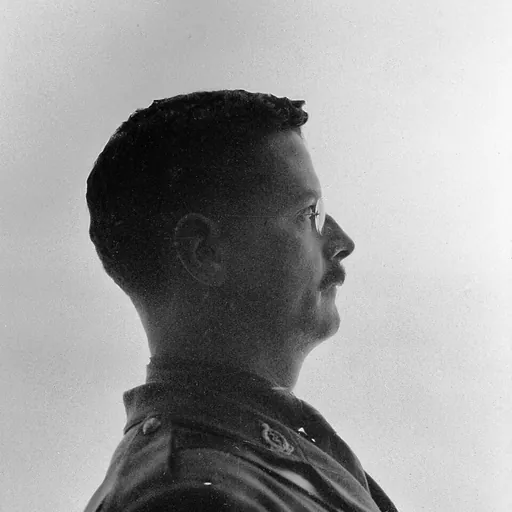
About Gordon Morgan Holmes
Lived 1876 – 1965 (aged 89). Gordon Morgan Holmes was an Irish and British neurologist.
Education
The son of a County Louth farmer, Holmes was born 40 miles north of Dublin. He was educated at Dundalk Educational Institution (now Dundalk Grammar School) and Trinity College, Dublin, where he graduated in medicine in 1897. He then carried out research at the Anatomical Institute in Frankfurt.
Career He was initially employed at Richmond Lunatic Asylum and then, after working his way to New Zealand and back, returned to studying neurology in Germany. In 1906 he was appointed Physician to the National Hospital for Nervous Diseases, Queen Square, London.
At the outbreak of the First World War he was appointed as consultant neurologist to the British Expeditionary Forces. Working in a field hospital he had a unique opportunity for the investigation of the effects of lesions in specific regions of the brain on balance, vision and bladder function. While in France, Holmes met his future wife, Dr Rosalie Jobson, an Oxford graduate and an international sportswoman, to whom he subsequently proposed marriage while rowing on the Thames. His wartime observations on gunshot wounds re-awakened his interest in cerebellar disease which led to his classical analysis of the symptoms of cerebellar lesions described in his Croonian Lectures to the Royal College of Physicians in 1922.
He was elected a Fellow of the Royal Society in May 1933. He delivered their Ferrier Lecture in 1944.
He was made CMG in 1917, CBE in 1919 and knighted in 1951. Holmes then undertook 2 1/2 years postgraduate study in neurology in Germany. Initially he was in Berlin, but he said "it was all spoon feeding" and he went to Frankfurt am Main where he worked at the Senckenberg Institute with Ludwig Edinger (1855–1919) and Carl Weigert (1845–1904).
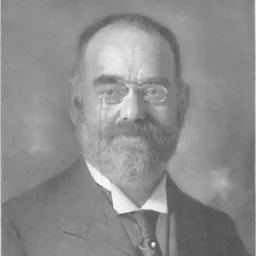
Edinger suggested that he investigated the experimental model of Friedrich Leopold Goltz (1834–1902), which was a dog who had had its brain extirpated, saying "I can't make anything of it!" It is possible that this experimental animal may have aroused his initial interest in the cerebellum. He said, "I might have become a German" for there was an effort to create a post for him in Frankfurt, but Ehrlich had just commenced his work on Salvarsan and it was decided that the money over the next two years go to that work.
Holmes therefore returned to London and became a resident medical officer at the National Hospital for Nervous Diseases in Queen Square, under John Hughlings Jackson (1835–1911),
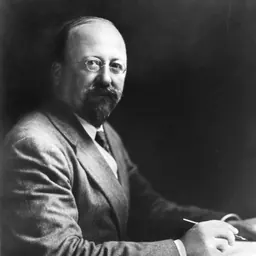
In 1906 Holmes was appointed as director of clinical research at Queen Square, where he commenced collaborating with Henry Head (1861–1940) in 1908. This led to the first accurate account of the functions of the optic thalamus and its relation to the cerebral cortex. The two men complemented one another because Head was imaginative and enthusiastic as well as speculative, whereas Holmes insisted upon attention to detail and would never bend facts to fit a hypothesis. At times this led to clashes between the two, but they continued a close collaboration until the outbreak of the First World War.
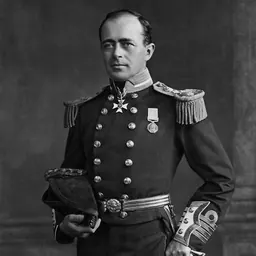
Holmes retained his urge for adventure and he sought a place on Captain Robert Falcon Scott's (1868–1912) ill-fated expedition to the South Pole. A ruptured Achilles tendon necessitated the abandonment of this plan and Holmes profited from his convalescence by obtaining a higher medical degree. In 1910, having obtained a higher medical degree, Holmes was appointed to the staff of the National Hospital when a senior colleague died suddenly. Thereafter his life revolved around his clinical and teaching activities in this hospital, which were unpaid, and a successful private practice.
Upon the outbreak of World War I Holmes was appointed as consultant neurologist to the British Expeditionary Forces. G. Holmes, The National Hospital, Queen Square, 1860–1948. Edinburgh & London, E & S Livingstone Ltd., 1954
Don’t just read it —
keep it.
Full-length biographies made to live with: read them, listen on the way to work, watch them tonight.
- E-book
- Audio
- Video
Instant download · yours to keep · every purchase keeps this site free
Important facts
People in Gordon Morgan Holmes's life
Named in this biography and alive at the same time


Related people
Same field, nearest in time


Contemporaries
People whose lives overlapped Gordon Morgan Holmes's

Frequently asked questions
Who was Gordon Morgan Holmes?
British neurologist (1876-1965)
When was Gordon Morgan Holmes born?
Gordon Morgan Holmes was born on 22 February 1876 in Dublin.
When did Gordon Morgan Holmes die?
Gordon Morgan Holmes died on 29 December 1965 in Farnham.
What was Gordon Morgan Holmes's occupation?
Gordon Morgan Holmes was a neurologist.
What nationality was Gordon Morgan Holmes?
Gordon Morgan Holmes was Irish and British.
Sources & further reading
· Wikipedia: Gordon Morgan Holmes
· DBpedia: Gordon Morgan Holmes
Cite this page
APA: Biography.guide. (2026). Gordon Morgan Holmes. https://biography.guide/gordon-morgan-holmes/
MLA: "Gordon Morgan Holmes." Biography.guide, https://biography.guide/gordon-morgan-holmes/.
Chicago: "Gordon Morgan Holmes." Biography.guide. https://biography.guide/gordon-morgan-holmes/.
Data last updated: 2026-09-21 · Spot an error? Report a correction.
Portrait: Wikimedia Commons · author & licence
Page generated 2026-09-27 04:59 UTC