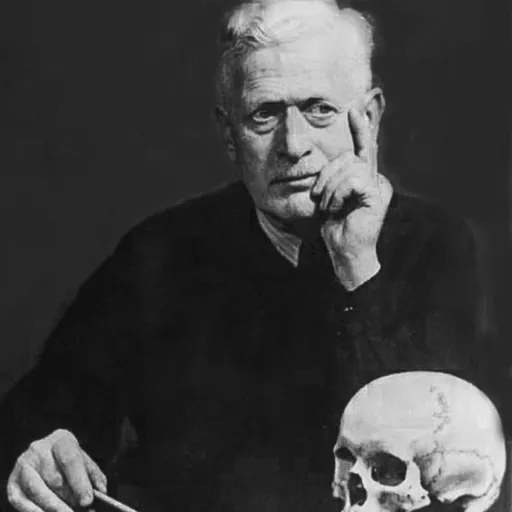
About Arthur Schüller
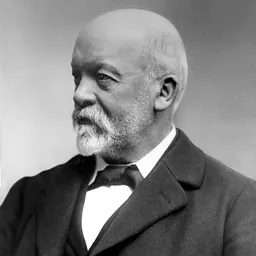
Lived 1874 – 1957 (aged 82). Arthur Schüller was a neurologist, radiologist, physician, psychiatrist and university teacher, known for Hand–Schüller–Christian disease and Neuroradiology.
Arthur Schüller (28 December 1874 – 31 October 1957) was an Austrian medical doctor who served as professor at Vienna University and was the founder of the discipline of neuroradiology. He is credited with coining the term "Neuro-Röntgenologie" and he contributed particularly to three neurosurgical procedures; antero-cordotomy, cisternal hydrocephalic drainage and the transsphenoidal approach to pituitary tumours, and is associated with three bone diseases; the Hand–Schüller–Christian disease, osteoporosis circumscripta and cephalohaematoma deformans.
He graduated from the University of Vienna "sub auspiciis imperatoris" in 1899, and then chose to be mentored by Julius Wagner-Jauregg and Richard Kraft-Ebbing, subsequently working with Guido Holzknecht of the Röntgen Laboratory. His first notable innovation was the construction of an instrument for reaching and destroying tumours in dogs. His research made him the pre-eminent international authority on the radiology of the skull and brain, particularly after the publication of his two books; Die Schädelbasis im Röntgenbilde (The Skull base on the Radiogram) (1905), the first systematic survey of the radiology of the skull, and Röntgendiagnostik der Erkrankungen des Kopfes (1912), which became the standard neuroradiology textbook of the time. At the Vienna Medical School he made significant contributions to developing courses for international graduates.
Being of Jewish origin, he was expelled from the university in 1938 following the annexation of Austria by the Nazis. In 1939, Schüller and his wife fled to Oxford, England, and then emigrated to Australia. Their sons Franz and Hans Schüller were deported to concentration camps, where in 1943 and 1944 respectively they were killed. For the remainder of his life he worked at St Vincent's Hospital, Melbourne, Australia. He became an honorary member of the Anatomy Department of Melbourne University, and of the Neurosurgical Society of Australasia. The Austrian Society of Neuroradiology (OEGNR) awards an annual Arthur Schüller prize. Arthur Schüller Founder of Neuroradiology: a Life on Two Continents by Keith Henderson, a colleague of Schuller's at St Vincent's Hospital, was published in February 2021 by Hybrid Publishers, Melbourne.
Early life and education Arthur Schüller was born on 28 December 1874 in Brno, in Moravia, just north of Vienna. His father was an otorhinolaryngologist. After a broad education in the humanities at the German Gymnasium in Brno he entered Vienna University to study medicine at the age of 17.
In 1899 he graduated "sub auspiciis imperatoris", a status awarded very rarely by Emperor Franz Joseph, which enabled him to choose to be mentored by Julius Wagner-Jauregg and Richard Kraft-Ebbing, combining neurology and psychiatry. In 1909, his advice contributed to Oskar Hirsch introducing the transphenoidal approach to pituitary tumours. These courses prompted the establishment of the American Medical Association of Vienna to handle almost 12,000 American doctors who enrolled between 1921 and 1938. He was invited to lecture all over Europe and America. Schüller spent three months in Oxford, working with Hugh Cairns, Alfred Barclay and Wilfred Le Gros Clark.
With his wife, in the first week of August 1939, he departed from Croydon Airport, London, and emigrated to Australia where Schüller had been invited by a former student, John O’Sullivan, to join St Vincent's Hospital in Melbourne. After initial difficulties in obtaining registration to practise he treated his own patients in private rooms and eventually also at Moreland Hospital. He became an honorary member of the Anatomy Department of Melbourne University, and of the Neurosurgical Society of Australasia. In 1949 he was elected in absentia as honorary president of the second Symposium Neuroradiologicum held in Rotterdam. The family home was in Vienna at 7 Garnisongasse although the sons spent much of their upbringing living with their grandmother Frederike Stiassni in Brno. They both worked for the Stiassni firm. Margarethe survived until 1972, and in her later years did domestic work for various families in Melbourne. In addition to his contributions to neurosurgical procedures (transsphenoidal approach, antero-cordotomy and hydrocephalic intervention) Schüller is associated with three bone diseases: the Hand–Schüller–Christian disease,
The Austrian Society of Neuroradiology (OEGNR) awards an annual Arthur Schüller prize. Arthur Schüller Founder of Neuroradiology: a Life on Two Continents by Keith Henderson, a colleague of Schuller's at St Vincent's Hospital, was published in February 2021 by Hybrid Publishers, Melbourne.
Books
Articles
(Co-author with F. Morgan)
Don’t just read it —
keep it.
Full-length biographies made to live with: read them, listen on the way to work, watch them tonight.
- E-book
- Audio
- Video
Instant download · yours to keep · every purchase keeps this site free
Important facts
People in Arthur Schüller's life
Named in this biography and alive at the same time





Related people
Same field, nearest in time



Contemporaries
People whose lives overlapped Arthur Schüller's

Frequently asked questions
Who was Arthur Schüller?
neurologist and roentgenologist
When was Arthur Schüller born?
Arthur Schüller was born on 28 December 1874 in Brno.
When did Arthur Schüller die?
Arthur Schüller died on 31 October 1957 in Melbourne.
What was Arthur Schüller's occupation?
Arthur Schüller was a neurologist, radiologist, physician, psychiatrist and university teacher.
What was Arthur Schüller known for?
Arthur Schüller was known for Hand–Schüller–Christian disease and Neuroradiology.
Sources & further reading
Cite this page
APA: Biography.guide. (2026). Arthur Schüller. https://biography.guide/arthur-schuller/
MLA: "Arthur Schüller." Biography.guide, https://biography.guide/arthur-schuller/.
Chicago: "Arthur Schüller." Biography.guide. https://biography.guide/arthur-schuller/.
Data last updated: 2026-09-21 · Spot an error? Report a correction.
Portrait: Wikimedia Commons · author & licence
Page generated 2026-09-27 05:00 UTC